August 31, 2011

Honor Spotlight

Nicola Sacco and Bartolomeo Vanzetti


Nicola Sacco (died 1927) and Bartolomeo Vanzetti (1888-1927), Italian-born anarchists, became the subject of one of America's most celebrated controversies and the focus for much of the liberal and radical protest of the 1920s in the United States. The execution of Nicola Sacco and Bartolomeo Vanzetti in Boston in 1927 brought to an end a struggle of more than 6 years on the part of Americans and Europeans who had become convinced that they were innocent of the crimes of robbery and murder. For a sizable portion of the American intellectual community their case symbolized the fight for justice for ethnic minorities, the poor, and the politically unorthodox. The case had a catalytic influence on the subsequent development of leftist thought in America.

August 30, 2011

Quote of the Day

"Betray a friend, and you'll often find you have ruined yourself."
—
Aesop (Aesop's Fables)

August 27, 2011

Art of the Day

Beer Street and Gin Lane
-William Hogarth

Quote of the Day

"In the end, we will remember not the words of our enemies, but the silence of our friends."
—
Martin Luther King Jr.

August 24, 2011

Clark Gable
-King of Hollywood

August 18, 2011

Architecture

Hearst Castle- Celestial Suite

August 17, 2011

Quote of the Day

Pornography is about dominance. Erotica is about mutuality.
-Gloria Steinem

August 15, 2011

Literary Pick (***)

La Callas
-André Tubeuf


Mostly photographs with a very brief, if not meager bio.

August 14, 2011

Literary Quote

"Here sighs and cries and shrieks of lamentation
echoed throughout the starless air of Hell;
at first these sounds resounding made me weep:

tongues confused, a language strained in anguish
with cadences of anger, shrill outcries
and raucous groans that joined with sounds of hands,
raising a whirling storm that turns itself
forever through that air of endless black,
like grains of sand swirling when a whirlwind blows.

And I, in the midst of all this circling horror,
began, "Teacher, what are these sounds I hear?
What souls are these so overwhelmed by grief?"

And he to me: "This wretched state of being
is the fate of those sad souls who lived a life
but lived it with no blame and with no praise.
They are mixed with that repulsive choir of angels
neither faithful nor unfaithful to their God,
who undecided stood but for themselves.

Heaven, to keep its beauty, cast them out,
but even Hell itself would not receive them,
for fear the damned might glory over them."

And I. "Master, what torments do they suffer
that force them to lament so bitterly?"
He answered: "I will tell you in few words:

these wretches have no hope of truly dying,
and this blind life they lead is so abject
it makes them envy every other fate.

The world will not record their having been there;
Heaven's mercy and its justice turn from them.
Let's not discuss them; look and pass them by..."
—
Dante Alighieri

August 12, 2011

August 6, 2011

Honor Spotlight

Lucille Ball (1911-1989)


August 3, 2011

Quote of the Day

"I don't have pet peeves - I have major psychotic fucking hatreds."
—
George Carlin

August 1, 2011

Cultural News

Pa. judge hears arguments over moving Barnes


NORRISTOWN, Pa. (AP) — The Barnes Foundation's new home is well under construction in Philadelphia but a long and bitter fight continues over whether the world-famous art collection should stay in its longtime suburban home.

Montgomery County Orphans' Court Judge Stanley Ott presided over a packed two-hour hearing Monday afternoon on the ongoing Barnes saga. He approved the proceeding after a request from a citizens group that argued he didn't have all the evidence when he approved the relocation in 2004.

The Friends of the Barnes Foundation, a group trying to halt the multibillion-dollar collection's 5-mile move from suburban Lower Merion, said Ott was misled by the actions of the attorney general's office, which has oversight over charitable trusts.

Samuel Stretton, an attorney representing the group, argued that then-Attorney General Mike Fisher, now a federal appeals judge, failed to serve as a neutral party and instead was "essentially a cheerleader" in facilitating the collection's move by undermining and pressuring the Barnes' controlling board of trustees to go along with the relocation.

Barnes Foundation attorney Ralph Wellington said Ott had determined years ago that the citizens group has no legal standing in the case. He also said their understanding of the attorney general's responsibility in such legal matters is incorrect because Fisher's role was not to be neutral but to act in Pennsylvanians' best interest, which meant preventing the cash-strapped organization from closing or selling off its collection.

"It is baseless factually and filed by people who have no right to do so," Wellington said of the opponents' petition.

Dr. Albert C. Barnes, a pharmaceutical magnate, amassed a collection regarded as one of the world's greatest private holdings of contemporary art, which includes 181 Renoirs, 69 Cezannes, 60 Matisses, 44 Picassos and thousands of other objects.

He established the Barnes Foundation in 1922 to teach populist methods of appreciating and evaluating art. He tightly grouped his paintings with antique ironwork, furniture and African sculpture to illustrate universal aesthetic themes.

The trust of Barnes, a self-made millionaire who died in a 1951 car crash at age 78, stipulated that his trove of 800 impressionist and postimpressionist masterpieces "remain in exactly the places they are" after his death and gave control of his foundation to Lincoln University, a historically black school in nearby Chester County.

Barnes Foundation officials first asked Ott's permission in 2002 to relocate near Philadelphia's museums and cultural attractions. The foundation said its endowment was exhausted and it would go bankrupt if required to remain in Lower Merion, where it was subject to restrictive township zoning regulations severely limiting the number of visitors.

The Pew Charitable Trusts, The Lenfest Foundation and The Annenberg Foundation promised to help the Barnes raise $150 million for a new gallery and an endowment when the relocation to Philadelphia was approved. In exchange, Lincoln University ceded control of the foundation's board of trustees and permitted its new benefactors to appoint their own members.

The Barnes galleries closed in July. The new building is scheduled to open next year on the Benjamin Franklin Parkway, near the Philadelphia Museum of Art and the Rodin Museum.

Ott did not say when he would issue a ruling on the latest petition, but attorneys said they expect it could take about a month.

Literary Pick (****)

We Need To Talk About Kevin
-Lionel Shriver


Something about today's modern literature irritates me and almost always provokes me to go on a rant as to why. Now that I think of it, why should modern literature be any different than the stuff they play on TV today? The female character (Eva) in "We Need to Talk about Kevin", wasn't any different than what I've been trying to avoid, and I'll tell you why. First of all I chose this book as a change of pace from the kind of literature I normally read. I know modern lit is all about sensationalism, and I guess that's what I was in search of for my next read, although, typically, it's that very aspect I try to avoid. Eva fit the perfect stereotypical example of what today's authors create and think women love, and they must, because these books sell. But why is it that I choose novels where the protagonist or main narrator is almost always a whiny , show-offy, upper-middle class snobby suburbanite woman or wife? I mean this Eva character wreaks of Allison Wynn Scott and Eat Pray Love, without the romance. But you want to know what the insulting part of the novel is? The typical modern career woman who makes a 6 figure salary, and somehow gets to travel all over the world, because they always get to travel all over the world, you know.. which to them is a nuisance *roll of the eyes here*. They also almost all the time have a NYC Apt. which then eventually gets upgraded to a center hall colonial in Westchester county. I swear, this same thing happened in Time of My Life and in Eat Pray love, except in eat pray love, she moves to Bali. Then they marry someone who isn't exactly PERFECT, but to desperate book-wormy housewives, like ourselves, a 6'2 tall brawny manly man who plays the part of the great ALL-American dad and is willing to stay home and take care of the kids while the wife goes in search of herself, will do for us any day of the week. I feel like novels don't even try to be different anymore. It's the same old tired story lines with slightly different edgy inserts. And it's not that the premise of the story isn't an interesting one, because it is, which is why I chose it to begin with. It's the way authors craft these women/protagonists. Why does everyone have to be so goddamn perfect? perfect husband, perfect car, perfect career, perfect clothes, perfect friends and the perfect bric-a-brac to decorate the perfect house.. It's such bullshit, it's trite..This could have been a 5 star novel if Eva was authentically flawed. Like if she had 40 hard pounds she's been struggling to lose for the last 15 years, or if she had a decent husband who cheats just a little. What's insulting is that the author then tries to convince us her life ISN'T all that perfect after all, by throwing in a not-so-perfect child murderer. Even her murderous son is a brilliant sociopath. See? perfect! But that is my only complaint, not only about this novel, but modern works in general, so I'll stop, take a deep breath and digress.
Now with all that being said, WOW!! I don't even know where to begin. I compared Eva's character very much to that of the awkwardness of when new sitcoms begin and the star actors have to find a comfortable niche in their roles. Shaky at the beginning but rapidly gaining confidence and comfort in their roles making them perfectly casted for the part.
It's not one of those stories that has you gripping the edges of your seat, but it's written in an intellectual, methodical manner. It's psychological and calculating.
I believe this book is about American accountability and culpability, or lack thereof.
It definitely possess a misanthropic theme, which I admit was very seductive to me since I myself am disgusted by people and their mediocrity. The mom hated society and so did her son, and in turn society hated them right back for what they did, because yes, they were both responsible for what Kevin did. Accountability.
This novel stirred the sinister part of me, that part that made me go to them both, nyeh, nyeh, nyeh... because I'm so sick of women like her, who have children like him, who don't end up shooting kids in the hall and we have to live amongst them for all our worldly life. It made me feel very evil to enjoy what they were both doing to each other. How they both were tearing eachother apart. I loved every minute of it. This book sops with hatred, shame, and abhorrence. It was my own personal fantasy of "I told you so" to society. It provided me with that sort of sick satisfaction.


July 22, 2011

RIP

Lucian Freud
(8 December 1922 – 20 July 2011)

July 21, 2011

Quote of the Day

"The worst part of success is trying to find someone who is happy for you."

— Bette Midler

Literary Pick (***)

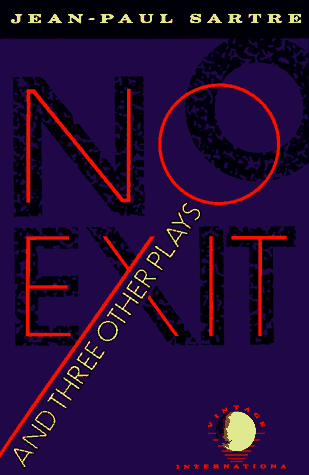
No Exit -Jean-Paul Sartre


Waited years to read this collection of plays by Sartre. My favorite of all the is "No Exit". I also enjoyed The Flies. I particularly enjoyed the realism of the dialogue.

July 20, 2011

Literary Pick (**)

Slaughterhouse-Five
-Kurt Vonnegut


It's funny the misconceptions we have about certain books before we read them. I don't know why, but I thought this book was about a totalitarian society. Perhaps I read a description of one of his other books and thought it was Slaughterhouse-5? anyway...the theme is an anti-war theme that didn't really reach out to me. Sure the story was interesting enough and I enjoyed where Vonnegut was leading Billy's character, but to me it seemed to be the only real interesting part of the story, the rest of it was a flat-line. There were no highs and lows, it just glided on an even level. I know I haven't described much about what the book is about, so here it goes. A guy who once fought in the war tracks down a few of his friends because he wants to write about his war experiences, and so he begins to write a story about Billy, one of his war buddies, who becomes insane and eventually dies. Vonnegut, in my opinion, took the alien theme with Billy too far. I think that's what turned me off about the story. It seemed so unrealistic and fluffy. Had he with the exact talent omitted the alien stuff, I would have been able to enjoy it more, but I don't really have an open mind to subjects having to do with aliens or anything else of that nature, especially if it's dragged out too long. I know it was what Vonnegut thought necessary to demonstrate how crazy Billy's character was, but it was a bit too much for me. However, I love the way Vonnegut writes and I'm looking forward to reading Cats Cradle.

July 13, 2011

Art of the Day


Fukami Sueharu (Japanese, born 1947)

View of Distant Sea II, ca. 1989
Molded porcelain with celadon glaze, 8 1/2 x 42 15/16 x 2 1/4 in. (21.6 x 109 x 5.7 cm)


This unusual porcelain sculpture resembles a wave about to break. It stands in opposition to the functional ceramics of traditional Japanese potters who "worship" unglazed clay, its tactile qualities, and the accidental effects that wood-fired kilns produce. Fukami challenges them by using electric kilns to minimize uncontrolled processes, by using molds to cast his creations, and by applying high-quality glazes of subtle, varying density. Despite his extensive control of color and form, one detects a slightly wavering edge; its gentle curve and subtle irregularity softens and at the same time enlivens the severe geometry of the piece. The Zen-like meditative mood of the work, and the celadon color, reminiscent of Chinese Song dynasty ceramics, suggest an Asian idiom for a work that otherwise speaks a universal language of visual art.

Literary Pick (***)

The Motorcycle Diaries- A Latin-American Journey
-Che Guevara


I couldn't have picked a better book to read after finishing On The Road by Jack Kerouac. Reading The Motorcycle Diaries proved to me that I can indeed enjoy a man's journey so long as it's a meaningful journey with a purpose, and not a selfish odyssey of drunken fools looking for high times and easy girls.

The Motorcycle Diaries wasn't as inspirational as I hoped it would be, but it was a humanitarian journey nevertheless, that I truly enjoyed reading. His altruistic lifestyle inspires me to be a better person. I'm still learning a lot about Che, and this is the second book I've read on his life and I'm looking forward to learning more about his life and causes.

July 7, 2011

Quote of the Day

"Justice is a matter between men, and I need no god to teach me it".

Orestes to Zeus in The Flies by Jean Paul Satre.

Literary Pick (*)

On The Road
-Jack Kerouac


Labels:

June 24, 2011

June 14, 2011

Quote of the Day

"I myself have never been able to find out precisely what feminism is: I only know that people call me a feminist whenever I express sentiments that differentiate me from a doormat, or a prostitute."

— Rebecca West

June 12, 2011

Literary Pick (**)

The Adventures of Huckleberry Finn
-Mark Twain


Didn't enjoy Huck Finn as much as I enjoyed Tom Sawyer, and I only gave Tom Sawyer 3 stars. I do appreciate Twain's wit and clever style of thinking, but this was not my kind of literature. Huck Finn seemed to me cliched and depth-less.

Labels:

May 19, 2011

Literary Pick (**)

Franny and Zooey
J.D. Salinger


The main reason I didn't enjoy this book as much as I could have is because I kept looking for the similarities between Franny and Zooey in The Royal Tannenbaums, a movie I happen to love! I did however, got to enjoy once again Salinger's writing.

Labels:

Literary Pick (**)

La Batard
Violette Leduc


Violette Leduc always gets the shitty end of the stick. I do too. So what.

Labels:

May 11, 2011

Quote of the Day

"Solitude is fine but you need someone to tell that solitude is fine."
— Honoré de Balzac

April 21, 2011

Literary Pick (**)

The Poetry of Pablo Neruda
Pablo Neruda


I hate that I have to write this. Neruda's poetry didn't move me as much as I thought it would. His poetry is very similar to that of  Walt Whitman, who I also didn't particularly enjoy. I've read so many references to the beauty of Neruda's poetry, I just thought they would be painfully and beautifully romantic, but they were just regular poems. I did however enjoy a couple, but my favorite in this mammoth collection of poetry is one by the title of "Your Laughter".

Labels:

March 28, 2011

Photograph of the Day

Marlon Brando

Literary Pick (****)

The Feast of the Goat
-Mario Vargas Llosa


Luckily for me I was already familiar with Trujillo's reign of terror from previously reading "The Brief and Wondrous Life of Oscar Wao" by Junot Diaz. Perhaps that is how I became fascinated by Trujillo's tyrannical reputation as the president of The Dominican Republic. The stories about Trujillo are like the kafkaesque nightmares that most of us have experienced, about the fear of losing one's freedom, losing one's integrity and self-respect. Fears of being unable to escape that all too watchful omnipresent entity. Trujillo was a living devil, he took whatever he wanted and banished anyone who not only opposed his regime, but also those who even thought of opposing it. He was the absolute ultimate psychological oppressor. He was known to publicly humiliate high-ranking member officials of his own inner circle, in person and through the local newspaper, which was of course owned by the Trujillo family. If he wanted to have sex with someone's wife or daughter, there was not much a husband or father could do about it. If they resisted they would simply be sent to jail to be tortured and maimed by Johnny Abbes, head of the SIM, another ruthless heartless demon who worked for Trujillo. Trujillo was indeed a goat who consumed everything in his path. His demonic presence was so strong in the hearts of the Dominican people that even after his death citizens were still terrified of him, as if he would come back from the dead and punish all those who dared believe he was mortal.
The Feast of the Goat weaves the fictional story of the life of Urania Cabral and her father Agustin Cabral (president of the senate), with non-fictional events of the Trujillo era and regime. Each chapter is jammed packed with fascinating and unbelievable accounts of some of the events that occurred during this period, It's one of the best books I've read this year. However, I admit that one of the reasons I was able to enjoy it as much as I did is because I was already familiar with the history of the Trujillo era. This book could be overwhelming for someone who is not familiar with it, so It's really worth looking into before diving in. The only fault in the book is that Llosa tended to quickly switch from narrating, to story-telling, if that makes any sense at all.. So one has to pay close attention to who is speaking and what scene is taking place at any given moment. Other than that each and every chapter of the book was enthralling. I'm so tempted to give it 5 stars.

Labels:

March 24, 2011

March 23, 2011

RIP

Elizabeth Taylor
(February 27, 1932 – March 23, 2011)

March 20, 2011

Literary Pick (***)

The Easter Parade -Richard Yates
 
 Quite an interesting story, but not half as good as Revolutionary Road. The synopsis on the back cover suggests the story is about two sisters, Sarah and Emily Grimes, but it seems to focus more on the younger sister, Emily, a divorcee career woman who has had quite a few casual relationships in her life. Her sister Sarah, is married to an abuser, they have three boys. Sarah is an alcoholic like their mother Esther (kookie) Grimes. I think their father, Esther's husband, was an alcoholic too. The novel is a steady-paced account of the lives of these two siblings. But mostly about Emily's detached relationship with her mother and sister. I guess Emily, as a then modern-day career woman (the only one in the family who graduated college) felt smarter in more ways than one than her sister who got married so young, and her over-bearing mother who ultimately ends up in an insane asylum. In the end Emily ends up worse than her mother and sister. Her live-in boyfriend leaves for an ex-wife. She then loses her job, ends up in a smaller Apt. on unemployment, with nothing to do, nowhere to go. She decides to call an estranged nephew, (Sarah's son) moves to New England to stay with him, his wife and their little girl, has a mini nervous breakdown from the station to his house. I think this book might have impacted me more than I'd like to admit.
Yates is so easy and pleasant to read, so although I didn't consider this a 4-5 star novel, I still enjoyed reading his work and I thought the story was very unique.

Labels:

Photograph of the Day

Viviene Leigh

March 14, 2011

Literary Pick (**)

The Bauhaus Group: Six Masters of Modernism
Nicholas Fox Weber


Not as exciting as I had anticipated. I expected the story of The Bauhaus Group to be as riveting as Peggy Guggenheims "Art Lover" or Frederick Kaisler's "Art of this Century", instead it was excruciatingly boring. I did however, enjoy reading about Gropius, Klee and Kandisnky's lives, but somehow I knew that once the author got to the Albers' life the gossip wouldn't be as juicy, since most of the recollections came from Annie Albers and Josef themselves, (they were married for over 50 years). I've had an interest in learning more about the Bauhaus group for quite some time, but I can't say I learned much about the movement or it's aim from reading this book. I think Weber might have even turned me off to the movement entirely. I give it only two stars.

Labels:

March 1, 2011

Literary Pick (*)

Anna Karenina- Leo Tolstoy


This book took me too long to finish. Normally, I go through books faster than I go through towels, but Anna Karenina is true to Tolstoy's form, he writes beautifully, but what's missing is deep-rooted psychological honesty and emotion. Sometimes I think Tolstoy was too hung up on his own agenda of Puritanism to allow himself to be true to the realistic direction of human nature. For Tolstoy women belonged here, and men belonged there, and you read it in all of his books. He was also hung up on peasant-workers (muzhiks) and their rights, a topic that resurfaces in all of his works. Although his short stories, The Kruetzer Sonata and The Death of Ivan Illych are two of my all-time favorite stories, I'm glad I don't have to read any other of his larger works again.
I would like to say that the most disappointing part of the novel wasn't Anna's anti-climatic suicide, but Levin's totally superfluous character.

Labels:

February 11, 2011

Literary Pick (****)

Salvador Dali and the Surrealists
-Michael Elsohn Ross
This is a biography and activity art-book intended for young adults. I received it as a Christmas present from my SIL, who isn't an art lover, as far as I know, which perhaps explains why she gave me this book in the first place, but I was very happy to receive it nevertheless. Surprisingly, up until now I had never read anything on Dali. Of course I've heard of Dali and the surrealist movement.. who hasn't? but that's as far as my knowledge of him extended. I can easily identify his artworks, but I knew nothing of his life. This book perhaps inadvertently portrayed him as an insecure obnoxious rival-rouser struggling to remain confident throughout his early art career. He was portrayed as an attention-whoring opportunist, turning his back on old friends and colleagues once he gained fame and notoriety. He seemed like the Heidi Spencer of his time. However, deep down inside there is something very sad and pitiful about his career and his ego. He grew up as an insecure kid who was bullied throughout his early years in school, and slowly developed his confidence by having a generation me mentality, which made him extremely famous, but in his later years the fame seemed to have gone to his head and he began commercializing his artwork a bit too much, and it affected his credibility as a serious artist. He was in a very long relationship with a woman by the name of Gala, who seemed to have been very abusive towards him when he was old. I don't know..there's just something so sad about his life. But the book was very interesting and educational. It mentions art movements such as Dada, surrealism, expressionism,  and pop-art. It also talks about Franco, Hitler, and how the WWI affected artists and the art world. I enjoyed it very much.

Labels:

February 4, 2011

Literary Pick (***)

The Unbearable Lightness of Being
-Milan Kundera


After reading the first 50 pages of Kundera's The Unbearable Lightness of Being, I was very tempted to read the one and two star reviews on Goodreads. Most especially women's reaction to Kundera, but I did my best to refrain from doing so. As usual, I didn't want to be negatively influenced by anyone's reviews from the start.
There was something about this book that annoyed me very much, and I really did struggle to read it from a objective point of view, however, the scenarios seemed so outrageously absurd and nonsensical that I simply couldn't get Kundera's narcissism and misogynism past the palate, and please note, that I don't say Thomas' or Franz' misogynism. It didn't feel like I was reading a character's character, it felt like I was reading Kundera's character. It's not that I cannot have an open mind and accept women portrayed as weak beings, who suffer and make mistakes and ruin their lives by making stupid choices, but come on! These women were so unrealistic in every conceivable way. Thomas would score 1-2 women a day? and that's after he lost his job as a Dr. and ended up as a window-cleaner? Is that funny or what? and what about Tereza and Sabina response to all this? The part when Tomas' hair smelled like vagina, and after months of enduring this smell Tereza asks Tomas to go wash his hair? I can go on and on about ridiculous instances but it's not even worth getting into. I could accept it as a work if the writing was brilliant, but it's not. It was ok but nothing extraordinary. The references to Ana Karenina make sense. Although I have not had the pleasure of reading Karenina yet, I am very familiar with Tolstoy's works and I understand he too was quite insensitive to women's needs and tended to be self-focused.
Anyway..further research confirmed my feeling about Kundera, he is notorious for representing women as nothing more than sex objects and mistresses.
I have to admit the story did keep me intrigued and curious enough to want to finish it, but overall I didn't enjoy it.

Labels:

January 30, 2011

Literary Pick (***)

The Adventures of Tom Sawyer -Mark Twain


Two years ago I set a goal to read as many classics as possible. I even started a "Classic's Challenge" thread on Goodreads in order to prioritize which classics I wanted to read first. About every four to six months this list of "classics" was revised and edited with items often being removed or added on. But in all these revisions I've never once added anything by Mark Twain, which surprises me, because Mark Twain is obviously a colossal name in literature. In fact, William Faulkner called him the "father of American literature". When I try to understand why I never added Mark Twain to my classics list, although I subconsciously intended to, eventually, all I could come up with is that I didn't feel like reading about little boy adventures and rascalities. Mark Twain has always seemed a bit too wonder-breadish to me. I've always compared him to Walt Whitman, don't ask me why. I enjoyed Walt Whitman, but Whitman has always been white-breadish to me too and I wasn't sure if I was ready for another yeasty dose of that kind of literature. So, you ask, what made me finally add Twain to my list? Well, it was the press Huck Finn received about the inclusion of the "N" word into the new revised copies of the book, and since Tom Sawyer is the precursor to Huck Finn, I felt I had no choice but to read Tom Sawyer first.

My first impression upon reading the first chapter of Tom Sawyer was rather refreshing, especially after having finished reading something very challenging and strenuous.. but just as I expected, halfway through the story of Tom and his Shenanigans, I got a little bored. Little boys wreaking havoc has never appealed to me, and although Mark Twain is a lovely writer, because I do recognize his talents and appreciate his style, it was not sufficient enough to make me love it. However, I can see why Twains composition appeals to mature audiences. It's cheerful and carefree with episodes of warmth. It'll be interesting to see how Twain developed Finns character in his next novel.

Labels:

January 28, 2011

Literary Pick (**)

Labrynth -Jorge Luis Borges


Labels:

January 24, 2011

Quote of the Day

"I haven't any right to criticize books, and I don't do it except when I hate them. I often want to criticize Jane Austen, but her books madden me so that I can't conceal my frenzy from the reader; and therefore I have to stop every time I begin. Every time I read Pride and Prejudice I want to dig her up and beat her over the skull with her own shin-bone.
-Letter to Joseph Twichell, 9/13/1898"
— Mark Twain

January 23, 2011

Literary Pick (**)

Catch-22
Joseph Heller


Labels:

January 18, 2011

Photograph of the Day

Salvador Dalí

January 17, 2011

Literary Pick (**)

The Real Life of Sebastian Knight
-Vladimir Nabokov


Considering Lolita is my favorite novel in the entire world, I expected to feel somewhat of the same magic and enchantment reading Nabokov's The Real Life Of Sebastian Knight, but I had difficulty even making out Nabokov at all. But what do I know? out of all of his novels I've only read Lolita, and now Sebastian. My mistake was that I assumed that all of Nabokov's works would seduce me. I'll have to read some more of his novels and see what happens. The tale of Sebastian Knight is appealing enough to want to finish and see what the big mystery is behind his last romance and his life, but overall it was rather dull, mostly because it felt like it was more about his brothers ego and unresolved relationship with Sebastian (his brother) than about Sebastian himself.. I have to say that I loved the way it ended. It focused more on Sebastian the way it should have from the beginning. Plus there were some brilliant sentences and passages that are worth noting.

Labels:

January 14, 2011

Literary Pick (**)

The Story of Art -E.H. Gombrich


Although I didn't enjoy this book as much as I would've enjoyed it a few years ago, I appreciated Gombrich's enthusiasm and excitement to share the story of art through the ages. I think what turned me off most about it was the attention given to architecture, which I understand is an enormous part of art. I'm simply not that interested in architecture. I gave it two stars not because it was ok, but because I respect it as a textbook.

Labels:

Photo of the Day


Picasso and Bardot

January 13, 2011

Literary Pick (**)

Drown
-Junot Diaz
I didn't enjoy Drown nearly as much as I did The Brief and Wondrous Life of Oscar Wao. The last chapter (Negocios) was more of what I expected of the whole book. I'm still glad I read it.

Labels:

January 10, 2011

Literary Pick (**)

Chairman Mao Would Not Be Amused
edited by Howard Goldblatt
A collection of short stories by 20 chinese writers. A genre (scar literature) that emerged after the death of Chairman Mao and the fall of the cultural revolution. The stories lacked. There was only one story I enjoyed and that was "The Brothers Shu".

Labels:

January 3, 2011

Literary Pick (****)

In Defiance of Hitler: The Secret Mission of Varian Fry


Amazing story about Varian Fry's heroic efforts to help many anti-fascist artists, writers, and Jews escape from France during WWII. Fry helped about two thousand refugees escape Nazi occupied France.


Shame on you, Andre Breton.

Labels:

Picture of the Day


Julien Levy, Frida Kahlo, New York, 1938. Vicente Wolf Photography Collection. © 2001 Philadelphia Museum of Art

January 2, 2011

Literary Pick (**)

Where The Wild Things Are
-Maurice Sendak

Labels:

Literary Pick (****)

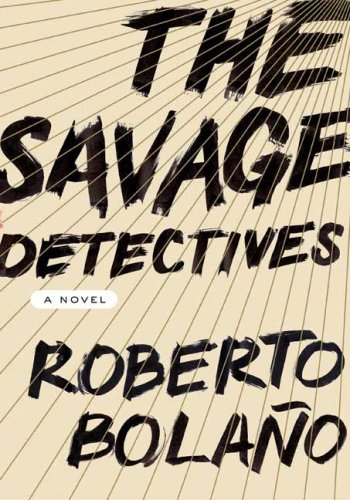
The Savage Detectives
-Roberto Bolano


I would have loved to read this book in Spanish. I bet there are minute, yet significant expressions and details lost in the translation that you can only experience reading it in it's original language. This novel is like the love-child of Marquez and Murakami. Perhaps. one day I will read it in Spanish. I think I will have to, because I enjoyed it so much.

I know readers who didn't enjoy this novel accuse it of being cliquey and haphazard, but perhaps it's because they were constantly anticipating something grand to happen, and that is exactly what Bolano meant when he referred to readers who buy into the "exotic stereotype"-style narrative. Although, I have to admit, Bolano himself falls into this trap with The Savage Detectives, with examples of ghosts, whores, and just a dab of magical realism, but I loved it all!

The story begins in a diary format, and later moves on to an interview format, in which many poets are questioned about the whereabouts of Arturo Belano and Ulises Lima, later Cesaria Tinajero. Each account is like a short story. Bolano rarely writes within quotation marks, but the dialogue flows smoothly like real-time conversations and interviews. I enjoyed all of the stories. Each character had their own fascinating tale to tell, and all so full of intrigue. How talented to be able to write so many short stories with so many different plots and scenarios. That takes an incredible amount of skill and talent. I even read one of the stories aloud to hear the words, and I chose a good one too, the one by Pablo Del Valle from Madrid. By coincidence that one sounded more like poetry than any of the other stories and it sounded so beautiful to hear it spoken out.

I wish Cesarias poem would've been made more clearer. I know it was suppose to be a joke, but I'm not clear on why since Cesaria was a serious and reserved character. I wasn't 100% clear on the ending but I guess Miguel and Lupe got caught by the police and when he was asking, "what's outside the window?" it meant prison cell window because he made a reference to a star. That would make a lot of sense. I'm not sure. But I loved this story. It was a long book but there wasn't a moment where I found myself bored. I could see reading it again down the road.

Favorite Passage:

"He whispered that he loved me, that he would never be able to forget me. then he got up (twenty seconds after he'd spoken, at most) and slapped my face. The sound echoed through the house. We were on the first floor, but I heard the sound of his hand (when his palm left my cheek) rise up the stairs and enter each of the rooms on the second floor, dropping down through the climbing vines and rolling like glass marbles in the yard. When I could react , I made a fist with my right hand and hit him in the face. He hardly moved. But his arm was fast enough to hit me again. Bastard, I said, faggot, coward, and I launched a clumsy attack, punching, scratching, and kicking. He didn't even try to dodge my blows. Fucking masochist".

Labels:

December 18, 2010

Poetry

True Love

It is true love because
I put on eyeliner and a concerto and make pungent observations about the great issues of the day
Even when there's no one here but him,
And because
I do not resent watching the Green Bay Packer
Even though I am philosophically opposed to football,
And because
When he is late for dinner and I know he must be either having an affair or lying dead in the middle of the street,
I always hope he's dead.

It's true love because
If he said quit drinking martinis but I kept drinking them and the next morning I couldn't get out of bed,
He wouldn't tell me he told me,
And because
He is willing to wear unironed undershorts
Out of respect for the fact that I am philosophically opposed to ironing,
And because
If his mother was drowning and I was drowning and he had to choose one of us to save,
He says he'd save me.

It's true love because
When he went to San Francisco on business while I had to stay home with the painters and the exterminator and the baby who was getting the chicken pox,
He understood why I hated him,
And because
When I said that playing the stock market was juvenile and irresponsible and then the stock I wouldn't let him buy went up twenty-six points,
I understood why he hated me,
And because
Despite cigarette cough, tooth decay, acid indigestion, dandruff, and other features of married life that tend to dampen the fires of passion,
We still feel something
We can call
True love.

Labels:

December 17, 2010

Literary Pick (****)

Che
Fidel Castro
It's a shame there aren't yet any reviews written on this book on Goodreads. It would certainly make for a very interesting discussion. The preface by Jesus Montane wasn't impressive, however, the intro written by David Deutschmann helped give the reader a quick chronological biography on the political history and contribution that Che Guevara offered the Cuban Revolution. The analysis that Castro offers on the death of Che is thoroughly fascinating. Castro defends the truth behind the murder of his beloved comrade as if he's posthumously defending his own character and honor. Technically, it's not the most sophisticated memoir. In parts Castro tends to get cyclical, but at the same time is able to make good points and does an impressive job at disproving the lies behind Barrientos' statements concerning Che's diary.
It goes without saying that this memoir plays homage to Che's revolutionary spirit and heroism. It's Castro's personal eulogy to the memory of all the virtues that embodied Che's altruistic qualities. This memoir is not only moving but inspiring as well.

Labels:

December 15, 2010

Literary Pick (*****)

501 Great Artists


Labels:

December 13, 2010

Literary Pick (**)

The Awakening
Kate Chopin


I don't understand how people call this is a feminist novel. There's a difference between feminism and selfishness. Here we have a woman, Edna Pontellier, who is married, with two children I believe, and so one day she suddenly realizes she doesn't want to be married anymore, and while her husband is away on business, and the kids are away at grandmas, she decides she's going to move out of the house and into a smaller home a couple blocks away, all nonchalant, like her husband won't mind one bit. I think she even asks her husband what he thinks about this idea..but she then to proceeds to moves out. However, before she leaves, she throws herself a going-away party at her husbands expense (not too independent if you ask me) and starts a series of affairs, one of which is with another married man in her little circle of society.. If it were the husband who had behaved this way in the novel, what do you think the reader would have thought about him? This is not acceptable behavior just because she's a woman. The only oppressive subject in this novel was the protagonist herself.
Kate Chopin is a lovely writer but this story is weak.
The other short stories included in this collection only got worse as they progressed.

Labels: