February 11, 2011

Literary Pick (****)

Salvador Dali and the Surrealists
-Michael Elsohn Ross
This is a biography and activity art-book intended for young adults. I received it as a Christmas present from my SIL, who isn't an art lover, as far as I know, which perhaps explains why she gave me this book in the first place, but I was very happy to receive it nevertheless. Surprisingly, up until now I had never read anything on Dali. Of course I've heard of Dali and the surrealist movement.. who hasn't? but that's as far as my knowledge of him extended. I can easily identify his artworks, but I knew nothing of his life. This book perhaps inadvertently portrayed him as an insecure obnoxious rival-rouser struggling to remain confident throughout his early art career. He was portrayed as an attention-whoring opportunist, turning his back on old friends and colleagues once he gained fame and notoriety. He seemed like the Heidi Spencer of his time. However, deep down inside there is something very sad and pitiful about his career and his ego. He grew up as an insecure kid who was bullied throughout his early years in school, and slowly developed his confidence by having a generation me mentality, which made him extremely famous, but in his later years the fame seemed to have gone to his head and he began commercializing his artwork a bit too much, and it affected his credibility as a serious artist. He was in a very long relationship with a woman by the name of Gala, who seemed to have been very abusive towards him when he was old. I don't know..there's just something so sad about his life. But the book was very interesting and educational. It mentions art movements such as Dada, surrealism, expressionism,  and pop-art. It also talks about Franco, Hitler, and how the WWI affected artists and the art world. I enjoyed it very much.

Labels:

February 4, 2011

Literary Pick (***)

The Unbearable Lightness of Being
-Milan Kundera


After reading the first 50 pages of Kundera's The Unbearable Lightness of Being, I was very tempted to read the one and two star reviews on Goodreads. Most especially women's reaction to Kundera, but I did my best to refrain from doing so. As usual, I didn't want to be negatively influenced by anyone's reviews from the start.
There was something about this book that annoyed me very much, and I really did struggle to read it from a objective point of view, however, the scenarios seemed so outrageously absurd and nonsensical that I simply couldn't get Kundera's narcissism and misogynism past the palate, and please note, that I don't say Thomas' or Franz' misogynism. It didn't feel like I was reading a character's character, it felt like I was reading Kundera's character. It's not that I cannot have an open mind and accept women portrayed as weak beings, who suffer and make mistakes and ruin their lives by making stupid choices, but come on! These women were so unrealistic in every conceivable way. Thomas would score 1-2 women a day? and that's after he lost his job as a Dr. and ended up as a window-cleaner? Is that funny or what? and what about Tereza and Sabina response to all this? The part when Tomas' hair smelled like vagina, and after months of enduring this smell Tereza asks Tomas to go wash his hair? I can go on and on about ridiculous instances but it's not even worth getting into. I could accept it as a work if the writing was brilliant, but it's not. It was ok but nothing extraordinary. The references to Ana Karenina make sense. Although I have not had the pleasure of reading Karenina yet, I am very familiar with Tolstoy's works and I understand he too was quite insensitive to women's needs and tended to be self-focused.
Anyway..further research confirmed my feeling about Kundera, he is notorious for representing women as nothing more than sex objects and mistresses.
I have to admit the story did keep me intrigued and curious enough to want to finish it, but overall I didn't enjoy it.

Labels:

January 30, 2011

Literary Pick (***)

The Adventures of Tom Sawyer -Mark Twain


Two years ago I set a goal to read as many classics as possible. I even started a "Classic's Challenge" thread on Goodreads in order to prioritize which classics I wanted to read first. About every four to six months this list of "classics" was revised and edited with items often being removed or added on. But in all these revisions I've never once added anything by Mark Twain, which surprises me, because Mark Twain is obviously a colossal name in literature. In fact, William Faulkner called him the "father of American literature". When I try to understand why I never added Mark Twain to my classics list, although I subconsciously intended to, eventually, all I could come up with is that I didn't feel like reading about little boy adventures and rascalities. Mark Twain has always seemed a bit too wonder-breadish to me. I've always compared him to Walt Whitman, don't ask me why. I enjoyed Walt Whitman, but Whitman has always been white-breadish to me too and I wasn't sure if I was ready for another yeasty dose of that kind of literature. So, you ask, what made me finally add Twain to my list? Well, it was the press Huck Finn received about the inclusion of the "N" word into the new revised copies of the book, and since Tom Sawyer is the precursor to Huck Finn, I felt I had no choice but to read Tom Sawyer first.

My first impression upon reading the first chapter of Tom Sawyer was rather refreshing, especially after having finished reading something very challenging and strenuous.. but just as I expected, halfway through the story of Tom and his Shenanigans, I got a little bored. Little boys wreaking havoc has never appealed to me, and although Mark Twain is a lovely writer, because I do recognize his talents and appreciate his style, it was not sufficient enough to make me love it. However, I can see why Twains composition appeals to mature audiences. It's cheerful and carefree with episodes of warmth. It'll be interesting to see how Twain developed Finns character in his next novel.

Labels:

January 28, 2011

Literary Pick (**)

Labrynth -Jorge Luis Borges


Labels:

January 24, 2011

Quote of the Day

"I haven't any right to criticize books, and I don't do it except when I hate them. I often want to criticize Jane Austen, but her books madden me so that I can't conceal my frenzy from the reader; and therefore I have to stop every time I begin. Every time I read Pride and Prejudice I want to dig her up and beat her over the skull with her own shin-bone.
-Letter to Joseph Twichell, 9/13/1898"
— Mark Twain

January 23, 2011

Literary Pick (**)

Catch-22
Joseph Heller


Labels:

January 18, 2011

Photograph of the Day

Salvador Dalí

January 17, 2011

Literary Pick (**)

The Real Life of Sebastian Knight
-Vladimir Nabokov


Considering Lolita is my favorite novel in the entire world, I expected to feel somewhat of the same magic and enchantment reading Nabokov's The Real Life Of Sebastian Knight, but I had difficulty even making out Nabokov at all. But what do I know? out of all of his novels I've only read Lolita, and now Sebastian. My mistake was that I assumed that all of Nabokov's works would seduce me. I'll have to read some more of his novels and see what happens. The tale of Sebastian Knight is appealing enough to want to finish and see what the big mystery is behind his last romance and his life, but overall it was rather dull, mostly because it felt like it was more about his brothers ego and unresolved relationship with Sebastian (his brother) than about Sebastian himself.. I have to say that I loved the way it ended. It focused more on Sebastian the way it should have from the beginning. Plus there were some brilliant sentences and passages that are worth noting.

Labels:

January 14, 2011

Literary Pick (**)

The Story of Art -E.H. Gombrich


Although I didn't enjoy this book as much as I would've enjoyed it a few years ago, I appreciated Gombrich's enthusiasm and excitement to share the story of art through the ages. I think what turned me off most about it was the attention given to architecture, which I understand is an enormous part of art. I'm simply not that interested in architecture. I gave it two stars not because it was ok, but because I respect it as a textbook.

Labels:

Photo of the Day


Picasso and Bardot

January 13, 2011

Literary Pick (**)

Drown
-Junot Diaz
I didn't enjoy Drown nearly as much as I did The Brief and Wondrous Life of Oscar Wao. The last chapter (Negocios) was more of what I expected of the whole book. I'm still glad I read it.

Labels:

January 10, 2011

Literary Pick (**)

Chairman Mao Would Not Be Amused
edited by Howard Goldblatt
A collection of short stories by 20 chinese writers. A genre (scar literature) that emerged after the death of Chairman Mao and the fall of the cultural revolution. The stories lacked. There was only one story I enjoyed and that was "The Brothers Shu".

Labels:

January 3, 2011

Literary Pick (****)

In Defiance of Hitler: The Secret Mission of Varian Fry


Amazing story about Varian Fry's heroic efforts to help many anti-fascist artists, writers, and Jews escape from France during WWII. Fry helped about two thousand refugees escape Nazi occupied France.


Shame on you, Andre Breton.

Labels:

Picture of the Day


Julien Levy, Frida Kahlo, New York, 1938. Vicente Wolf Photography Collection. © 2001 Philadelphia Museum of Art

January 2, 2011

Literary Pick (**)

Where The Wild Things Are
-Maurice Sendak

Labels:

Literary Pick (****)

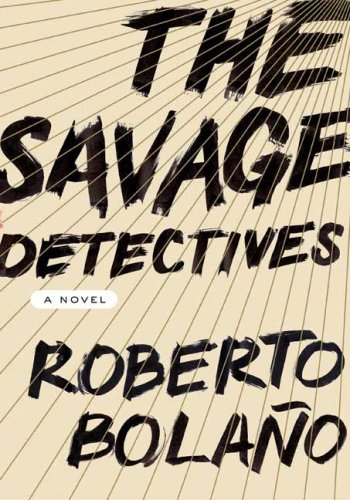
The Savage Detectives
-Roberto Bolano


I would have loved to read this book in Spanish. I bet there are minute, yet significant expressions and details lost in the translation that you can only experience reading it in it's original language. This novel is like the love-child of Marquez and Murakami. Perhaps. one day I will read it in Spanish. I think I will have to, because I enjoyed it so much.

I know readers who didn't enjoy this novel accuse it of being cliquey and haphazard, but perhaps it's because they were constantly anticipating something grand to happen, and that is exactly what Bolano meant when he referred to readers who buy into the "exotic stereotype"-style narrative. Although, I have to admit, Bolano himself falls into this trap with The Savage Detectives, with examples of ghosts, whores, and just a dab of magical realism, but I loved it all!

The story begins in a diary format, and later moves on to an interview format, in which many poets are questioned about the whereabouts of Arturo Belano and Ulises Lima, later Cesaria Tinajero. Each account is like a short story. Bolano rarely writes within quotation marks, but the dialogue flows smoothly like real-time conversations and interviews. I enjoyed all of the stories. Each character had their own fascinating tale to tell, and all so full of intrigue. How talented to be able to write so many short stories with so many different plots and scenarios. That takes an incredible amount of skill and talent. I even read one of the stories aloud to hear the words, and I chose a good one too, the one by Pablo Del Valle from Madrid. By coincidence that one sounded more like poetry than any of the other stories and it sounded so beautiful to hear it spoken out.

I wish Cesarias poem would've been made more clearer. I know it was suppose to be a joke, but I'm not clear on why since Cesaria was a serious and reserved character. I wasn't 100% clear on the ending but I guess Miguel and Lupe got caught by the police and when he was asking, "what's outside the window?" it meant prison cell window because he made a reference to a star. That would make a lot of sense. I'm not sure. But I loved this story. It was a long book but there wasn't a moment where I found myself bored. I could see reading it again down the road.

Favorite Passage:

"He whispered that he loved me, that he would never be able to forget me. then he got up (twenty seconds after he'd spoken, at most) and slapped my face. The sound echoed through the house. We were on the first floor, but I heard the sound of his hand (when his palm left my cheek) rise up the stairs and enter each of the rooms on the second floor, dropping down through the climbing vines and rolling like glass marbles in the yard. When I could react , I made a fist with my right hand and hit him in the face. He hardly moved. But his arm was fast enough to hit me again. Bastard, I said, faggot, coward, and I launched a clumsy attack, punching, scratching, and kicking. He didn't even try to dodge my blows. Fucking masochist".

Labels:

December 18, 2010

Poetry

True Love

It is true love because
I put on eyeliner and a concerto and make pungent observations about the great issues of the day
Even when there's no one here but him,
And because
I do not resent watching the Green Bay Packer
Even though I am philosophically opposed to football,
And because
When he is late for dinner and I know he must be either having an affair or lying dead in the middle of the street,
I always hope he's dead.

It's true love because
If he said quit drinking martinis but I kept drinking them and the next morning I couldn't get out of bed,
He wouldn't tell me he told me,
And because
He is willing to wear unironed undershorts
Out of respect for the fact that I am philosophically opposed to ironing,
And because
If his mother was drowning and I was drowning and he had to choose one of us to save,
He says he'd save me.

It's true love because
When he went to San Francisco on business while I had to stay home with the painters and the exterminator and the baby who was getting the chicken pox,
He understood why I hated him,
And because
When I said that playing the stock market was juvenile and irresponsible and then the stock I wouldn't let him buy went up twenty-six points,
I understood why he hated me,
And because
Despite cigarette cough, tooth decay, acid indigestion, dandruff, and other features of married life that tend to dampen the fires of passion,
We still feel something
We can call
True love.

Labels:

December 17, 2010

Literary Pick (****)

Che
Fidel Castro
It's a shame there aren't yet any reviews written on this book on Goodreads. It would certainly make for a very interesting discussion. The preface by Jesus Montane wasn't impressive, however, the intro written by David Deutschmann helped give the reader a quick chronological biography on the political history and contribution that Che Guevara offered the Cuban Revolution. The analysis that Castro offers on the death of Che is thoroughly fascinating. Castro defends the truth behind the murder of his beloved comrade as if he's posthumously defending his own character and honor. Technically, it's not the most sophisticated memoir. In parts Castro tends to get cyclical, but at the same time is able to make good points and does an impressive job at disproving the lies behind Barrientos' statements concerning Che's diary.
It goes without saying that this memoir plays homage to Che's revolutionary spirit and heroism. It's Castro's personal eulogy to the memory of all the virtues that embodied Che's altruistic qualities. This memoir is not only moving but inspiring as well.

Labels:

December 15, 2010

Literary Pick (*****)

501 Great Artists


Labels:

December 13, 2010

Literary Pick (**)

The Awakening
Kate Chopin


I don't understand how people call this is a feminist novel. There's a difference between feminism and selfishness. Here we have a woman, Edna Pontellier, who is married, with two children I believe, and so one day she suddenly realizes she doesn't want to be married anymore, and while her husband is away on business, and the kids are away at grandmas, she decides she's going to move out of the house and into a smaller home a couple blocks away, all nonchalant, like her husband won't mind one bit. I think she even asks her husband what he thinks about this idea..but she then to proceeds to moves out. However, before she leaves, she throws herself a going-away party at her husbands expense (not too independent if you ask me) and starts a series of affairs, one of which is with another married man in her little circle of society.. If it were the husband who had behaved this way in the novel, what do you think the reader would have thought about him? This is not acceptable behavior just because she's a woman. The only oppressive subject in this novel was the protagonist herself.
Kate Chopin is a lovely writer but this story is weak.
The other short stories included in this collection only got worse as they progressed.

Labels:

December 10, 2010

Literary Pick (**)

The Iliad
Homer


After extensive research I purposely chose to read The Odyssey before the Iliad since I felt that a lengthy story on war and battle wouldn't interest me much, however, I wanted to read the Iliad anyway to complete the set. Not surprised to confirm I didn't enjoy the Iliad as much as I did The Odyssey, but the ending made it fairly worth it.

Labels:

December 5, 2010

Art of the Day

Saint Matthew and the Angel
Caravaggio


Artist Caravaggio
Year 1602
Type Oil on canvas
Dimensions 295 cm × 195 cm (116 in × 77 in)
Location Destroyed

Labels:

December 2, 2010

Literary Pick (**)

The Book of Disquiet
Fernando Pessoa

Labels:

December 1, 2010

Cultural News

Art’s Survivors of Hitler’s War


BERLIN — The past still thrusts itself back into the headlines here, occasionally as an unexploded bomb turning up somewhere. Now it has reappeared as art.

In January workers digging for a new subway station near City Hall unearthed a bronze bust of a woman, rusted, filthy and almost unrecognizable. It tumbled off the shovel of their front-loader.

Researchers learned the bust was a portrait by Edwin Scharff, a nearly forgotten German modernist, from around 1920. It seemed anomalous until August, when more sculpture emerged nearby: “Standing Girl” by Otto Baum, “Dancer” by Marg Moll and the remains of a head by Otto Freundlich. Excavators also rescued another fragment, a different head, belonging to Emy Roeder’s “Pregnant Woman.” October produced yet a further batch.

The 11 sculptures proved to be survivors of Hitler’s campaign against what the Nazis notoriously called “degenerate art.” Several works, records showed, were seized from German museums in the 1930s, paraded in the fateful “Degenerate Art” show, and in a couple of cases also exploited for a 1941 Nazi film, an anti-Semitic comedy lambasting modern art. They were last known to have been stored in the depot of the Reichspropagandaministerium, which organized the “Degenerate” show.

Then the sculptures vanished.

How they ended up underground near City Hall is still a mystery; it seems to involve an Oskar Schindler-like hero. Meanwhile a modest exhibition of the discoveries has been organized and recently opened at the Neues Museum, Berlin’s archaeological collection, the perfect site for these works.

Like the sculptures, the museum lately rose, all these years later, from the ruins of war. In the architect David Chipperfield’s ingenious, Humpty Dumpty-like reconstruction of the building, it has become a popular palimpsest of German history, bearing witness, via the evidence of the damage done to it, to a violence that not even time and several generations have been able to erase.

I can hardly express how moving this little show is, unexpectedly so. Its effect ends up being all out of proportion to the objects discovered, which are, in strictly aesthetic terms, fine but not remarkable. They are works of quasi-Cubism or Expressionism, mostly not much more than a foot high, several newly cleaned but still scarred, inspiring the obvious human analogy.

The poet and Holocaust survivor Paul Celan came up, in a different context, with the metaphor of bottles tossed into the ocean “at the shoreline of the heart,” now finally washed ashore. They’re like the dead, these sculptures, ever coming back to us, radiant ghosts.

In a country that for decades has been profoundly diligent at disclosing its own crimes and framing them in the context of history, it makes sense that the exhibition was installed to share a courtyard with Assyrian friezes from a long-ago regime that made an art of totalitarian rule and with an ancient frieze describing the eruption of Vesuvius, which preserved priceless objects, buried in the ash, that have found sanctuary in institutions like the Neues Museum.

Archeologists have so far determined that the recovered works must have come from 50 Königstrasse, across the street from City Hall. The building belonged to a Jewish woman, Edith Steinitz; several Jewish lawyers are listed as her tenants in 1939, but their names disappear from the record by 1942, when the house became property of the Reich. Among its subsequent occupants, German investigators now believe, the likeliest candidate to have hidden the art was Erhard Oewerdieck, a tax lawyer and escrow agent.

Oewerdieck is not widely known, but he is remembered at Yad Vashem, the Holocaust memorial in Israel. In 1939, he and his wife gave money to a Jewish family to escape to Shanghai. He also hid an employee, Martin Lange, in his apartment. In 1941 he helped the historian Eugen Täubler and his wife flee to America, preserving part of Täubler’s library. And he stood by Wolfgang Abendroth too, a leftist and Nazi opponent, by writing him a job recommendation when that risked his own life.

The current theory is that when fire from Allied air raids in 1944 consumed 50 Königstrasse, the contents of Oewerdieck’s office fell through the floor, and then the building collapsed on top. Tests are being done on ash from the site for remains of incinerated paintings and wood sculptures. How the lost art came into Oewerdieck’s possession in the first place still isn’t clear.

But at least it’s now back on view. Scharff’s bust, of an actress named Anni Mewes, brings to mind Egyptian works in the Neues Museum. Karl Knappe’s “Hagar,” a bronze from 1923, twisted like knotted rope, has been left with its green patina of rust and rubble, making it almost impossible to decipher, save as evidence of its fate. On the other hand, Freundlich’s “Head,” from 1925, a work made of glazed terra cotta, gnarled like an old olive tree, loses little of its power for being broken. The Nazis seized the Freundlich from a museum in Hamburg in 1937, then six years later, in France, seized the artist and sent him to Majdanek, the concentration camp in Poland, where he was murdered on the day he arrived.

Across the street from the Neues Museum contemporary galleries showcase the sort of work the Nazis hoped to eradicate but that instead give Berlin its current identity as a capital of cool. This is a city that resembles the young masses who gravitate here: forever in a state of becoming, wary, unsure and unresolved, generally broke, but optimistic about the future, with the difference that Germany can’t escape its past.

Farther down the block the Deutsches Historisches Museum’s Hitler exhibition, today’s version of a “Degenerate” show, means to warn viewers about succumbing to what present German law declares morally reprehensible. How could any decent German have ever been taken in? the show asks.

That happens to be the question the Nazis’ “Degenerate” show posed about modern art. Many more Germans visited that exhibition than the concurrent one of approved German art. Maybe Oewerdieck was among those who went to the modern show and saw these sculptures in it. In any case, today’s Germany has salvaged them and has organized this display. Redemption sometimes comes late and in small measures.


NYT

Labels:

November 20, 2010

Literary Pick (**)

The Rape of Europa
Lynn H. Nicholas


Having read and loved "Monuments Men", By Robert Edsel in which Lynn H. Nicholas also collaborated in, along with several books on Peggy Guggenheim, I expected "The Rape of Europa" to fill in the gaps that I felt Edsel didn't satisfy. I'm not usually one to complain about details if they're presented with enough background to guide you through the text, especially since it was the primary reason why I wanted to read the book in the first place, however, in the "Rape of Europa", Nicholas seems to assume the reader already has a basic understanding of the wheelings and dealings that occurred with the Art of Europe during the second world war. To be quite honest I didn't even know anything about the looting of European art until about 3 years ago. Since then I've been fascinated by the history and hoped that Nicholas' "Rape of Europa" would shed some light on it's details for me, but unfortunately, she failed to do so. I got more from the pictures printed in the book than the actual text. I've been looking forward to reading this book for a long time, so needless to say I'm a extremely disappointed, to say the least. I watched the PBS special on the Rape of Europa as well, and became even more interested in reading the book which made me finally order it. There were geographical details about the war I learned and am grateful for, but she went into painfully unnecessary details that do not interest the average reader. This book is perfect for a scholar, but unless you have pretty decent background of WWII, Hitler, Art, and political figures involved, I don't see how you can learn from it as a primary source. One of the things that annoyed me about Lynn which was very typical in her writing is that, as I mentioned, she goes into these tediously long details about things and people that don't really matter to the average reader yet totally glossed over important events the reader would want to know more about, like the reaction of everyone involved when Hitler committed suicide, or the destruction of Goering's Carinhall, and his trial.
I can't believe I waited this long to read this book and got almost nothing out of it. I challenge anyone who isn't a scholar and doesn't have any WWII background to sit down and walk me through everything they've learned from this book. This was one of the most frustrating reads for me. I gave it two stars because I did learn a couple of things from it.
Oddly enough though, whenever I try to retell parts that I've read, I get choked up. It's a very powerful story in itself. I always think of the missing art pieces as ancient children trying to eternally find their way home. I hope I'm able to find another book on the subject in which I'm able to learn more from.

Labels:

November 10, 2010

Literary Pick (****)

As I Lay Dying
William Faulkner


I loved this book.

Reading Faulkner's "As I Lay Dying", is at first like reading Steinbeck backwards, but oddly enough, I gradually began appreciating the style as I read along, mostly because of it's on-point phonetic diction. That's always been one of my pet peeves, authors who can't pull off authentic regional dialogue and the phonetic part ends up sounding like a total mess. In that respect I felt Faulkner cracked it wide open.

Reading "As I lay Dying" is much like picking up a book and starting it in the middle. None of it makes much sense at the beginning, but once you get past the first few chapters it gains momentum and you begin to feel connected to the characters and their journey through the Mississippi river, towards Jefferson, to bury their mother and wife, Addy. I don't know why, but I was able to strongly relate to the characters, the poor country folk. It took me back to the days when I myself grew up in the countryside of the Puerto Rican mountains where there was simplicity and ignorance. The parts of the book I couldn't follow didn't bother me much because it possessed a certain poetic rhythm that flowed so beautifully.

I found that you have to read Faulkner fluently in order for it to make sense. If you stop to question everything you're reading, it can get in the way of enjoying the work as a whole. Just read it and go with the flow. I would definitely want to read this again.

Labels:

November 4, 2010

Literary Pick (*)

Always Looking Up: The Adventures of an Incurable Optimist
Michael J. Fox


Loved Fox's first book "Lucky Man", but this book seemed more like something mostly his family and friends could enjoy years down the road. Also too much politics. I was also really disappointed with the "Scores" and "playboy" references he made. It's what I personally feel contributes to helping porn become mainstream in our society. I know it's not a big deal to people, but things like that turn me off, especially when it's someone I admire and respect. I still think he's a fine person with a fine family. I wish them all happiness and health.

Labels:

November 2, 2010

Literary Pick (**)

Fear and Loathing in Las Vegas
Hunter S. Thompson


A quick days-worth of reading. Funny in parts but not really my kind of read. I'd be interested in watching the movie to see how it's interpreted through film.

Labels:

October 29, 2010

Literary Pick (**)

War and Peace
(Leo Tolstoy
)


Although clearly not a Victorian novel, I felt the setting possessed a Victorian-styled tone which was personally enjoyable to me.
The story was easier than I expected it to be, it was by no means a big mean scary hairy indecipherable novel. The worst part about it was having the stamina to finish it once I realized it was a work that failed to move me.
I read somewhere that Tolstoy wrote his books for the average man, so it doesn't surprise me that it was comprehensible.
The reason I gave this book only two stars is because although Tolstoy did a commendable job in making the novel (especially the war part) grasping, it left me bored and fatigued.
I think the characters could have offered a lot more in terms of drama and suspense. Their family issues and dilemmas lacked interest and sympathy. This really surprised me about Tolstoy's Tour de force, since his short stories are supremely gripping.
War and Peace is the story of the War of 1812 and 5 Tsarist families during that time. Some of which were men who joined the war, and others who were either elders or women related to the men who fought the war.
Honestly, none of the characters moved me as much as I thought they should have. I thought Andrey would become a better person after the death of his wife, but he seems to have died as bitterly as he lived. I felt no warmth towards him at the time of his death. None of the characters seemed ripe enough for me to care about. I sensed when Tolstoy wanted me to feel sadness and emotion, for example, when Petya, the youngest Rostov son was shot in the head during combat, but I didn't feel anything over that event either. Or like when the old man died and finally realized gratitude towards his daughter, that didn't move me either.. Then there was Nikolay Rostov, who basically married for money. There was no love or romance between them prior to the wedding. He did turn out to be a good husband, but he married Marie to save what was left of the family name and fortune, thus leaving Sonya (his childhood romance) who patiently waited for him all those years out to dry. Sonya's reaction to his union with Marie wasn't even addressed. In fact, the story left her sort of high and dry with no husband and no opinion or feelings about having waited so long for her love only to lose him to Marie (Andrey's sister).
Towards the end when Pierre left to Petersburg on business to start a revolutionary group to band against the government that were treating people poorly, Nikolay (his BIL) didn't agree with his point of views on the matter, being that he was a military officer who took an oath and....that's basically where the story ends, flat. Tolstoy then proceeds to exceedingly go into these theories and metaphors that basically just dragged his own novel through the mud. The book is no doubt a work of art as far as the cannon is concerned, but as a sit-down enjoyable piece of literature for today's society, it's extremely outdated. Tolstoy probably rolls over in his grave 8 million times a day if he saw what's become of us. In my humble opinion It's not a timeless piece.
I'm glad I read it, but I'm glad it's over.


ps. the epilogue must be read. It's part of the novel. If you didn't finish the epilogue, you didn't finish reading War and Peace.

Labels:

September 21, 2010

Literary Pick (***)

One Hundred and One Classic Love poems


My favorite poems in this collection were "Annabel Lee" by Edgar Allen Poe, which was the inspiration for the opening of the novel "Lolita" which happens to be my favorite book, and "True Love" by Judith Viorst. These two poems alone made the entire collection worth reading.

Labels:

September 18, 2010

Quote of the Day

"I believe I am in Hell, therefore I am"
— Arthur Rimbaud

Labels:

September 15, 2010

Poem

The Open Window
My tower was grimly builded,
With many a bolt and bar,
"And here," I thought, "I will keep my life
From the bitter world afar."


Dark and chill was the stony floor,
Where never a sunbeam lay,
And the mould crept up on the dreary wall,
With its ghost touch, day by day.


One morn, in my sullen musings,
A flutter and cry I heard;
And close at the rusty casement
There clung a frightened bird.


Then back I flung the shutter
That was never before undone,
And I kept till its wings were rested
The little weary one.


But in through the open window,
Which I had forgot to close,
There had burst a gush of sunshine
And a summer scent of rose.


For all the while I had burrowed
There in my dingy tower,
Lo! the birds had sung and the leaves had danced
From hour to sunny hour.


And such balm and warmth and beauty
Came drifting in since then,
That window still stands open
And shall never be shut again.

 -Edward Rowland Sill

Labels:

Literary Pick (**)

Love in Verse: Classic Poems of the Heart-Kathleen Blease


I enjoyed reading this collection of poetry by various poets, however, there was only one I really loved, the rest were ok.
The one I loved was called "The Open Window" by Edward Rowland Sill.

Labels:

September 12, 2010

Literary Pick (**)

Selected Poetry
-William Butler Yeats


Glad I experienced Yeats, but not the style of poetry I enjoy.

Labels:

September 1, 2010

August 31, 2010

Cultural News

New movie to look at the life of Peggy Guggenheim
-The film, by art advisor Eleanor Cayre and Emmy Award-winning producer Nikki Silver, is expected to begin production in 2012
New York-based art advisor Eleanor Cayre has partnered with Nikki Silver, the Emmy Award-winning producer of On Screen Entertainment, to make a movie about the life of collector Peggy Guggenheim, whose birthday was celebrated last week.
Past Cayre projects include the Art Basel Miami Beach exhibition, ‘The Station’, 2008, in which she teamed up with former Whitney curator Shamim Momin and artist Nate Lowman to display the work of 40 artists, including Ryan McGinley, Ed Ruscha and Rita Ackermann.
"I have always been fascinated with Peggy's collection and life story,” said Cayre of the art world maven. “She was an eccentric figure who not only championed, but also had intimate relationships with some of the most creative minds in modern art history.”
The film, which is still untitled, is expected to begin production in 2012.


-The Art Newspaper

Labels:

Quote of the Day

"Wise wretch! with pleasures too refined to please,
With too much spirit to be e'er at ease,
With too much quickness ever to be taught,
With too much thinking to have common thought:
You purchase pain with all that joy can give,
And die of nothing but a rage to live."


— Alexander Pope

Labels:

August 30, 2010

Art of the Day

Albrecht Durer
"Turf"

Labels:

Literary Pick (****)

Birthday Letters
-Ted Hughes


In this collection of poems by Ted Hughes, one only gathers glimpses of what his relationship with Sylvia Plath was like. Each poem is slightly obscure yet enjoyable. In these writings one gets the sense that Plath was unstable and emotionally unpredictable. I'm sure she was, given the nature in which she died, but you can also sense Hugh's egoism, superior-lism and control. There is a sense of deflected responsibility on his part in blaming Plath's instability on the death of her father. Ted martyrizes himself to the reader.
The poems are effortless and smooth. "woody" feels like a right word to use to describe them.

August 29, 2010

Poetry

Drawing

Drawing calmed you. Your poker infernal pen
Was like a branding iron. Objects
Suffered into their new presence, tortured
Into final position. As you drew
I felt released, calm. Time opened
When you drew the market at Benidorm.
I sat near you, scribbling something.
Hours burned away. The stall-keepers
Kept coming to see you had them properly.
We sat on those steps, in our rope-soles,
And were happy. Our tourist novelty
Had worn off, we knew our own ways
Through the town's runs. We were familiar
Foreign objects. When he's sold his bananas
The banana seller gave us a solo
Violin performance on his banana stalk.
Everybody crowded to praise your drawing.
You drew doggedly on, arresting details,
Till you had the whole scene imprisoned.
Here it is. You rescued for ever
Our otherwise lost morning. Your patience,
Your lip-gnawing scowl, got the portrait
Of a market-place that still slept
In the Middle Ages. Just before
It woke and disappeared
Under the screams of a million summer migrants
And the cliff of dazzling hotels. As your hand
Went under Heptonstall to be held
By endless darkness. While my pen travels on
Only two hundred miles from your hand,
Holding this memory of your red, white-spotted bandanna,
Your shorts, your short-sleeves jumper-
One of the thirty I lugged around Europe-
And your long brown legs, propping your pad,
And the contemplative calm
I drank from your concentrated quiet,
In this contemplative calm
Now I drink from your stillness that neither
Of us can disturb or escape.


-Ted Hughes (Birthday Letters)

August 28, 2010

August 25, 2010

Literary Pick (***)

Brideshead Revisited
-Evelyn Waugh


I began reading this book not knowing anything about it and the reason I chose it was because it kept resurfacing as a essential read on many Goodreads members lists. Since my goal is to hopefully read most, if not all highly regarded pieces of literature, I decided to give it a shot.
The prologue concerned me immediately. It reminded me of A Farewell To Arms, not a novel I particularly enjoyed. Also, when I started reading the first chapter it changed themes so drastically that I felt I was going to have issues with visualization, which normally happens to be the main reason I stop enjoying a book. If I have trouble visualizing scenes, themes and characters the story is usually a bust. I mean, who wouldn't need a little assistance visualizing a full grown man driving around with a teddy bear? Then this book went from having a semblance of Farewell to Arms to shades of The Great Gatsby... and I didn't enjoy The Great Gatsby at all either You should read my review for that one!). I was also having a little bit of trouble following the narration, and since I was only on chapter one, I felt discouraged. I didn't plan on abandoning it so I went online to do a bit of research to help familiarize myself with it's theme. I came across a movie clip of Brideshead Revisited (with Jeremy Irons) which I've never seen nor heard of before, and upon viewing a few minutes of it I got the visual I needed.
First of all, anything Jeremy Irons is in works for me, so it was very easy for me to imagine it's style, theme and mannerism.
It is one of those books you have to read carefully and pay close attention to at the beginning because it starts off unclear and complex, but the more I read it, the more I got into it, and I became quickly absorbed by the anxiety of Sebastian's drinking problem and all the family drama that followed thereafter. Other than that, the story is amazingly told. I think Waugh is one of the best writers I've experienced. Not since Nabokov has another writer been able to stimulate me so.
I could tell this book would be much better the second time around. I enjoyed how it challenged me at the beginning and I think Waugh's writing is beautifully succinct. There was nothing excessive about his style at all. It was perfect for it's subject matter. The story matched the tone of writing exquisitely.
I loved the way Waugh described the ship scene with the passengers becoming sea-sick. I don't think anyone else could have pulled it off in such a way that would've made me enjoy it so much.
This is the reason why I don't like giving up on books, because you never know which is going to capture you. I look forward to re-reading this one again down the road.
I don't know why this book seems to teeter between 3-4 stars to me..I feel like there's a lot of room to enjoy it even further with more reads.

Labels:

August 18, 2010

Literary Pick (****)

Married To Tolstoy -Cynthia Asquith


Quote of the Day

“I don’t care if people hate my guts; I assume most of them do. The important question is whether they are in a position to do anything about it.”
-William S. Burroughs

Labels:

August 16, 2010

Literary Pick (**)

The Divine Comedy 
-Dante Alighieri


I once read a biography on Modilgiani (one of my favorite artists) where it mentioned that his favorite piece of literature was The Divine Comedy. Apparently he use to walk around quoting Dante all day long, to the point of being utterly annoying to his friends and colleagues. Other artists and writers would look at him and be like, "God, don't you have a life?!". For some reason he seemed to have had a deep connection to this work. Also, It's a funny coincidence that one of the women in Modilgiani's life was also named Beatrice, just like the seraph who guides Dante through the later part of his journey.
Since I was a child I've always had a morbid curiosity about the tortures and torments of hell and evil. I remember the first time I heard the story of Jim Jones, I cried. I was terribly upset and terrified. It was horrifying to learn that forms of evil could exist so close to us, mortals, here on earth. Aside from that traumatizing childhood experience, my father use to have a collection of vintage saint illustrations, and I came across this collection when I was about 6 years old, and in these illustrations were depictions of angelic images who were tortured and tormented by unseen evil forces. There always seemed to be an evil form trying to pull them down into hell, as the saints gazed upwardly with their eyes pleading for mercy from the God above. These are the kinds of images that sparked a curiosity that made me want to tackle a massive masterpiece such as this one.
I prepared a lot for The Divine Comedy before actually reading it (about a year). I found a mint condition copy in a used bookstore and snatched it up immediately. Personally, the translation was a bit tough for me, fortunately I had familiarized myself enough with it's theme before attempting to read it and felt I had a pretty good understanding of what is what about, so that helped a lot.
Finally, one of the things that attracted me to The Divine Comedy was the fact that Dante put the people he disliked through different stages of hell, which I think was brilliant in and of itself. There are a couple of people I too strongly dislike (hate) who I wish to see burn in several layers of hell as well. I've come to terms with the fact that I am not benevolent enough to forgive the wrongs and trespasses of others. I can't say I've reached that level of enlightenment in my life, and to be quite frank, I don't know if I ever will. However, I know that Dante himself ultimately reaches this point of spiritual enlightenment during his journey, and I was hoping that by the end of the book some of it could have rubbed off on me, but I'm afraid that didn't quite happen. My main issue with The Divine Comedy is that I had problems with visualization and imagery. In my minds eye I wasn't able to see or feel his experiences through these phases of afterlife. Perhaps if I had read a better translation I could have appreciated it more. I do however appreciate the work as a concept. The funny thing is that every now and then I'll come across brilliant passages or quotes from this book and wonder why I don't remember coming across  them while I was actually reading the book. I definitely have to re-visit this one again.

August 2, 2010

Literary Pick (***)

Portrait of the Artist as a Young Man
-James Joyce


I honestly didn't know what to expect from Joyce. I've added and removed Ulysses from my to-reads list too many times to count. So here I compromised and decided to start off with "A Portrait of an Artist as a Young Man" to get a general sense of the flavor of Joyce's work before I would dare attempt Ulysses. I began reading this book slowly and cautiously. I felt like if I wasn't careful I could reach a point in the book where I could get irrecoverably lost, and that's exactly what eventually ended up happening.
I don't enjoy reading books just for the sake of reading them, so it was important for me to get involved in all topics that involved this novel. However, when I reached chapter 5, I was lost in the discussion of beauty and aesthetic theory. I decided to cheat a little and consult sparknotes, but it turned out to be a topic that was over my head. The shame is that up until that point I was really enjoying the book. My favorite part was when the priest preached about eternal damnation. I think that's one of the best sections of literature I've ever read in my life. In fact, a while back I had printed a piece on my blog that Umberto Eco had copied in his book "On Ugliness" by St. Alphonsus Liguori, called "Preparation for Death", and I remember thinking how similar it was to the preachers' sermon, and sure enough, later in the chapter it mentioned that Stephen Dadelus often referred to another work which was also written by Ligouri. So that was pretty cool since I always wondered if I would ever read anything similar to that piece again.
Another funny coincidence is that at the same time I was reading "Portrait", I was also reading The Divine Comedy, so I was getting a pretty unhealthy dose of the perils of hell. I have to admit, that piece about hell in Portrait has left such an impression on me. Now I understand what people mean when they talk about the catholic guilt-trip.
Anyway...at least I got some enjoyment out of the book even if the end wasn't exactly to my liking. I think Joyce is an amazing writer. I just wish he was more approachable. I still plan on reading Ulysses someday... although I'm in no rush to read it anytime soon.

July 27, 2010

Literary Pick (**)

Love in the Time of Cholera
-Gabriel García Márquez


The prose was vibrant, and I adore Marquez's spirit, but the details were grueling. It's sad that I didn't love it as much as I thought I would. I adored 100 Years of Solitude, and although they are both similar in style, with minimal dialogue, in which each chapter is at least 50 pages long, made it that much harder for me to get through. It seemed to me there were more descriptions about details than about the actual events of the love story itself. This was a hard one for me to get through. The only motivation to continue till the end was my faith in Marquez's ability to make it worth my while, and although, like I mentioned before, the prose is beautiful, Florentino's love alone wasn't strong enough to support the almost 400 page novel.
To me their love story was not convincing, and it's not that I'm prejudice about love stories involving older people, because one of my most cherished love stories of all time is "Bridges of Madison County". Cholera just didn't do it for me.


This is the second book I've read which was translated by Grossman, and again she did a wonderful job!

Labels: