Literary Pick (*****)
Debbie: My Life
-Debbie Reynolds

posted by Rachel at
7:37 PM
0 Comments


Creative Ways of Saying No

The film and TV mainstay—who played memorable roles in classics like The Mary Tyler Moore Show and Young Frankenstein—had a career that spanned seven decades.
Creative Until You Die, a series of Hollywood Reporter profiles of nonagenarians who were still creatively active. When asked if she ever thought of retiring, Leachman uttered a direct and defiant response: “Fuck you.”
Cloris Leachman, whose career spanned seven decades, has passed away at the age of 94, her longtime manager told Variety Wednesday. Her most celebrated role was Phyllis Lindstrom on The Mary Tyler Moore Show, for which she won two of her unprecedented eight Primetime Emmys. The imperious Phyllis was best summed up in one of Leachman’s Emmy-winning episodes, “The Lars Affair,” in which she considered the male bee: “Once the male bee . . . has serviced the queen, the male dies. All in all, not a bad system.”
As with the characters Lou Grant and Rhoda Morgenstern, Phyllis earned her own eponymous spin-off series that lasted two seasons.
But beyond Phyllis, Leachman is indelibly associated with numerous iconic series, classic episodes, and era-defining feature films. Most notably, she was little Timmy’s foster mother for a season of Lassie, she was the mother of a 6-year-old monster on “It’s a Good Life”—widely considered to be one of the 10 best Twilight Zone episodes—and she was Frau Blücher (insert horse whinny here) in Mel Brooks’s Young Frankenstein. In 1972, she earned an Academy Award for best supporting actress for her shattering portrayal of lonely high-school coach’s wife Ruth Popper in Peter Bogdanovich’s The Last Picture Show. She reprised her character in Texasville, which was released in 1990.
Though she was in her twilight years, the sun never set on Leachman’s career. She began in the golden age of live television in the late 1940s, and in 2017 at the age of 91, she had a pivotal role in the buzzworthy supernatural Starz series American Gods, playing Zorya Vechernyaya, a sassy Old God out of Slavic mythology.
She never considered quitting acting. As Leachman shared in her 2009 memoir, Cloris, which she co-wrote with George Englund—to whom she was married from 1953 to 1979; they had five children—her mother offered her some simple advice when she landed her first play with a community theater group: “If you like it, just keep doing it.”
Leachman was born on April 30, 1926, in Des Moines, Iowa. In a 1972 Playgirl magazine interview, she declared, “I knew from the very beginning that I didn’t belong in Iowa.” She studied piano, loved movies, and at the age of 15, earned a summer radio scholarship to Northwestern University in Illinois. She would attend the university to study drama, becoming close friends with fellow actors Charlotte Rae and Paul Lynde in the process.
Leachman was crowned Miss Chicago in 1946, her senior year, and went on to compete in the annual Miss America pageant. She was ranked in the top 16. Then she moved to New York. Early successes included understudying Mary Martin as Nellie Forbush during the original run of Rodgers & Hammerstein’s South Pacific. In 1949, she chose to leave the Broadway-bound production of William Inge’s Come Back, Little Sheba, in which she costarred as a boarder who destabilizes a middle-aged couple’s household, to costar opposite Katharine Hepburn in William Shakespeare’s As You Like It. “I don’t think I could be successful as a sex symbol,” she wrote in her memoir. “I was first and foremost an actress.”
Leachman studied with the Actors Studio alongside Martin Balsam, Burgess Meredith, Julie Harris, and Anne Jackson. “I learned a lot,” she noted, “but I also made enemies . . . because I refused to take the ‘Method’ seriously.” She also fended off an ardent Marlon Brando. “I didn’t want to be one of the multitude,” she recalled. Instead, she introduced Brando to Englund and the two became lifelong friends.
Prolific would be one word to describe Leachman. IMDb lists 275 television and movie acting credits for her, beginning with the 1947 feature film Carnegie Hall. Among her most memorable are Butch Cassidy and the Sundance Kid, in which she appears as Agnes, a prostitute briefly engaged with Paul Newman’s Butch, the Emmy-nominated made-for-TV movie The Migrants, in which she played the matriarch opposite Sissy Spacek and Ron Howard, and Jonathan Demme’s drive-in cult classic Crazy Mama.
Leachman played a lot of mamas, but never generically. “I’ve fought all my life against clichés,” she proclaimed in her Oscar acceptance speech. She was at various points mother to, among others, Shirley Temple (Shirley Temple Storybook); Meryl Streep (Music of the Heart); Diane Keaton, Meg Ryan and Lisa Kudrow (Hanging Up); Téa Leoni (Spanglish); and Ellen DeGeneres (The Ellen Show). She was housemother to the girls of Eastland School for two seasons on The Facts of Life, succeeding Charlotte Rae when she left that series.
She has also played grandmothers and great-great-grandmothers who were less likely to kiss boo-boos and more prone to stab their grandsons with a knitting needle (as in her Emmy-winning turn on Malcom in the Middle) or wander around topless (on Raising Hope).
Fearless would be another Leachman signifier. “If it’s funny,” she told Newsday in 2011, “I’ll do anything.”
She put this to the ultimate test in 2008 when, at 82, she became the oldest contestant ever on the reality series, Dancing with the Stars. She was eliminated in week six, but was all attitude when she joked to the judges, “I’m not leaving.”
Leachman described hers as a life with “some real bang and smash in it.” She had affairs with Gene Hackman, Andy Williams, and Bobby Darin, and never lost her ribald muse. In 2017, PETA honored her with a Lifetime Achievement Award. One of those who paid tribute was her American Gods director Bryan Fuller, who recalled the on-set celebration when she turned 90. “She blew out her candles and said, ‘Fuck me—I’m 90,’” he said. “And then she said, ‘Seriously—somebody get in here and fuck me! I want you to line up the crew outside of my trailer and get them in here!’”
posted by Rachel at
7:28 PM
0 Comments
Joe Biden was sworn in as the United States' 46th president on Wednesday, and he pledged to be a president for all Americans — even those who did not support his campaign.
"Today, on this January day, my whole soul is in this: bringing America together, uniting our people, uniting our nation," he said in his inaugural address.
Biden spoke shortly after Kamala Harris made history by becoming the country's first female, first Black and first South Asian vice president. He said this Inauguration Day was a triumph for democracy.
"The will of the people has been heard, and the will of the people has been heeded," Biden said. "We've learned again that democracy is precious. Democracy is fragile. And at this hour, my friends, democracy has prevailed."
This was a scaled-down inauguration unlike any we've ever seen.
The celebrations were cut back because of the coronavirus pandemic, and Biden's inaugural committee — trying to keep crowds to a minimum — urged Americans not to travel to Washington, DC. The National Mall was also closed to the general public because of security concerns related to the January 6 storming of the US Capitol.


posted by Rachel at
7:14 PM
0 Comments
The Stranger in the Woods: The Extraordinary Story of the Last True Hermit
-Michael Finkel

posted by Rachel at
4:56 PM
0 Comments
Arlington Library
203 Arlington Ave. at, Warwick St, Brooklyn, NY 11207


posted by Rachel at
2:16 PM
0 Comments

posted by Rachel at
1:19 PM
0 Comments

-by Ernest Lawrence Thayer
The Outlook wasn't brilliant for the Mudville nine that day:
The score stood four to two, with but one inning more to play.
And then when Cooney died at first, and Barrows did the same,
A sickly silence fell upon the patrons of the game.
A straggling few got up to go in deep despair. The rest
Clung to that hope which springs eternal in the human breast;
They thought, if only Casey could get but a whack at that -
We'd put up even money, now, with Casey at the bat.
But Flynn preceded Casey, as did also Jimmy Blake,
And the former was a lulu and the latter was a cake;
So upon that stricken multitude grim melancholy sat,
For there seemed but little chance of Casey's getting to the bat.
But Flynn let drive a single, to the wonderment of all,
And Blake, the much despis-ed, tore the cover off the ball;
And when the dust had lifted, and the men saw what had occurred,
There was Johnnie safe at second and Flynn a-hugging third.
Then from 5,000 throats and more there rose a lusty yell;
It rumbled through the valley, it rattled in the dell;
It knocked upon the mountain and recoiled upon the flat,
For Casey, mighty Casey, was advancing to the bat.
There was ease in Casey's manner as he stepped into his place;
There was pride in Casey's bearing and a smile on Casey's face.
And when, responding to the cheers, he lightly doffed his hat,
No stranger in the crowd could doubt 'twas Casey at the bat.
Ten thousand eyes were on him as he rubbed his hands with dirt;
Five thousand tongues applauded when he wiped them on his shirt.
Then while the writhing pitcher ground the ball into his hip,
Defiance gleamed in Casey's eye, a sneer curled Casey's lip.
And now the leather-covered sphere came hurtling through the air,
And Casey stood a-watching it in haughty grandeur there.
Close by the sturdy batsman the ball unheeded sped-
"That ain't my style," said Casey. "Strike one," the umpire said.
From the benches, black with people, there went up a muffled roar,
Like the beating of the storm-waves on a stern and distant shore.
"Kill him! Kill the umpire!" shouted someone on the stand;
And its likely they'd a-killed him had not Casey raised his hand.
With a smile of Christian charity great Casey's visage shone;
He stilled the rising tumult; he bade the game go on;
He signaled to the pitcher, and once more the spheroid flew;
But Casey still ignored it, and the umpire said, "Strike two."
"Fraud!" cried the maddened thousands, and echo answered fraud;
But one scornful look from Casey and the audience was awed.
They saw his face grow stern and cold, they saw his muscles strain,
And they knew that Casey wouldn't let that ball go by again.
The sneer is gone from Casey's lip, his teeth are clenched in hate;
He pounds with cruel violence his bat upon the plate.
And now the pitcher holds the ball, and now he lets it go,
And now the air is shattered by the force of Casey's blow.
Oh, somewhere in this favored land the sun is shining bright;
The band is playing somewhere, and somewhere hearts are light,
And somewhere men are laughing, and somewhere children shout;
But there is no joy in Mudville - mighty Casey has struck out.
posted by Rachel at
12:58 PM
0 Comments
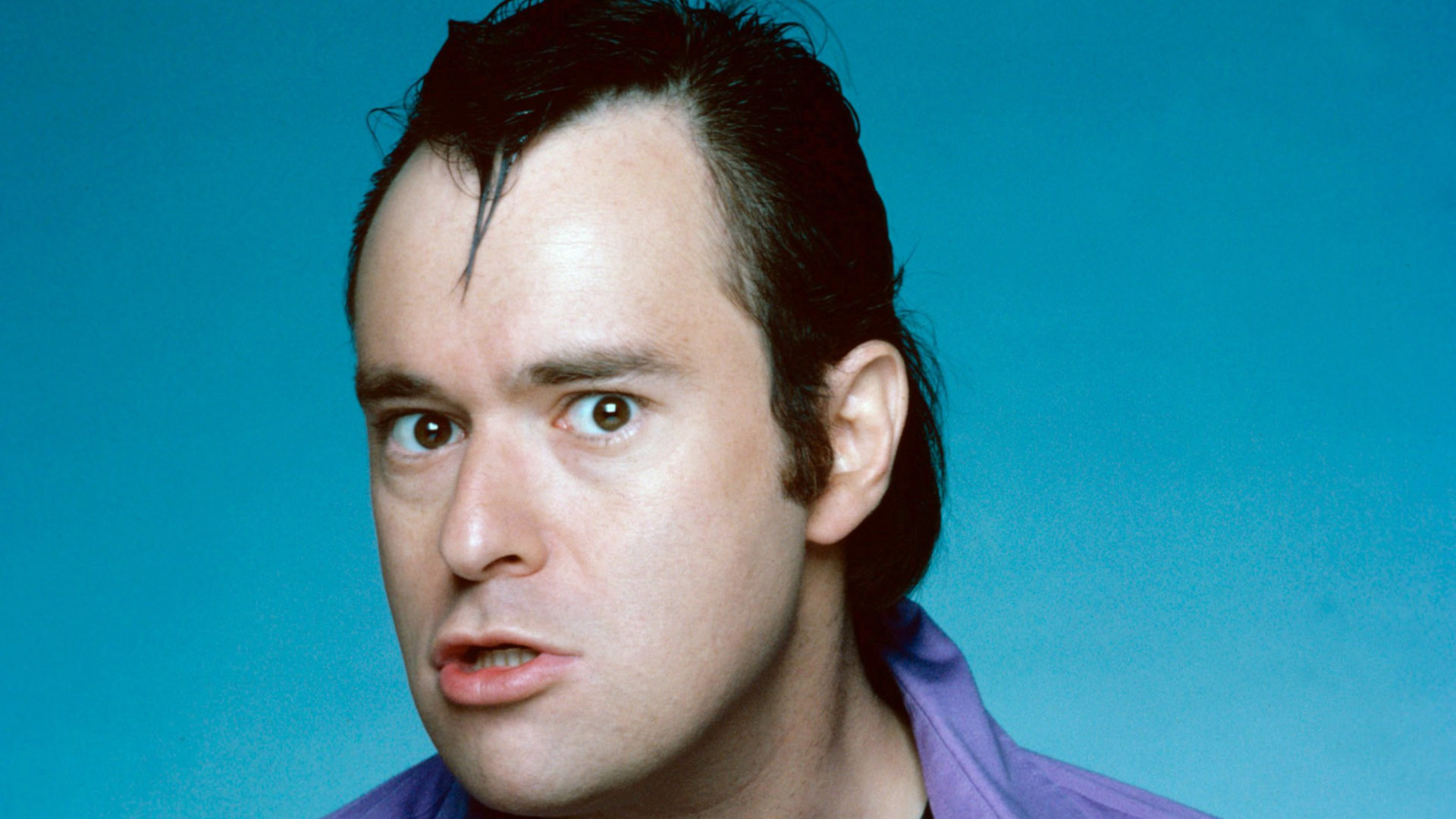
Actor David Lander, best known as Squiggy on the ABC sitcom “Laverne & Shirley,” died Friday evening at Cedars-Sinai Medical Center in Los Angeles, his family confirmed to Variety. He was 73.
Lander died of complications related to multiple sclerosis, which he battled for 37 years. Since he went public with his diagnosis in 1999, Lander has worked closely with the National Multiple Sclerosis Society, speaking out about his experience at related conferences.
The actor played the role of Andrew “Squiggy” Squiggman on “Laverne & Shirley,” opposite actor Michael McKean’s Lenny Kosnowski. The characters were developed by the longtime friends and collaborators while they were students at Carnegie Mellon University.
On Saturday morning, McKean remembered the late actor by tweeting an old photo of him and Lander.

Born on June 22, 1947 in Brooklyn, N.Y., Lander had his eyes on acting from a young age, and attended the High School for the Performing Arts in New York City. After teaming up with McKean in college, Lander moved with him to Los Angeles, where the duo joined the comedy ensemble. The Credibility Gap.
The actors continued building their early career together, co-starring in Steven Spielberg’s comedy film “1941” and Kurt Russell’s “Used Cars.” Lander and McKean also voiced an animated TV series, “Oswald,” in which they played the animated penguins Henry and Louie, respectively. In 1979, they released an album together as Lenny and the Squigtones featuring Christopher Guest in guitar, who was credited as Nigel Tufnel – an alias that Guest later reused in the fictional band Spinal Tap.
Lander also made appearances in several TV shows, including “The Bob Newhart Show,” “Barney Miller,” “Happy Days,” “Viva Valdez,” “Twin Peaks” and “The Drew Carey Show,” and played smaller yet memorable parts in movies like “A League of Their Own” and “Say It Isn’t So.”
As a voice actor, Lander was the voice behind Smart Ass in the 1988 Disney movie “Who Framed Roger Rabbit,” and was credited as Stephen Lander in “Boo” and “Zino and the Snurks.” He also voiced Ch’p in the DC Comics animated movie, “Green Lantern: First Flight” in 2009.
Lander most recently voiced Rumpelstiltskin in Disney’s children’s show, “Goldie & Bear,” and Donnie the Shark in an episode of “SpongeBob Squarepants” in 2016.
Lander is survived by his wife, Kathy Fields Lander, and daughter, Natalie Lander.
posted by Rachel at
9:28 PM
0 Comments

The moment has been immortalized in a Norman Rockwell painting with the apt title The Problem We All Live With: a little African American girl walks to school, surrounded by a team of U.S. Marshals, with racist graffiti and thrown garbage ornamenting the wall behind her. Ruby Bridges was only 6 years old in 1960 when the first grader arrived for her first day of school at William Frantz Elementary School in New Orleans — and was met by a vicious mob. The courageous girl would spend a year alone in the classroom, since other children had been removed by their parents due to her presence. But today, the 65-year-old Bridges says that those difficult days were worth it: "I now know that experience comes to us for a purpose, and if we follow the guidance of the spirit within us, we will probably find that the purpose is a good one."
Ruby, who was born on September 8, 1954, was one of only six black children who passed the tests that determined she could attend the previously all-white school; two families opted to keep their children at their old school, while three were transferred to McDonogh No. 19, leaving Ruby as the only student desegregating William Frantz. Ruby's father was hesitant to send his daughter, but her mother believed that it was important for the family to take that step — not just for Ruby herself, but for the children who would come after her. An order by Judge J. Skelly Wright dictated that New Orleans schools be integrated by November 14, 1960, so that would be Ruby's first day at school.
"That first morning I remember Mom saying as I got dressed in my new outfit, 'Now, I want you to behave yourself today, Ruby, and don't be afraid,'" Bridges recalled. "'There might be a lot of people outside this new school, but I'll be with you.' That conversation was the full extent of preparing me for what was to come." When Ruby arrived and saw the crowd, she had no idea that they were there to protest her presence. "Living in New Orleans, I actually thought it was Mardi Gras," she reflected. "There was a large crowd of people outside of the school. They were throwing things and shouting, and that sort of goes on in New Orleans at Mardi Gras. I really didn't realize until I got into the school that something else was going on."

One of the federal marshals, Charles Burks, who served on her escort team, later recalled Bridges' courage in the face of such hatred: "For a little girl six years old going into a strange school with four strange deputy marshals, a place she had never been before, she showed a lot of courage. She never cried. She didn't whimper. She just marched along like a little soldier. We were all very proud of her."
When Ruby entered the school, now devoid of other children, only one teacher, Barbara Henry, who had recently moved from Boston, Massachusetts, agreed to teach her. Although the boycott against the school was broken the next day when a white Methodist minister Lloyd Anderson Foreman walked his 5-year-old daughter through the mob into the school, and other parents followed within a few days, Ruby still spent the first year at the school alone in one classroom with Henry "as if she were teaching a whole class." Despite daily harassment, which required the federal marshals to continue escorting her to school for months, Ruby persisted in attending school.
As the year went on, Ruby's family suffered for their decision: her father lost his job as a gas station attendant and her sharecropping grandparents were turned off their land. Even the grocery store where the family shopped turned them away. But, when Ruby returned for second grade, more African American students were there to join her. The pioneering school integration effort was a success due to Ruby's inspiring courage, perseverance, and resilience.
As an adult, Ruby Bridges still lives in New Orleans. Since 1999, she has been the chair of the Ruby Bridges Foundation, whose mission is to promote " tolerance, respect, and appreciation of all differences." She believes that the key to ending prejudice lies in fostering these values among children. "Racism is a grown-up disease and we must stop using our children to spread it," she asserts. "Each and every one of us is born with a clean heart.... We owe it to our children to help them keep their clean start."
posted by Rachel at
2:33 PM
0 Comments
Television’s consummate quizmaster dies “peacefully” after lengthy battle with pancreatic cancer

Alex Trebek, television’s consummate quizmaster and the host of Jeopardy! for 35 years, died Sunday morning at the age of 80 following a lengthy battle with cancer.
“Jeopardy! is saddened to share that Alex Trebek passed away peacefully at home early this morning, surrounded by family and friends,” the show tweeted. “Thank you, Alex.”
Trebek revealed his pancreatic cancer diagnosis in March 2019. Despite the prognosis, Trebek vowed to continue working even as he fought the disease. “Truth told, I have to,” Trebek added, with a wink of humor. “Because under the terms of my contract, I have to host Jeopardy! for three more years! So help me. Keep the faith and we’ll win. We’ll get it done.”
As the host of Jeopardy!, Trebek came to embody a wholly unique kind of intellectualism. He stood behind a lectern, sported a professorial mustache for years and projected a mix of wisdom and trustworthiness — a not-quite know-it-all who had all the answers in front of him, but could still get away with a sly quip if a contestant flubbed an easy one.
During his Jeopardy! tenure, Trebek won six Daytime Emmys for Outstanding Game Show Host, while the organization also honored him with a lifetime achievement award in 2011. In 2012, he accepted a Peabody on Jeopardy!’s behalf, and in 2014, he broke the Guinness World Record for “the most game show episodes hosted by the same presenter (same program)” with a whopping 6,829 episodes. He has stars on the Hollywood Walk of Fame and Canada’s Walk of Fame, and in 2017 was named an Officer of the Order of Canada.
“Alex wasn’t just the best ever at what he did,” Ken Jennings, who won 75 games in a row and became a de facto ambassador for the show, wrote on Twitter. “He was also a lovely and deeply decent man, and I’m grateful for every minute I got to spend with him.”
Trebek’s cultural reach was vast. He appeared as himself in an array of television shows and movies, from Cheers and The X-Files to White Men Can’t Jump and RuPaul’s Drag Race. He even voiced a quiz-show host on episodes of celebrated kid’s shows Rugrats and Arthur. And of course, Will Ferrell played a famously beleaguered version of Trebek on Saturday Night Live’s “Celebrity Jeopardy!” skits, enduring years of verbal abuse from dimwitted stars like Sean Connery and Burt Reynolds.
Alex Trebek was born in Sudbury, Ontario, on July 22nd, 1940, and began working in broadcast television while still a college student in the early Sixties. For years, he was a jack-of-all-trades at the Canadian Broadcasting Corp., covering news and sports, and even hosting the music program Music Hop. In 1966, he hosted his first game show, Reach for the Top, and landed his second, Strategy, in 1969.
Game shows remained Trebek’s forte as he found more work in Hollywood in the early Seventies. The first program he hosted on American television was The Wizard of Odds, with subsequent gigs on High Rollers and The $128,000 Question. Later, Trebek even served as a game-show contestant: In 1976, he appeared on Celebrity Bowling, sporting a shirt that read “Alex Trebek, What the Heck!” and in 1980, he beat a crowded field of game-show hosts in a special tournament edition of Card Sharks.
Even after Jeopardy! took off, Trebek worked at a remarkable clip. For a brief period in 1991, he became the first person to host three American game shows at the same time (Jeopardy!, Classic Concentration, and To Tell the Truth). He also hosted the Pillsbury Bake-Off for several years, served as a spokesman for Colonial Penn Life Insurance and, one April Fools’ Day, even hosted Wheel of Fortune with co-hosts Pat Sajak and Vanna White as contestants. Arguably, Trebek’s least successful venture was the time he moderated a 2018 Pennsylvania governor’s debate, during which he monopolized the conversation, argued with one of the candidates, and even made an unprompted joke about sexual abuse within the Catholic Church (he later apologized).
A constant television presence for the better part of the past 40 years, Trebek remained an endearing fixture of American popular culture. Clips of him reading rap lyrics from clues or roasting unsuspecting contestants were viral manna, and the announcement of his cancer diagnosis was met with an outpouring of support from fans. But perhaps the most remarkable aspect of Trebek’s longevity is that, even after hosting countless episodes of Jeopardy! and its myriad offshoots, he never seemed to tire of the job.
“I have to work, but it’s work I enjoy and that still has challenges,” he told New York magazine in 2018. “I have at least two new players on each program and all new material that I’ve got to read properly. As I’ve gotten older I realize, as professional athletes do, that the difficult thing is not losing your physical skills. It’s losing your ability to concentrate. . . . We have a clue every 10, 12 seconds. I can’t dwell on the one I screwed up; I have to dwell on the next one.”
After his diagnosis, Trebek vowed to keep hosting Jeopardy! even as he began treatment (The show aired its 8,000th episode in October.) As he underwent chemotherapy, Trebek was always honest about his status and his state of mind. After proclaiming in May that his tumors had shrunk considerably and he was “near remission,” he revealed in September that his numbers had skyrocketed back to levels higher than his original diagnosis.
In an October interview with Canadian news network CTV, Trebek was blunt about where he stood, but also lucid and clear-eyed about the end of his life. “I’ve lived a good life, a full life, and I’m nearing the end of that life,” he said. “I know that. I’m not gonna delude myself. So if it happens, it happens. And why should I be afraid of it?”
posted by Rachel at
2:17 PM
0 Comments
Endless Love is a 1981 American romantic drama film directed by Franco Zeffirelli, starring Brooke Shields and Martin Hewitt. Tom Cruise makes his film debut, in a minor role.
Based on the 1979 Scott Spencer novel of the same name, the screenplay was written by Judith Rascoe. The original music score was composed by Jonathan Tunick.
Critics compared the film unfavorably to the novel, which showcased the dangers of obsessive love. Despite the poor reviews, its eponymous theme song, performed by Diana Ross and Lionel Richie, became a #1 hit on the Billboard Hot 100. The song spent nine weeks at #1 and received Academy Award and Golden Globe Award nominations for "Best Original Song", along with five Grammy Award nominations.
posted by Rachel at
7:33 PM
0 Comments


Save the Robots was an underground after hours club in New York City's East Village neighborhood. "Robots," as the venue was popularly known, operated illegally from a nondescript storefront and basement at 25 Avenue B, between East 2nd and 3rd Streets, from 1983 until mid-1984, when the club was shut down for fire safety violations. After undergoing safety-related renovations and obtaining a social club license, the venue reopened in early January 1986.[citation needed]
The club was frequented by drag performers, musicians, Club Kids, employees of other bars and clubs, skinheads and other denizens of downtown New York nightlife, including Dean Johnson and Lady Bunny.[1] Save the Robots was known for its late hours of operation and sold only vodka, soda and fruit juice. Patrons typically arrived after 4 a.m. and partied until the 8 a.m. closing time, often with the aid of recreational drugs. At one point, talk show host Craig Ferguson worked there as a bouncer.[2][3][4]
1993 was the last year of 'Robots'. The space was subsequently leased to other operators, who transformed it into a fully licensed dance club, to capitalize on the "Save the Robots" name, without consent from the original owners and with few vestiges of the original clientele or atmosphere.[5]
At a later time, the venue was bought by another owner and renamed Guernica. It was closed again in 2013 after the club's bouncer, Dana Blake, was stabbed in an incident with some smokers outside the club.[6][7]
Reopened in April 2019 as Downtime.\
posted by Rachel at
5:49 PM
0 Comments


Eight years later, Richard is a successful playwright living in Chicago. While struggling with writer's block, he decides to take a break from writing and travels to the Grand Hotel on Mackinac Island. While exploring the hotel's hall of history, he becomes enthralled with a vintage photograph of Elise McKenna, a beautiful and famous early-20th century stage actress. Upon further research, he discovers she is the same woman who gave him the pocket watch. Richard visits Laura Roberts, Elise’s former housekeeper and companion. While there, he discovers a music box that plays the 18th variation of Rhapsody on a Theme of Paganini, his favorite musical piece. Among Elise's personal effects is a book on time travel written by his old college professor, Dr. Gerard Finney. Richard becomes obsessed with traveling back to 1912 and meeting Elise, with whom he has fallen in love.
Richard seeks out Professor Finney, who believes he briefly time traveled through the power of self-suggestion. Finney warns Richard that such a process would leave one very weak physically, perhaps dangerously so. Richard is determined to try. Dressed in an early 20th-century suit, he removes all modern objects from his hotel room and attempts to will himself to 1912 using tape-recorded suggestions. The attempt fails because he lacks real conviction, but after finding a hotel guest book from 1912 containing his signature, Richard realizes he will eventually succeed.
Richard hypnotizes himself again, this time allowing his absolute faith in his eventual success to serve as the engine that transports him back to 1912. Richard finds Elise walking by the lake. Upon meeting him she asks, "Is it you?" Her manager, William Fawcett Robinson, abruptly intervenes and sends Richard away. Although Elise is initially uninterested, Richard pursues her until she agrees to accompany him on a stroll the next morning. During a boat ride, Richard hums the theme from the 18th variation of opus 43, a tune Elise has never heard before as it has yet to be written. Richard asks what Elise meant by, "Is it you?" She reveals that Robinson has predicted she will meet a man who will change her life, and that she should be afraid. Richard shows Elise the pocket watch she will give him in 1972.
Richard attends Elise's play where she gives an impromptu monologue dedicated to him. During the intermission, Elise poses formally for a photograph but seeing Richard, breaks into a radiant smile. It is the same image Richard saw 68 years later. Afterward, Richard receives an urgent message from Robinson requesting a meeting. Robinson wants Richard to leave Elise, saying it is for her own good. When Richard says he loves her, Robinson has him bound and locked inside the stables. Robinson then tells Elise that Richard has left, though she does not believe him and professes her love for Richard.
Richard wakes the next morning and frees himself. The acting troupe has already left for Denver, though Elise has returned to the hotel to find him. They go to her room and make love. They agree to marry and Elise promises to buy Richard a new suit, as his is about a decade out of style. Inside one of the suit pockets, Richard discovers a penny with a 1979 mint date. This modern item breaks the hypnotic suggestion, pulling Richard into the present as Elise screams in terror.
Richard awakens back in 1980. His attempts to return to 1912 are unsuccessful. After wandering the hotel grounds despondently, physically weakened by the time travel and brokenhearted, he dies in despair. His spirit is drawn into the afterlife, where he is reunited with Elise.
posted by Rachel at
4:44 PM
0 Comments

Sean Connery, the first actor to portray James Bond and later one of the biggest and wealthiest stars in the history of film, has died at age 90.
Eon Productions, the film studio behind the James Bond films, confirmed the death in a statement on its website.
"We are devastated by the news of the passing of Sean Connery," read the statement from producers Michael G. Wilson and Barbara Broccoli. "He was and shall always be remembered as the original James Bond whose indelible entrance into cinema history began when he announced those unforgettable words — 'The name's Bond... James Bond' — he revolutionised the world with his gritty and witty portrayal of the sexy and charismatic secret agent. He is undoubtedly largely responsible for the success of the film series and we shall be forever grateful to him."
On screen, Connery brimmed with innate sexuality, topped off by a cool, insolent sense of menace. A Scotsman who could rock a kilt, he possessed cliffhanger eyebrows over piercing eyes.
As a struggling actor in 1962, he managed to change pop culture forever in the first scene of his first lead role, when he introduced himself in Dr. No: "Bond. James Bond."
Connery's trajectory, as Bond and otherwise, took off like a bullet from a Walther PPK. For many, his performance in the Bond role has never been bettered.
It was far from his origins. Born in 1930 to a cleaning woman and truck driver in depressed Edinburgh, he dropped out of school at age 13. He joined the Royal Navy. After he got out, he competed in the Mr. Universe bodybuilding competition.
In the 1980s, he told ABC's Barbara Walters that his life changed with a trip to London.
"What happened was: When I went to London for the Mr. Universe, one of the guys, he was in South Pacific and he said, 'Do you want to do a show?'" Connery said. "I said, 'Well, I'll have a go at that,' so I went along and auditioned."
He got the part and toured England with the show. By day, he went to local libraries. He studied Shakespeare, Ibsen, Brecht.
In spite of these efforts at refinement, Connery was not the first choice of Bond's creator. Author Ian Fleming wanted the suave British actor James Mason. But after the premiere for Dr. No, Fleming was so impressed he wrote Bond as half-Scottish in future books.
Connery made six Bond films in 10 years. But he felt constrained by Bond as time went on, and he pushed back by taking other roles.
The characters got older as he did. He won an Oscar for playing an Irish cop, Malone, in 1987's The Untouchables. In 1989, he played Indiana Jones' father, professor Henry Jones.

Sean Connery waves to the audience in receiving a lifetime achievement award from AFI in 2006.
He made his final Bond film in 1983, Never Say Never Again (though he did reprise the part to record a voiceover for the From Russia With Love video game in 2005).
On several occasions, Connery mirrored some of the misogyny exhibited his character in the early Bond films — namely roughing up women. His first wife, Diane Cilento, said he hit her for being drunk. In a 1965 interview with Playboy magazine, he said, "I don't think there is anything particularly wrong about hitting a woman — although I don't recommend doing it in the same way that you'd hit a man. An openhanded slap is justified — if all other alternatives fail and there has been plenty of warning."
He repeated that thought to Barbara Walters in an interview on ABC in 1987. Then, in 2006, he canceled an interview in Scotland over worries he would be asked about his attitudes. Shortly after, the Scottish newspaper The Herald reported that Connery walked back his earlier remarks, saying he had told friends, "I don't believe that any level of abuse of women is ever justified under any circumstances."
Connery was Scottish to the core — he had the word Scotland tattooed on his arm. A member of the Scottish National Party, he ardently supported secession from Great Britain.
In 1999, he addressed hundreds of party activists before a vote. Despite that, the queen of England knighted him the next year.
Sir Sean Connery will be remembered many ways — as an old-fashioned male sex symbol, a financial patron of the arts and a beloved son of Edinburgh — and, of course, for his many roles.
A cult favorite comes in the film version of Rudyard Kipling's The Man Who Would Be King in which Connery stars alongside his real-life friend Michael Caine. When it all goes wrong, they're marched to the edge of a cliff.
As Connery's character prepares to meet his death, he remains defiant to the last moment. Still wearing his crown, he sings.
posted by Rachel at
2:42 PM
0 Comments
Royal Love Stories: The tales behind the real-life romances of Europe's kings and queens
-by Gill Paul

posted by Rachel at
2:45 PM
0 Comments
The Four Seasons is a 1981 American romantic comedy film written and directed by and starring Alan Alda, which co-stars Carol Burnett, Len Cariou, Sandy Dennis, Rita Moreno, Jack Weston, and Bess Armstrong.[3] It draws its title from the four concerti composed by Antonio Vivaldi. They, along with other Vivaldi compositions,[which?] comprise the musical score.
The film spawned a short-lived CBS series in 1984 produced by Alda.
posted by Rachel at
6:38 PM
0 Comments
By Myself and Then Some
-Lauren Bacall

Not sure I was going to read this, but glad I did. One of the best autobiographies I've ever had the pleasure of reading. Mrs. Bacall lead a very interesting life, mentions many famous people from the silver screen era, (Judy Garland, Frank Sinatra, Vivienne Leigh, Gregory Peck, Katherine Hepburn, Marilyn Monroe..) she talks about her marriage to Bogie, and also shares his battle with cancer. This book made me feel deeply melancholic and nostalgic.. I obviously wasn't born anywhere near that era, but I was born in a generation that still respected and admired all those incredibly talented actors. Reading books like this also depresses me because we now live in such a shit society where people don't care about these amazing stars, they only care about they're useless and meaningless lives, it's just a bunch of gross fucking mutants. Shame..
posted by Rachel at
11:13 AM
0 Comments

"I have known the joy and pain of friendship. I have served and been served. I have made some good enemies for which I am not a bit sorry. I have loved unselfishly, and I have fondled hatred with the red-hot tongs of Hell. That's living." — Zora Neale Hurston
Subscribe to
Posts [Atom]


