February 26, 2014

Puerto Rican National Anthem

Lyrics: Manuel Fernández Juncos (1846-1928)

La Borinqueña
La tierra de Borinquén
donde he nacido yo,
es un jardín florido
de mágico fulgor.

Un cielo siempre nítido
le sirve de dosel
y dan arrullos plácidos
las olas a sus pies.

Cuando a sus playas llegó Colón;
Exclamó lleno de admiración;
"Oh!, oh!, oh!, esta es la linda
tierra que busco yo".

Es Borinquén la hija,
la hija del mar y el sol,
del mar y el sol,
del mar y el sol,
del mar y el sol,
del mar y el sol.

February 25, 2014

R.I.P

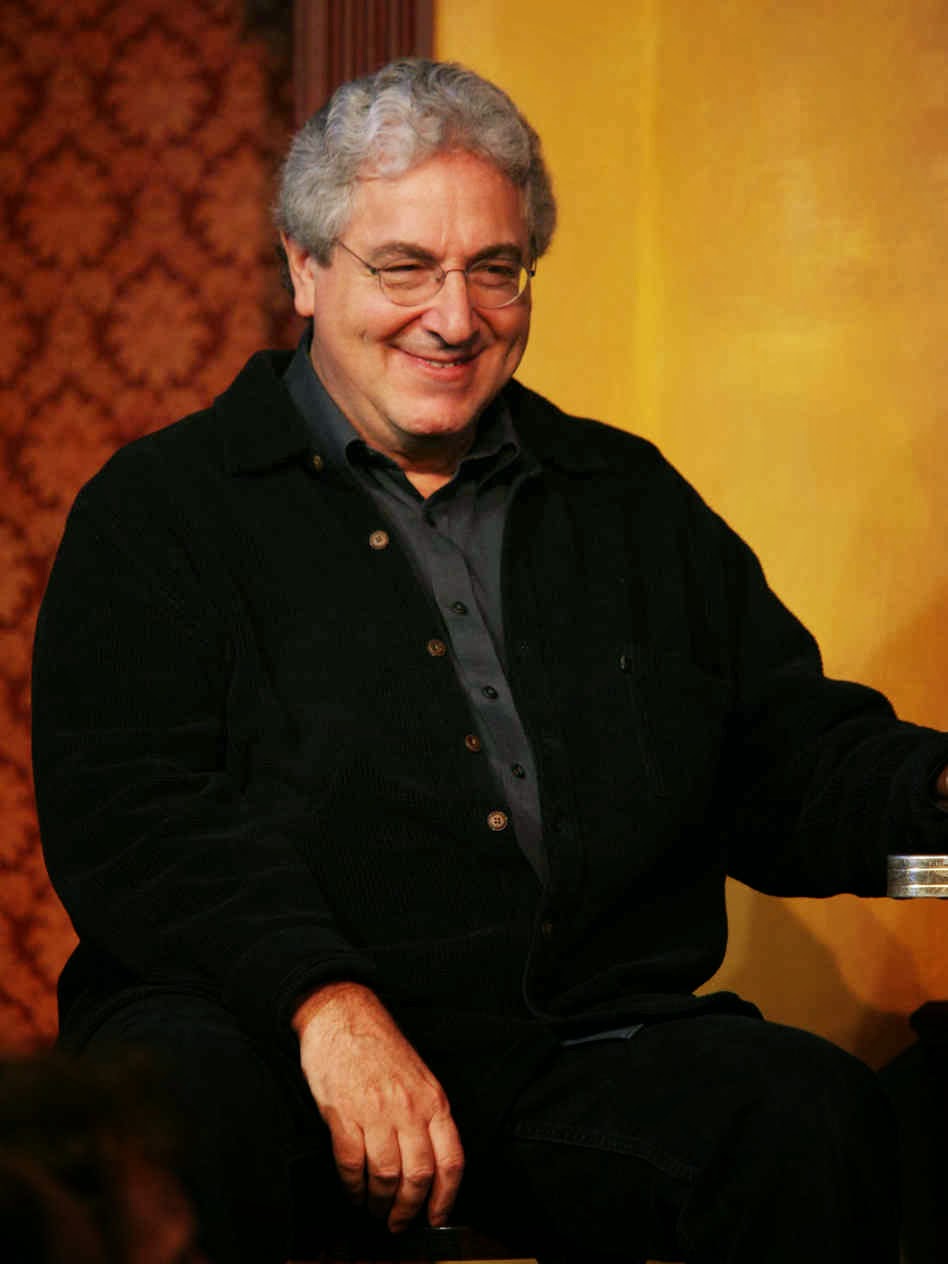
 Harold Ramis
Nov. 21, 1944- Feb. 24, 2014


Comedy legend Harold Ramis died early Monday (Feb. 24), the Chicago Tribune reported. He was 69.
The Chicago Sun-Times confirmed the news.
Ramis was surrounded by family when he died at 12:53 a.m. from complications of autoimmune inflammatory vasculitis, a rare disease that involves swelling of the blood vessels, his wife Erica Mann Ramis told the Chicago Tribune. Mann Ramis added that his health struggles began in May 2010, with an infection that led to complications related to the autoimmune disease. According to Laurel Ward, Vice President of Development at Ramis’ Ocean Pictures production company, Ramis suffered a relapse of the vasculitis in late 2011.
Ramis was best known for directing and writing "Caddyshack," "Groundhog Day" and "Analyze That." He also played the role of Egon Spengler in "Ghostbusters," which he co-wrote with Dan Aykroyd.
He was born and raised in Chicago, but moved to Los Angeles once his career took off.
AP story continues below:
Perhaps his greatest legacy is his influence on generations of comedians, actors and directors due to his ability to infuse comedy with a broader, sometimes spiritual message, said Andrew Alexander, president and CEO of The Second City. Ramis got his start with the Chicago-based improvisational comedy theater, along with future co-stars Dan Aykroyd, John Belushi and Murray.
"There was always a nuanced meaning to his pictures," Alexander said, including an "almost Buddhist philosophy to 'Groundhog Day'" — a movie Ramis co-wrote and directed that tells the story of a man who re-lives the same day over and over as he examines his life.
"He was a generous, nurturing, humble guy," Alexander added.
Aykroyd issued a statement Monday, saying he was "deeply saddened to hear of the passing of my brilliant, gifted, funny friend ... May he now get the answers he was always seeking."
Ramis joined The Second City in 1969, and in 1976 became head writer for the Canadian-based comedy show Second City Television, or SCTV.
He soon moved on to bigger projects — the legendary 1978 blockbuster film "National Lampoon's Animal House," which starred fellow Second City alum John Belushi.
With Murray as the comic lead, the Second City alums paired up for numerous projects: Ramis co-wrote 1979's "Meatballs" and co-wrote and directed 1980's "Caddyshack."
But the most well-known of their collaborations was "Ghostbusters," which also features Aykroyd. Ramis helped write the 1984 movie, in which he stars as Egon Spengler, the brainy, commonsense member of a group of parapsychologists who try to catch ghosts.
"The best comedy touches something that's timeless and universal in people," Ramis told The Associated Press in a 2009 story about the 50th anniversary of Second City. "When you hit it right, those things last."
More recently, he directed "Analyze This," starring Billy Crystal and Robert DeNiro.
Ramis was born Nov. 21, 1944 in Chicago. He is survived by his wife, Erica Ramis; sons Julian and Daniel; daughter Violet; and two grandchildren.


-Huff Post

Literary Pick (**)

The Insufferable Gaucho
-Roberto Bolaño

February 22, 2014

Literary Pick (****)

Women
-Charles Bukowski


All I've ever heard or read about Charles Bukowski is what a massive misogynist he is, which is why it's taken me this long to read any of his work, but judging from this novel alone I simply don't see proof of this. He's a repulsive alcoholic who wants to fuck women, and what repulsive alcoholic doesn't?


Great book. Great writer.

Literary Pick (*)

House of Leaves
-Mark Z. Danielewski 

February 16, 2014

Quote of the Day

"The problem with the world is that the intelligent people are full of doubts while the stupid ones are full of confidence".

-Charles Bukowski

February 15, 2014

Honor Spotlight

The town that hanged an elephant: A chilling photo and a macabre story of murder and revenge


Trooping into the tatty Big Top to the accompaniment of a drunken four-piece band, the elephants in Charlie Sparks’s travelling circus did their best to entertain the audience on that cold afternoon in February 1916. 

They sat on their haunches, stood on their heads, and formed an elephantine train as they placed their forelegs on each other’s backs and trumpeted around the ring. In short, they performed every trick they had been tortured into learning, but they could not make up for the absence of the real star of the show, a five-ton Asian elephant named Mary. 
Mary’s talents included picking out 25 tunes on musical horns, which she tooted with her trunk. She was also the champion pitcher on the circus’s baseball team. But on that tragic day, she had been stripped of her red-and-gold saddle and head-dress of artificial blue feathers and stood tethered in disgrace outside the tent. 
Waiting there in the drizzling rain, it was said that she trembled fearfully, as if aware of the awful fate about to befall her. And well she might have done, for ‘Murderous Mary’, as she became known, had not only killed a man but had made the mistake of doing so near Erwin, Tennessee. 
This newly booming American railroad town had pretensions to civilisation, boasting its own post office, theatre and courthouse. It also had a jail, but the sheriff’s authority counted for little in a part of the world where mob rule still prevailed. Between 1882 and 1930, there were 214 victims of lynchings in Tennessee. 
Most were black men, summarily found guilty of such crimes as ‘fighting a white man’ and having ‘bad character’. 
But soon their tragic ranks would be joined by Mary, surely the only elephant in history ever to have been hanged. And it seems particularly pertinent to remember her in the week that Prince Charles hosted a much-heralded international conference to address the illegal trade in wildlife parts. 
 Elephants were among the species highlighted as most at risk, but the supposedly enlightened Western world has not always been so concerned about the welfare of these majestic creatures, as we are reminded by the barbarity of Mary’s death. Her fate was sealed the day before the hanging, when Charlie Sparks’s circus train arrived in the small town of Kingsport, about 40 miles from Erwin. As always, it advertised its presence with a parade along the main street, during which Mary was ridden by 38-year-old Walter Eldridge, nicknamed Red because of his rusty-coloured hair. 

A drifter who had been with the circus only a day, he had no experience of handling elephants, but the only qualification required was the ability to wield an ‘elephant stick’ — a rod with a sharp spear at one end. A clue as to why this held such fear for the animals comes from an account of how a baby elephant named Mademoiselle Djek was tamed for a short stint on the London stage in 1829. While critics marvelled at her docility, Charles Reade, a novelist of the time, described how her keeper first gained mastery over her by stabbing her in the trunk with a pitchfork, at which she ‘wheeled round, ran her head into a corner, stuck out her great buttocks and trembled all over like a leaf’. 
He then jabbed her with all his force for half an hour until ‘the blood poured out of every square foot of her huge body’ and he had ‘filled her as full of holes as a cloved orange’. Similar techniques would have been used to break Mary. But although the elephant-stick usually kept her in line, she was suffering from a painfully abscessed tooth that day. When she stopped during the parade to nibble on a piece of discarded watermelon rind, Red Eldridge jabbed her to keep her moving and inadvertently hit the tender spot. Her reaction was swift and deadly. Reaching up with her trunk, she dashed him to the ground then stamped on his head. ‘Blood and brains and stuff just squirted all over the street,’ recalled one witness. As the terrified spectators screamed and fled, a local blacksmith shot Mary with a pistol, unloading five rounds of ammunition into her thick hide to little effect. She stood still, suddenly calm again and seemingly oblivious both to the bullets and the commotion as the townsfolk encircled her with chants of ‘Kill the elephant, kill the elephant.’ Fearing that his dates in other towns would be cancelled if they heard that his circus was home to a homicidal pachyderm, Charlie Sparks had no choice but to give in to these demands for vengeance. 

The only question was how Mary should meet her end. Bullets had already proved ineffective and neither was poison likely to work, since elephants have some half a million sense receptors in their trunks and can easily detect noxious substances. Some people advocated crushing Mary slowly between two opposing railway engines. Others called for her head to be tied to one locomotive and her legs to another so that she would be dismembered alive as they set off in opposite directions. Another option was electrocution — there was a horrific precedent for this thanks to Thomas Edison, inventor of the first commercially viable electric light bulb. At a time when America was choosing which of the two main forms of electricity to adopt, direct current (DC) or alternating current (AC), he had patents for many devices using the former and stood to profit hugely if it was chosen over its rival. Claiming that DC was the safer of the two, he spread false stories about fatal accidents supposedly involving AC. 
  He also staged various demonstrations in which animals were publicly electrocuted with AC, the most spectacular of which came about in 1903 when a new amusement park opened on New York’s Coney Island. One of the attractions was an elephant named Topsy, but it was claimed that she had become violent and uncooperative and the owners sought publicity for their new venture by executing her with Edison’s help. A huge crowd saw Topsy place her feet obediently into specially designed wooden sandals, lined with copper wiring and linked to an AC power supply. When the switch was thrown, smoke billowed up from her feet and within a minute or two it was all over. One newspaper reported the public’s morbid delight in watching her demise, even though it caused ‘an unpleasant smell to mingle with the scent of roasted peanuts, sold at two cents a bag’. 
  Later it was said that Topsy’s ‘riding the lightning’ had briefly caused bulbs to dull all over the region, as if in commemoration of her, but her death proved in vain, because Edison’s plot failed and America eventually went with AC as its standard electricity current. This had reached rural Tennessee by 1916, but not with sufficient power to dispatch an elephant, so Charlie Sparks came up with the equally sensational idea of hanging Mary. 

The next day the circus visited Erwin, which had a 100-ton crane used to lift railway carriages on and off the tracks. This was strong enough to support an elephant, and the matinee-goers disappointed by not seeing Mary in the ring that afternoon were mollified by the news that they could see her being hanged shortly afterwards, at no additional charge. As she was led to the railway yard, Mary was followed by the circus’s other four elephants, each entwining their trunk in the tail of the animal in front just as they had done on countless parades. Charlie Sparks hoped that their presence would keep her compliant but, as a chain was placed around her neck at the ‘gallows’, they trumpeted mournfully to her and he feared that she might try to run away. To stop this happening, one of her legs was tethered to a rail. 
No one thought to release it as the crane whirred into action and, as she was hoisted into the air, there was an awful cracking noise, the sound of her bones and ligaments snapping under the strain. She had been raised no more than five feet when the chain around her neck broke, dropping her to the ground and breaking her hip. ‘It made a right smart little racket,’ recalled one of the crowd which was some 3,000-strong and included most of the town’s children. The onlookers panicked and ran for cover, but Mary simply sat there dazed and in terrible pain. Meanwhile, one of the circus hands ran up her back — as if climbing a small hill rather than a living creature — and attached a stronger chain. The winch was powered up again and this time Mary was raised high in the air, her thick legs thrashing and her agonised shrieks and grunts audible even over the laughter and cheers of those watching below. Finally she fell silent and hung there for half an hour before a local vet declared her dead. 

 Her gruesome end is recorded in a photograph so horrifically surreal that some have suggested it must be a fake — but, all too sadly, its authenticity has been confirmed by other photographs taken at the time. That night the circus went ahead as usual, but after the show one of the remaining elephants broke away from the herd and began running towards the railway yard. Since wild elephants are thought to return to the bones of fallen family members for many years, he perhaps went in search of Mary. But he was quickly recaptured and returned to the life of captive misery from which he had escaped. Knowing that Mary no longer had to endure this cruel and unnatural existence is perhaps the only consolation to be drawn from this awful tale. 

Today she still lies interred in a huge grave which was dug for her using a steam shovel. Some said the hole was ‘as big as a barn’, but no one knows exactly where it is, or seems much inclined to find it. Tellingly, there remains no monument to her in Erwin, the town which hanged an elephant and apparently remains ashamed of having done so to this very day.

February 13, 2014

Literary Pick (***)

Mercury and Me
-Jim Hutton

February 11, 2014

RIP

Shirley Temple Black 
-April 23, 1928- February 10, 2014 


Shirley Temple Black, who lifted America's spirits as a bright-eyed, dimpled child movie star during the Great Depression and later became a U.S. diplomat, died late on Monday evening at the age of 85, her family said in a statement. Temple Black, who lured millions to the movies in the 1930s, "peacefully passed away" at her Woodside, Calif., home from natural causes at 10:57 p.m. local time (0157 ET), surrounded by her family and caregivers, the statement said on Tuesday. "We salute her for a life of remarkable achievements as an actor, as a diplomat, and most importantly as our beloved mother, grandmother, great-grandmother, and adored wife of fifty-five years," the statement said. As actress Shirley Temple, she was precocious, bouncy and adorable with a head of curly hair, tap-dancing through songs like "On The Good Ship Lollipop." As Ambassador Shirley Temple Black, she was soft-spoken and earnest in postings in Czechoslovakia and Ghana, out to disprove concerns that her previous career made her a diplomatic lightweight. "I have no trouble being taken seriously as a woman and a diplomat here," Black said after her appointment as U.S. ambassador to Ghana in 1974. "My only problems have been with Americans who, in the beginning, refused to believe I had grown up since my movies." Black, born April 23, 1928, started her entertainment career in the early 1930s and was famous by age 6. She became a national institution and her raging popularity spawned look-alike dolls, dresses and dozens of other Shirley Temple novelties as she became one of the first stars to enjoy the fruits of the growing marketing mentality. Shirley was 3 when her mother put her in dance school, where a talent scout spotted her and got her in "Baby Burlesk," a series of short movies with child actors spoofing adult movies. Movie studio executives took notice. In 1934 she appeared in the film "Stand Up and Cheer!", and her song and dance number in "Baby Take a Bow" stole the show. Other movies in that year included "Little Miss Marker" and "Bright Eyes" - which featured her signature song "On the Good Ship Lollipop" - and in 1935 she received a special Oscar for her "outstanding contribution to screen entertainment." She made some 40 feature movies, including "The Little Colonel," "Poor Little Rich Girl," "Heidi" and "Rebecca of Sunnybrook Farm," in 10 years, starring with big-name actors like Randolph Scott, Lionel Barrymore and Jimmy Durante. Shirley was a superstar before the term was invented. She said she was about 8 when adoring crowds shouting their love for her made her realize she was famous. "I wondered why," she recalled. "I asked my mother and she said, 'Because your films make them happy.'" She was such a money-maker that her mother - who would always tell her "Sparkle, Shirley!" before she appeared before an audience - and studio officials shaved a year off her age to maintain her child image. Her child career came to an end at age 12. She tried a few roles as a teenager - including opposite future president Ronald Reagan in "That Hagen Girl" - but retired from the screen in 1949 at age 21. The Screen Actors Guild gave her its 2005 Life Achievement Award, and in her acceptance speech posted on the group's website, she said: "I have one piece of advice for those of you who want to receive the Lifetime Achievement Award: start early!" POLITICS AND DIPLOMACY Temple was only 17 in 1945 when she married for the first time to John Agar, who would eventually appear with her in two movies. Their five-year marriage produced a daughter. In 1950 she wed Charles Black in a marriage that lasted until his death in 2005. She and Black had two children. Black's interest in politics was sparked in the early '50s when her husband was called back into the Navy to work in Washington. She did volunteer work for the Republican Party while attempting to make a comeback with two short-lived TV series, "Shirley Temple's Storybook" in 1959 and "The Shirley Temple Theater" a year later. Seven years after that she ran unsuccessfully for Congress in California but stayed in politics, helping raise more than $2 million for Richard Nixon's re-election campaign. She was later named to the United States' team to the United Nations and found that the her childhood popularity was an asset in her new career. "Having been a film star can be very helpful on an international basis," Black once said. "Many people consider me an old friend." Sometimes the public found it hard to accept her in diplomatic roles. But in 1989 she pointed out her 20 years in public service were more than the 19 she spent in Hollywood. In 1974, Ford appointed Black ambassador to Ghana and two years later made her chief of protocol. For the next decade she trained newly appointment ambassadors at the request of the State Department. In 1989, President George H.W. Bush made Black ambassador to Prague - a sensitive Eastern European post normally reserved for career diplomats. Black had been in Prague in 1968, representing a group fighting multiple sclerosis at a conference, when Soviet-bloc tanks entered to crush an era of liberalization known as the "Prague Spring." President Gustav Husak did not seem daunted by the prospect of a U.S. ambassador who had witnessed the invasion. He told her that he had been a fan of "Shirleyka." In 1972, Black was diagnosed with breast cancer and underwent a mastectomy. She publicly discussed her surgery to educate women about the disease. Black is survived by her children, Susan, Charlie Jr., and Lori, her granddaughter Teresa and her great-granddaughters Lily and Emma, the family statement said. It said private funeral arrangements were pending. (Reporting by Eric M. Johnson; Editing by Bill Trott and Sonya Hepinstall) -Reuters

February 2, 2014

RIP

Philip Seymour Hoffman 
Born July 23, 1967
Died February 2, 2014 (aged 46)


The Oscar-winning actor Philip Seymour Hoffman was found dead on Sunday afternoon in his New York apartment, after a suspected drug overdose. He was 46.
A law enforcement source told the Guardian Hoffman was discovered by a friend in the bathroom of his apartment on Bethune Street, in the West Village neighbourhood of Manhattan, around 11.15am ET.
He was confirmed dead at the scene.
The source confirmed that the New York Police Department had opened a “DOA” (“Dead on arrival”) investigation and was investigating a possible drug overdose. The inquiry will take place alongside Office of the Chief Medical Examiner, which is determining the precise cause of death.
In media interviews, Hoffman had admitted to suffering from drug and alcohol addiction problems after graduating from theatre school in 1989. He once said that he checked himself into a rehabilitation clinic and had been clean for 23 years.
However, more recently there have been reports that Hoffman suffered a relapse. In May last year, he reportedly admitted to having checked into a detox facility on the east coast, after taking prescription pills and consuming heroin.
In a 2011 interview with the Guardian, Hoffman said his alcohol and drug problem had been "pretty bad".
"And I know, deep down, I still look at the idea of drinking with the same ferocity that I did back then. It's still pretty tangible," he said.

Referring to his younger days, he added: "I had no interest in drinking in moderation. And I still don't. Just because all that time's passed doesn't mean maybe it was just a phase."

Around 1.30pm ET on Sunday, an NYPD car was photographed on the road outside the apartment – an officer was stood by the apartment-block door. By 2pm, satellite TV trucks had arrived outside the property.
Hoffman, who was from Fairport, New York, was one of America’s most loved actors. In 2005, he won the Academy Award for best actor for his leading role in Capote, based on the life of the novelist Truman Capote.
Renowned for his work as a supporting actor, Hoffman, had three children with Mimi O’Donnell, a costume designer with whom he had been in a long-term relationship. He came to prominence as an actor working on television series in the early 1990s. He received his third Academy Award nomination in the best supporting actor category in 2012, in recognition of his performance in The Master.
His death was first reported in the Wall Street Journal, shortly after 1pm ET.

-The Guardian

RIP

Pete Seeger
May, 1919-Jan. 28, 2014


Peter Seeger was born in May, 1919, in New York City, into one of the most influential folk music families of the 20th Century. His father, Charles Seeger, was a musicologist, and both of his siblings, Mike and Peggy Seeger, also became musicians. (Mike Seeger was a founding member of the traditionalist folk music revival combo New Lost City Ramblers.) He was also heavily influenced by his stepmother Ruth Crawford Seeger, who was a champion of folk music for children and an innovative composer in her own right.
After high school, Seeger spent two years studying Journalism at Harvard University before dropping out to perform music and explore the arts. He briefly explored painting, dabbling in water colors, before shifting his focus entirely to the banjo and folk music. During a trip to lower Appalachia with his father, Seeger was handed a five-string banjo, frequently considered the "lesser" banjo. Nonetheless, the instrument's high drone string captured Seeger's imagination and became his signature tool.
During the late 1930s, at a migrant union benefit in New York City, he met Woody Guthrie. Seeger immediately recognized Guthrie's incredible talent, and Woody quickly realized Seeger was able to follow along as an accompanist very simply. The two found they had plenty in common both musically and ideologically, and they soon formed a group that came to be known famously as the Almanac Singers.
The Almanacs had a few good years' run before the US entered World War II and several of them were drafted into the war effort. Seeger spent much of his enlistment time down South and out West, entertaining his fellow enlistees on the banjo.
After the War ended, Seeger rejoined his young wife Toshi in New York and started a new group featuring fellow Almanac Lee Hays, called the Weavers. This traditional folk revivalist quartet enjoyed extensive success until being blacklisted for suspected Communist activity during the McCarthy Era. Seeger himself refused to testify in the McCarthy hearings, citing that it would violate his first amendment rights.
Fresh from the stress and frustration of blacklisting, Seeger was not swayed away from music. In fact, he came out of the debacle even more convinced that music was one of the surest ways toward a better world. So, in the late 1950s, Pete Seeger began his solo career. He became well-known as a topical songwriter and activist folksinger. He began performing "We Shall Overcome" - a song he'd learned in the mid-1940s from Zilphia Horton at the Highlander Folk School. It was one of Zilphia's favorite songs and she had been teaching it to labor activists for some time. Seeger adapted her version of the song - which had a looser rhythm structure and repeated the phrase "We Will Overcome". He moved the rhythm to a marching triplet and changed the "will" to "shall", saying the latter allowed your mouth to open up a little wider, to sing more strongly.
Together with his friend Lee Hays, he wrote "If I Had a Hammer" and also penned "Turn, Turn, Turn" based on a Bible verse at a time when he was being accused of being a godless Communist. All these songs have long since become anthems for peace movements and civil rights.
Seeger has released dozens of records during the course of his extensive and inspiring career, and has received the Kennedy Center Honor Award, National Medal of Arts, and was inducted into the Rock and Roll Hall of Fame in 1996. He continued to perform with his grandson Tao Rodriguez-Seeger and children's groups across the country until he was 94 years old. In early 2014, it was announced that Seeger would be awarded the first ever Woody Guthrie Prize for his contributions to the world of citizenship and music. Seeger died in New York City at the age of 94 on Jan. 28, 2014.

Quote of the Day

"Don't talk unless you can improve the silence". 
-Jorge Luis Borges

January 26, 2014

Art of the Day

 The Skating Minister [c.1795] 
 -Sir Henry Raeburn
 

January 25, 2014

Art of the Day

Dahlias
-Claude Monet 

January 14, 2014

Photo of the Day

The Doors


Photo: Joel Brodsky. New York, 1967.

January 10, 2014

Literary Pick (***)

Gone Girl
-Gillian Flynn

January 5, 2014

Literary Pick (****)

Behind the Candelabra 
 -Scott Thorson

January 2, 2014

Literary Pick (***)

The Shadow of the Wind
-Carlos Ruiz Zafón 


I hate finding fault in a novel that is so obviously well-loved by so many readers. It took me a long while to get into it because there seemed to be too much of a build-up that went on for well over 250 pages. I did eventually begin to find interest in the story nearing the part of "Nuria Monfort's Remembrance Lost" chapter, but by then I was already a bit skeptical, and not buying a lot of what author intended to project, which was to re-create a classic old-fashioned novel with a modern flair, pretty much like what Barcelona represents. I can't say I loved any of the characters except for Fermín. I don't understand why Daniel fell in love with Bea. I understood his love for Clara, the blind girl, but Bea's character, and their relationship/courtship was so under-developed that it left me wondering why he was so in love with her, and how everyone compared her to Penelope, when I think Clara resembled Penelope more than Bea did.
The entire novel to me felt a bit predictable, like the kind of novel you would enjoy when you first begin reading in your life. I think it's because I'm a avid fan of Latin-American literature, and I've read many great works, by quite a few amazing writers. I'm not trying to take anything away from
Zafón , because I can see why many readers enjoy The Shadow of the Wind, and towards the end I rather enjoyed it myself too, but it didn't live up to my expectations.

December 15, 2013

RIP

Peter O'Toole
1932-2013 


The actor Peter O'Toole who found stardom in David Lean's masterpiece Lawrence of Arabia, has died aged 81, his family has annouced.
The acclaimed leading man who overcame stomach cancer in the 1970s passed away at the Wellington hospital in London following a long illness.
His daughter Kate O'Toole said: "His family are very appreciative and completely overwhelmed by the outpouring of real love and affection being expressed towards him, and to us, during this unhappy time. Thank you all, from the bottom of our hearts."
O'Toole announced last year he was stopping acting saying: "I bid the profession a dry-eyed and profoundly grateful farewell."
He said his career on stage and screen fulfilled him emotionally and financially, bringing him together "with fine people, good companions with whom I've shared the inevitable lot of all actors: flops and hits."
The president of Ireland, Michael Higgins, was among the first to pay tribute: "Ireland, and the world, has lost one of the giants of film and theatre."
"In a long list of leading roles on stage and in film, Peter brought an extraordinary standard to bear as an actor," Higgins said. "He had a deep interest in literature and a love of Shakespearean sonnets in particular. While he was nominated as best actor for an Oscar eight times, and received a special Oscar from his peers for his contribution to film, he was deeply committed to the stage. Those who saw him play leading roles on the screen from Lawrence in 1962, or through the role of Henry II in Becket, and The Lion in Winter, or through the dozens of films, will recognise a lifetime devoted to the artform of the camera.
Higgins, who knew O'Toole as a friend since 1969, said "all of us who knew him in the west will miss his warm humour and generous friendship.
"He was unsurpassed for the grace he brought to every performance on and off the stage," he said.
The O'Toole family announced there will be "a memorial filled with song and good cheer, as he would have wished", but until then they would like to be allowed to grieve privately.
Early in his career O'Toole became emblematic of a new breed of hard-drinking Hollywood hellraiser.
"We heralded the '60s," he once said. "Me, [Richard] Burton, Richard Harris; we did in public what everyone else did in private then, and does for show now. We drank in public, we knew about pot."
In the 1990s he found stage fame starring in Keith Waterhouse's play, Jeffrey Bernard is Unwell, about a hard-drinking journalist who propped up bars in Soho. O'Toole's version sold out the Old Vic theatre in 1999.
Last month it was reported he had been coaxed out of retirement to act in a film about ancient Rome called Katherine of Alexandria in which he would play Cornelius Gallus, a palace orator. It is believed he completed filming on the project alongside Joss Ackland, Steven Berkoff and Edward Fox and the movie is due to be released next year.
O'Toole is believed to have been born in Connemara in County Galway in Ireland, and lived in London. He shot to stardom in the 1962 film of TE Lawrence's life story and went on to take leading roles in Goodbye Mr Chips, The Ruling Class, The Stunt Man and My Favourite Year. He received an honorary Oscar in 2003 after receiving eight nominations and no wins – an unassailed record. He considered turning it down and asking the Academy to hold off until he was 80, on the basis that "I am still in the game and might win the bugger outright."
He finally accepted, saying: "Always a bridesmaid, never a bride, my foot".
He is survived by his two daughters, Pat and Kate O'Toole, from his marriage to actress Siân Phillips, and his son, Lorcan O'Toole, by Karen Brown.

-The Guardian

December 14, 2013

Art of the Day

La Nuit de Noel
-Gustave Doré

December 12, 2013

Quote of the Day

"The tragedy of old age is not that one is old, but that one is young."

-Oscar Wilde

December 11, 2013

Lyrics

Do You Realize?
Do You Realize - that you have the most beautiful face
Do You Realize - we're floating in space -
Do You Realize - that happiness makes you cry
Do You Realize - that everyone you know someday will die

And instead of saying all of your goodbyes - let them know
You realize that life goes fast
It's hard to make the good things last
You realize the sun doesn't go down
It's just an illusion caused by the world spinning round

Do You Realize - Oh - Oh - Oh
Do You Realize - that everyone you know
Someday will die -

And instead of saying all of your goodbyes - let them know
You realize that life goes fast
It's hard to make the good things last
You realize the sun doesn't go down
It's just an illusion caused by the world spinning round

Do You Realize - that you have the most beautiful face
Do You Realize


-The Flaming Lips

December 10, 2013

Honor Spotlight

Freddie Mercury
Born: September 5, 1946
Died: November 24, 1991


Singer-songwriter Freddie Mercury was born Farookh Bulsara on September 5, 1946, in Zanzibar, Tanzania. He studied piano in boarding school in India and befriended numerous musicians at London's Ealing College of Art. The music of Mercury's band, Queen, reached the top of U.S. and British charts. Mercury died of AIDS-related bronchial pneumonia on November 24, 1991, at age 45.

Musical Education

Singer-songwriter and musician Freddie Mercury was born Farookh Bulsara on September 5, 1946, in Zanzibar, Tanzania. As the frontman of Queen, Freddie Mercury was one of the most talented and innovative singers of the rock era. He spent time in a boarding school in Bombay (now Mumbai), India, where he studied piano. It was not long before this charismatic young man joined his first band, the Hectics.
Moving to London with his family in the 1960s, Mercury attended the Ealing College of Art. He befriended a number of musicians around this time, including future bandmates, drummer Roger Taylor and guitarist Brian May. In 1969, Mercury joined up with a group called Ibex as their lead singer. He played with a few other bands before joining forces with Taylor and May. They met up with bassist John Deacon in 1971, and the quartet—who Mercury dubbed Queen—played their first gig together that June.

Queen

In 1973, the band released their first self-titled album, but it took two more recordings for Queen's music to really catch on. Their third record, Sheer Heart Attack (1974), featured their first hit, "Killer Queen," a song about a high-class call girl. The single hit No. 2 on the U.K. charts, and peaked at No. 12 in the U.S.
With a sound that has been described as a fusion of hard rock and glam rock, Queen had an even bigger hit the following year with their album, A Night at the Opera (1975). Mercury wrote the song "Bohemian Rhapsody," a seven-minute rock operetta, for the album. Overdubbing his voice, Mercury showed off his impressive four-octave vocal range on this innovative track. The song hit the top of the charts in Britain and became a Top 10 hit in the United States.
In addition to his talents as a singer and songwriter, Mercury was also a skilled showman. He knew how to entertain audiences and how to connect with them. He liked to wear costumes—often featuring skintight spandex—and strutted around the stage, encouraging fans to join in the fun. Artistic in nature, Mercury was also actively involved in designing the art for many of the group's albums.
Queen's popularity continued to soar through the late 70s and early 80s. "We Are the Champions," off of News of the World (1978), became a Top 10 hit in the United States and in Britain. It was featured on a single with "We Will Rock You"—both songs have taken on a life of their own as popular anthems played at sporting events. Always exploring new and different sounds, Queen also tried their hand at the big music trend of the time, with the disco-flavored "Another Bites the Dust" in 1980. Off that same album, The Game (1980), Mercury and the rest of the band showed their range as performers with the rockabilly-influenced hit "Crazy Little Thing Called Love," which Mercury penned.

Memorable Performances

The following year, the members of Queen collaborated with David Bowie to create "Under Pressure." A No. 1 hit in Britain, the song's distinctive bass line was later reportedly used by Vanilla Ice for his 1990 rap hit "Ice, Ice Baby." Their abilities to sell albums began to wane by the mid-1980s after The Works (1984), which featured the minor hit "Radio Ga Ga."
As a live act,
Queen continued to draw huge crowds around the world. One of their most notable performances was in 1985 at the Live Aid charity concert. Simply dressed in a tank top and jeans, Mercury led the crowd through some of the band's greatest hits with great energy and style. He got the thousands of music fans at London's Wembley Stadium to chant along to "We Will Rock You." For many who watched the event live or on television, Queen gave one of the top performances of the day-long event, which was organized by singer and activist Bob Geldof and songwriter Midge Ure to raise money for victims of famine in Africa. Inspired by the event, the band wrote the hit "One Vision."
In addition to his work with Queen, Mercury released several solo albums, including 1985's Mr. Bad Guy. He also collaborated with opera singer Montserrat Caralle for 1988's Barcelona.

AIDS

Offstage, Mercury was open about his bisexuality, but he kept his relationships private. He also lived a lavish lifestyle. He loved champagne and liked to collect art, once spending more than $400,000 on a set of hand-painted china. Always one for a party, Mercury threw himself elaborate celebrations; for one particular birthday he flew a group of friends to the island of Ibiza. The occasion was marked by fireworks and flamenco dancing.
By 1989, Mercury largely retreated from public life. He did not promote or tour for Queen's next album, Innuendo (1991), and rumors about possible health problems began to circulate. On November 23, 1991, Mercury released a statement: "I wish to confirm that I have been tested HIV-positive and have AIDS. I felt it correct to keep this information private to date to protect the privacy of those around me. However, the time has come now for my friends and fans around the world to know the truth and I hope that everyone will join with my doctors and all those worldwide in the fight against this terrible disease." The next day, he died from AIDS-related bronchial pneumonia at his London mansion. Mercury was only 45 years old.
Longtime friend and bandmate Roger Taylor provided some insight to Mercury's decision to keep his battle with AIDS private. "He didn't want to be looked at as an object of pity and curiosity, and he didn't want circling vultures over his head," Taylor said, according to a report in Entertainment Weekly. The rock world mourned the loss of one of its most versatile and engaging performers.
To honor his memory, the Freddie Mercury Tribute: Concert for AIDS Awareness was held in April 1992 at Wembly Stadium. A diverse range of rock acts—from Def Leppard to Elton John—performed to celebrate Mercury and advance the fight against the disease that took his life. 

That same year, Mercury's mock operatic masterpiece, "Bohemian Rhapsody" made a return to the pop charts, illustrating its timeless appeal.
Before his death, Mercury had done some work in the studio with Queen. These efforts were released in 1995 on Made In Heaven, the group's last album with all the original members. Gone but clearly not forgotten, this collection of Mercury's final performances reached the top of the British charts. In 2001, Mercury and rest of the band received special recognition for their contributions to American music history when they were inducted into the Rock and Roll Hall of Fame.

-Bio. True Story


December 9, 2013

RIP

Nelson Mandela, South Africa's first black president, dies aged 95


Nelson Mandela, the towering figure of Africa's struggle for freedom and a hero to millions around the world, has died at the age of 95. South Africa's first black president died in the company of his family at home in Johannesburg after years of declining health that had caused him to withdraw from public life. The news was announced to the country by the current president, Jacob Zuma, who in a sombre televised address said Mandela had "departed" around 8.50pm local time and was at peace. "This is the moment of our deepest sorrow," Zuma said. "Our nation has lost its greatest son … What made Nelson Mandela great was precisely what made him human. We saw in him what we seek in ourselves. "Fellow South Africans, Nelson Mandela brought us together and it is together that we will bid him farewell." Zuma announced that Mandela would receive a state funeral and ordered that flags fly at half-mast. 

 Early on Friday morning Archbishop Desmond Tutu led a memorial service in Capetown where he called for South Africa to become as a nation what Mandela had been as a man. Mandela's two youngest daughters were at the premiere of the biopic Mandela: Long Walk to Freedom in London last night. 
 They received the news of their father's death during the screening in Leicester Square and immediately left the cinema. Barack Obama led tributes from world leaders, referring to Mandela by his clan name – Madiba. The US president said: "Through his fierce dignity and unbending will to sacrifice his own freedom for the freedom of others, Madiba transformed South Africa – and moved all of us. "His journey from a prisoner to a president embodied the promise that human beings – and countries – can change for the better. His commitment to transfer power and reconcile with those who jailed him set an example that all humanity should aspire to, whether in the lives of nations or our own personal lives." David Cameron said: "A great light has gone out in the world" and described Mandela as "a hero of our time". FW de Klerk – the South African president who freed Mandela, shared the Nobel peace prize with him and paved the way for him to become South Africa's first post-apartheid head of state – said the news was deeply saddening for South Africa and the world. "He lived reconciliation. He was a great unifier," De Klerk said. Throughout Thursday night and into Friday morning people gathered in the streets of South Africa to celebrate Mandela's life. In Soweto people gathered to sing and dance near the house where he once lived. They formed a circle in the middle of Vilakazi Street and sang songs from the anti-apartheid struggle. Some people were draped in South African flags and the green, yellow and black colours of Mandela's party, the African National Congress. "We have not seen Mandela in the place where he is, in the place where he is kept," they sang, a lyric anti-apartheid protesters had sung during Mandela's long incarceration. Several hundred people took part in lively commemorations outside Mandela's final home in the Houghton neighbourhood of Johannesburg. A man blew on a vuvuzela horn and people made impromptu shrines with national flags, candles, flowers and photographs. Mandela was taken to hospital in June with a recurring lung infection and slipped into a critical condition, but returned home in September where his bedroom was converted into an intensive care unit. 

His death sends South Africa deep into mourning and self-reflection, nearly 20 years after he led the country from racial apartheid to inclusive democracy. But his passing will also be keenly felt by people around the world who revered Mandela as one of history's last great statesmen, and a moral paragon comparable with Mohandas Karamchand Gandhi and Martin Luther King. It was a transcendent act of forgiveness after spending 27 years in prison, 18 of them on Robben Island, that will assure his place in history. With South Africa facing possible civil war, Mandela sought reconciliation with the white minority to build a new democracy. He led the African National Congress to victory in the country's first multiracial election in 1994. Unlike other African liberation leaders who cling to power, such as Zimbabwe's Robert Mugabe, he then voluntarily stepped down after one term. Mandela was awarded the Nobel peace prize in 1993. At his inauguration a year later, the new president said: "Never, never, and never again shall it be that this beautiful land will again experience the oppression of one by another … the sun shall never set on so glorious a human achievement. Let freedom reign. God bless Africa!" Born Rolihlahla Dalibhunga in a small village in the Eastern Cape on 18 July 1918, Mandela was given his English name, Nelson, by a teacher at his school. He joined the ANC in 1943 and became a co-founder of its youth league. In 1952, he started South Africa's first black law firm with his partner, Oliver Tambo. Mandela was a charming, charismatic figure with a passion for boxing and an eye for women. He once said: "I can't help it if the ladies take note of me. I am not going to protest." He married his first wife, Evelyn Mase, in 1944. They were divorced in 1957 after having three children. In 1958, he married Winnie Madikizela, who later campaigned to free her husband from jail and became a key figure in the struggle. When the ANC was banned in 1960, Mandela went underground. After the Sharpeville massacre, in which 69 black protesters were shot dead by police, he took the difficult decision to launch an armed struggle. He was arrested and eventually charged with sabotage and attempting to overthrow the government. Conducting his own defence in the Rivonia trial in 1964, he said: "I have cherished the ideal of a democratic and free society in which all persons live together in harmony and with equal opportunities. "It is an ideal which I hope to live for and to achieve. But if needs be, it is an ideal for which I am prepared to die." He escaped the death penalty but was sentenced to life in prison, a huge blow to the ANC that had to regroup to continue the struggle. But unrest grew in townships and international pressure on the apartheid regime slowly tightened. Finally, in 1990, FW de Klerk lifted the ban on the ANC and Mandela was released from prison amid scenes of jubilation witnessed around the world. In 1992, Mandela divorced Winnie after she was convicted on charges of kidnapping and accessory to assault. His presidency rode a wave of tremendous global goodwill but was not without its difficulties. After leaving frontline politics in 1999, he admitted he should have moved sooner against the spread of HIV/Aids in South Africa. His son died from an Aids-related illness. On his 80th birthday, Mandela married Graça Machel, the widow of the former president of Mozambique. It was his third marriage. In total, he had six children, of whom three daughters survive: Pumla Makaziwe (Maki), Zenani and Zindziswa (Zindzi). He has 17 grandchildren and 14 great-grandchildren. Archbishop Desmond Tutu, who headed the truth and reconciliation committee after the fall of apartheid, said: "He transcended race and class in his personal actions, through his warmth and through his willingness to listen and to emphasise with others. And he restored others' faith in Africa and Africans." Mandela was diagnosed with prostate cancer in 2001 and retired from public life to be with his family and enjoy some "quiet reflection". But he remained a beloved and venerated figure, with countless buildings, streets and squares named after him. His every move was scrutinised and his health was a constant source of media speculation. Mandela continued to make occasional appearances at ANC events and attended the inauguration of the current president, Jacob Zuma. His 91st birthday was marked by the first annual "Mandela Day" in his honour. He was last seen in public at the final of the 2010 World Cup in Johannesburg, a tournament he had helped bring to South Africa for the first time. Early in 2011, he was taken to hospital in a health scare but he recovered and was visited by Michelle Obama and her daughters a few months later. In January 2012, he was notably missing from the ANC's centenary celebrations due to his frail condition. With other giants of the movement such as Tambo and Walter Sisulu having gone before Mandela, the defining chapter of Africa's oldest liberation movement is now closed.

November 23, 2013

Fakers, Fakes, & Fake Fakers

November 22, 2013

Quote of the Day

“It's so curious: one can resist tears and 'behave' very well in the hardest hours of grief. But then someone makes you a friendly sign behind a window, or one notices that a flower that was in bud only yesterday has suddenly blossomed, or a letter slips from a drawer... and everything collapses. ”
Colette

Art of the Day

 Agnus Dei
 Francisco de Zurbaran

November 19, 2013

Literary Pick (****)

They Cage the Animals at Night
-Jennings Michael Burch


It's so nice when you finally come upon a book that really tugs at your heart strings. The only things I didn't like about the book is that he seemed a bit old to be talking to his stuffed animal dog, but I guess if he did, he did. The other part I didn't get is the excuse Sal gave him for not picking him up from one of the homes, "he wasn't ready to commit.." but other than that the story is a true page-turner, and brimming with tons of sappy moments. I really loved this one.
Great job, Burch. RIP

November 16, 2013

Art of the Day

 Whistlejacket
-George Stubbs

November 14, 2013

Literary Pick (***)

The War of Don Emmanuel's Nether Parts
-Louis De Bernieres


Reading this story was like reading one of those odd kafkaesque dreams you sometimes have. I always seem to get so much enjoyment out of magical realism, a genre I never thought I could ever even begin to patronize, or take seriously. But it never disappoints..The only reason I'm giving it only 3 stars is because there was a lot of political party, army, general, soldiers, and stuff like that, which always loses me, but I loved it when I would read about Aurelio, his wife and daughter. I also had a hard time keeping up with the characters, no fault to the book, I was distracted at the time, having to study for tests, etc. But the book was brilliantly written, and I would definitely read the other two that follow in this series.

October 31, 2013

Quote of the Day

“First they came for the communists, and I did not speak out— because I was not a communist; Then they came for the socialists, and I did not speak out— because I was not a socialist; Then they came for the trade unionists, and I did not speak out— because I was not a trade unionist; Then they came for the Jews, and I did not speak out— because I was not a Jew; Then they came for me— and there was no one left to speak out for me.” 

Martin Niemöller

October 27, 2013

R.I.P

Lou Reed, Velvet Underground Leader and Rock Pioneer, Dead at 71

Lou Reed
Lex van Rossen/MAI/Redferns
Lou Reed, a massively influential songwriter and guitarist who helped shape nearly fifty years of rock music, died today on Long Island. The cause of his death has not yet been released, but Reed underwent a liver transplant in May.
Look back at Lou Reed's remarkable career in photos
With the Velvet Underground in the late Sixties, Reed fused street-level urgency with elements of European avant-garde music, marrying beauty and noise, while bringing a whole new lyrical honesty to rock & roll poetry. As a restlessly inventive solo artist, from the Seventies into the 2010s, he was chameleonic, thorny and unpredictable, challenging his fans at every turn. Glam, punk and alternative rock are all unthinkable without his revelatory example. "One chord is fine," he once said, alluding to his bare-bones guitar style. "Two chords are pushing it. Three chords and you're into jazz."
Lewis Allan "Lou" Reed was born in Brooklyn, in 1942. A fan of doo-wop and early rock & roll (he movingly inducted Dion into the Rock and Roll Hall of Fame in 1989), Reed also took formative inspiration during his studies at Syracuse University with the poet Delmore Schwartz. After college, he worked as a staff songwriter for the novelty label Pickwick Records (where he had a minor hit in 1964 with a dance-song parody called "The Ostrich"). In the mid-Sixties, Reed befriended Welsh musician John Cale, a classically trained violist who had performed with groundbreaking minimalist composer La Monte Young. Reed and Cale formed a band called the Primitives, then changed their name to the Warlocks. After meeting guitarist Sterling Morrison and drummer Maureen Tucker, they became the Velvet Underground. With a stark sound and ominous look, the band caught the attention of Andy Warhol, who incorporated the Velvets into his Exploding Plastic Inevitable. "Andy would show his movies on us," Reed said. "We wore black so you could see the movie. But we were all wearing black anyway."
Listen to 20 essential Lou Reed tracks here
"Produced" by Warhol and met with total commercial indifference when it was released in early 1967, VU’s debut The Velvet Underground & Nico stands as a landmark on par with the Beatles' Sgt. Pepper's Lonely Hearts Club Band and Bob Dylan's Blonde On Blonde. Reed's matter-of-fact descriptions of New York’s bohemian demimonde, rife with allusions to drugs and S&M, pushed beyond even the Rolling Stones’ darkest moments, while the heavy doses of distortion and noise for its own sake revolutionized rock guitar. The band’s three subsequent albums – 1968’s even more corrosive sounding White Light/White Heat, 1969’s fragile, folk-toned The Velvet Underground and 1970’s Loaded, which despite being recorded while he was leaving the group, contained two Reed standards, “Rock & Roll” and “Sweet Jane,” were similarly ignored. But they’d be embraced by future generations, cementing the Velvet Underground’s status as the most influential American rock band of all time.   
After splitting with the Velvets in 1970, Reed traveled to England and, in characteristically paradoxical fashion, recorded a solo debut backed by members of the progressive-rock band Yes. But it was his next album, 1972’s Transformer, produced by Reed-disciple David Bowie, that pushed him beyond cult status into genuine rock stardom. “Walk On the Wild Side,” a loving yet unsentimental evocation of Warhol’s Factory scene, became a radio hit (despite its allusions to oral sex) and “Satellite of Love” was covered by U2 and others. Reed spent the Seventies defying expectations almost as a kind of sport. 1973’s Berlin was brutal literary bombast while 1974’s Sally Can’t Dance had soul horns and flashy guitar. In 1975 he released Metal Machine Music, a seething all-noise experiment his label RCA marketed as a avant-garde classic music, while 1978’s banter-heavy live album Take No Prisoners was a kind of comedy record in which Reed went on wild tangents and savaged rock critics by name (“Lou sure is adept at figuring out new ways to shit on people,” one of those critics, Robert Christgau, wrote at the time). Explaining his less-than-accommodating career trajectory, Reed told journalist Lester Bangs, “My bullshit is worth more than other people’s diamonds.”
Reed’s ambiguous sexual persona and excessive drug use throughout the Seventies was the stuff of underground rock myth. But in the Eighties, he began to mellow. He married Sylvia Morales and opened a window into his new married life on 1982’s excellent The Blue Mask, his best work since Transformer. His 1984 album New Sensations took a more commercial turn and 1989’s New York ended the decade with a set of funny, politically cutting songs that received universal critical praise. In 1991, he collaborated with Cale on Songs For Drella, a tribute to Warhol. Three years later, the Velvet Underground reunited for a series of successful European gigs.  
Read Rolling Stone's 1989 Lou Reed cover story
Reed and Morales divorced in the early Nineties. Within a few years, Reed began a relationship with musician-performance artist Laurie Anderson. The two became an inseparable New York fixture, collaborating and performing live together, while also engaging in civic and environmental activism. They were married in 2008.
Reed continued to follow his own idiosyncratic artistic impulses throughout the ‘00s. The once-decadent rocker became an avid student of T'ai Chi, even bringing his instructor onstage during concerts in 2003. In 2005 he released a double CD called The Raven, based on the work of Edgar Allen Poe. In 2007, he released an ambient album titled Hudson River Wind Meditations. Reed returned to mainstream rock with 2011’s Lulu, a collaboration with Metallica.
“All through this, I’ve always thought that if you thought of all of it as a book then you have the Great American Novel, every record as a chapter,” he told Rolling Stone in 1987. “They’re all in chronological order. You take the whole thing, stack it and listen to it in order, there’s my Great American Novel.” 

October 16, 2013

Literary Pick (****)

Escape from Camp 14- One Man's Remarkable Odyssey from North Korea to Freedom in the West
-Blaine Harden


Remarkable odyssey, indeed. It's hard to believe the things that are allowed to happen in North Korea. I'm amazed Shin was able to escape camp 14, and am happy he's beginning to learn a new way of life in other, safer parts of the world, but he has a lot of people who are trying to help him, and he needs to get his life together. I'm hoping he seeks psychological help so he can get passed a lot of the issues that are preventing him from getting the most out of his freedom, and all the beneficial programs offered to him as a North Korean refugee.

October 10, 2013

Literary Pick (***)

Waiting for Godot
-Samuel Becket


Ironically, I began appreciating this play by reading the single star reviews on Goodreads. Only then did I began to reflect and feel a bit of melancholy for these two characters. The symbolism in it is strikingly touching. There's something so pitiful, so sad about reading this play. However, there was something missing in it for me... I've been emotionally pre-occupied, so I believe that played a role in how I received this work..but I could envision the actual play in my head, the on-stage dialogue, the acting.., and so I went on Youtube and did a search, and I clicked on the TV production from 1961, starring Burgess Meredith and Zero Mostel, and it was exactly what I had imagined, and it is indeed a wonderful piece of work. I can see why Waiting for Godot is regarded as a masterpiece.

Literary Pick (*)

13 Reasons Why
-Jay Asher