


posted by Rachel at
6:52 PM
0 Comments

January 30, 2010
January 29, 2010
Art of the Day
Constellation: Awakening in the Early Morning
Joan Miró

This is one of a series of twenty-three small gouache and oil wash paintings known as the Constellations. The series evolved, surprisingly enough, from Miró’s aspirations in the late 1930s to work on a mural scale. As he wrote to his dealer, Pierre Matisse early in 1940: “I feel that it is one of the most important things I have done, and even though the formats are small, they give the impression of large frescoes.” By July 1940 Miró and his family had fled Nazi-occupied France, where he began the series, and were living in Majorca. It was there that the Kimbell Constellation was finished. At this time, Miró later explained, “The night, music, and stars began to play a major role in suggesting my paintings.”
The Constellations series was smuggled to New York, where part of it was exhibited at the Pierre Matisse Gallery in January 1945. Symbolic of the survival of great art in the face of the ongoing war, these small works had important implications for American painters such as Jackson Pollock as they created abstract compositions permeated with free-floating lines and forms.
Joan Miró

This is one of a series of twenty-three small gouache and oil wash paintings known as the Constellations. The series evolved, surprisingly enough, from Miró’s aspirations in the late 1930s to work on a mural scale. As he wrote to his dealer, Pierre Matisse early in 1940: “I feel that it is one of the most important things I have done, and even though the formats are small, they give the impression of large frescoes.” By July 1940 Miró and his family had fled Nazi-occupied France, where he began the series, and were living in Majorca. It was there that the Kimbell Constellation was finished. At this time, Miró later explained, “The night, music, and stars began to play a major role in suggesting my paintings.”
The Constellations series was smuggled to New York, where part of it was exhibited at the Pierre Matisse Gallery in January 1945. Symbolic of the survival of great art in the face of the ongoing war, these small works had important implications for American painters such as Jackson Pollock as they created abstract compositions permeated with free-floating lines and forms.
posted by Rachel at
10:24 PM
1 Comments
Poetry
Puerto Rican Obituary
They worked
They were always on time
They were never late
They never spoke back
when they were insulted
They worked
They never took days off
that were not on the calendar
They never went on strike
without permission
They worked
ten days a week
and were only paid for five
They worked
They worked
They worked
and they died
They died broke
They died owing
They died never knowing
what the front entrance
of the first national city bank looks like
Juan
Miguel
Milagros
Olga
Manuel
All died yesterday today
and will die again tomorrow
passing their bill collectors
on to the next of kin
All died
waiting for the garden of eden
to open up again
under a new management
All died
dreaming about america
waking them up in the middle of the night
screaming: Mira Mira
your name is on the winning lottery ticket
for one hundred thousand dollars
All died
hating the grocery stores
that sold them make-believe steak
and bullet-proof rice and beans
All died waiting dreaming and hating
Dead Puerto Ricans
Who never knew they were Puerto Ricans
Who never took a coffee break
from the ten commandments
to KILL KILL KILL
the landlords of their cracked skulls
and communicate with their latino souls
Juan
Miguel
Milagros
Olga
Manuel
From the nervous breakdown streets
where the mice live like millionaires
and the people do not live at all
are dead and were never alive
Juan
died waiting for his number to hit
Miguel
died waiting for the welfare check
to come and go and come again
Milagros
died waiting for her ten children
to grow up and work
so she could quit working
Olga
died waiting for a five dollar raise
Manuel
died waiting for his supervisor to drop dead
so he could get a promotion
Is a long ride
from Spanish Harlem
to long island cemetery
where they were buried
First the train
and then the bus
and the cold cuts for lunch
and the flowers
that will be stolen
when visiting hours are over
Is very expensive
Is very expensive
But they understand
Their parents understood
Is a long non-profit ride
from Spanish Harlem
to long island cemetery
Juan
Miguel
Milagros
Olga
Manuel
All died yesterday today
and will die again tomorrow
Dreaming
Dreaming about queens
Clean-cut lily-white neighborhood
Puerto Ricanless scene
Thirty-thousand-dollar home
The first spics on the block
Proud to belong to a community
of gringos who want them lynched
Proud to be a long distance away
from the sacred phrase: Que Pasa
These dreams
These empty dreams
from the make-believe bedrooms
their parents left them
are the after-effects
of television programs
about the ideal
white american family
with black maids
and latino janitors
who are well train
to make everyone
and their bill collectors
laugh at them
and the people they represent
Juan
died dreaming about a new car
Miguel
died dreaming about new anti-poverty programs
Milagros
died dreaming about a trip to Puerto Rico
Olga
died dreaming about real jewelry
Manuel
died dreaming about the irish sweepstakes
They all died
like a hero sandwich dies
in the garment district
at twelve o’clock in the afternoon
social security number to ashes
union dues to dust
They knew
they were born to weep
and keep the morticians employed
as long as they pledge allegiance
to the flag that wants them destroyed
They saw their names listed
in the telephone directory of destruction
They were train to turn
the other cheek by newspapers
that mispelled mispronounced
and misunderstood their names
and celebrated when death came
and stole their final laundry ticket
They were born dead
and they died dead
Is time
to visit sister lopez again
the number one healer
and fortune card dealer
in Spanish Harlem
She can communicate
with your late relatives
for a reasonable fee
Good news is guaranteed
Rise Table Rise Table
death is not dumb and disable
Those who love you want to know
the correct number to play
Let them know this right away
Rise Table Rise Table
death is not dumb and disable
Now that your problems are over
and the world is off your shoulders
help those who you left behind
find financial peace of mind
Rise Table Rise Table
death is not dumb and disable
If the right number we hit
all our problems will split
and we will visit your grave
on every legal holiday
Those who love you want to know
the correct number to play
let them know this right away
We know your spirit is able
Death is not dumb and disable
RISE TABLE RISE TABLE
Juan
Miguel
Milagros
Olga
Manuel
All died yesterday today
and will die again tomorrow
Hating fighting and stealing
broken windows from each other
Practicing a religion without a roof
The old testament
The new testament
according to the gospel
of the internal revenue
the judge and jury and executioner
protector and eternal bill collector
Secondhand shit for sale
learn how to say Como Esta Usted
and you will make a fortune
They are dead
They are dead
and will not return from the dead
until they stop neglecting
the art of their dialogue
for broken english lessons
to impress the mister goldsteins
who keep them employed
as lavaplatos porters messenger boys
factory workers maids stock clerks
shipping clerks assistant mailroom
assistant, assistant assistant
to the assistant’s assistant
assistant lavaplatos and automatic
artificial smiling doormen
for the lowest wages of the ages
and rages when you demand a raise
because is against the company policy
to promote SPICS SPICS SPICS
Juan
died hating Miguel because Miguel’s
used car was in better running condition
than his used car
Miguel
died hating Milagros because Milagros
had a color television set
and he could not afford one yet
Milagros
died hating Olga because Olga
made five dollars more on the same job
Olga
died hating Manuel because Manuel
had hit the numbers more times
than she had hit the numbers
Manuel
died hating all of them
Juan
Miguel
Milagros
and Olga
because they all spoke broken english
more fluently than he did
And now they are together
in the main lobby of the void
Addicted to silence
Off limits to the wind
Confine to worm supremacy
in long island cemetery
This is the groovy hereafter
the protestant collection box
was talking so loud and proud about
Here lies Juan
Here lies Miguel
Here lies Milagros
Here lies Olga
Here lies Manuel
who died yesterday today
and will die again tomorrow
Always broke
Always owing
Never knowing
that they are beautiful people
Never knowing
the geography of their complexion
PUERTO RICO IS A BEAUTIFUL PLACE
PUERTORRIQUENOS ARE A BEAUTIFUL RACE
If only they
had turned off the television
and tune into their own imaginations
If only they
had used the white supremacy bibles
for toilet paper purpose
and make their latino souls
the only religion of their race
If only they
had return to the definition of the sun
after the first mental snowstorm
on the summer of their senses
If only they
had kept their eyes open
at the funeral of their fellow employees
who came to this country to make a fortune
and were buried without underwears
Juan
Miguel
Milagros
Olga
Manuel
will right now be doing their own thing
where beautiful people sing
and dance and work together
where the wind is a stranger
to miserable weather conditions
where you do not need a dictionary
to communicate with your people
Aqui Se Habla Espanol all the time
Aqui you salute your flag first
Aqui there are no dial soap commercials
Aqui everybody smells good
Aqui tv dinners do not have a future
Aqui the men and women admire desire
and never get tired of each other
Aqui Que Paso Power is what’s happening
Aqui to be called negrito
means to be called LOVE
by Pedro Pietri
posted by Rachel at
8:11 PM
0 Comments
Literary Pick (*)
The Alchemist (Paulo Coehlo)

I believe that what you've just finished reading affects your judgment on what you read next. It's hard for me to look at each book as a single item (unless it's spectacular in it's own right) without comparing it to other books I've just recently finished. With that said, I recently finished reading 100 Years of Solitude, and to go from Marquez's beautifully prismatic tale of magical realism, to Coelho's one dimensional fairytale, which should be colorful and wondrous in itself simply because of it's backdrop (Spain, Africa, deserts, oasis') is really disappointing. I'm also not the spiritual type, per say. At least not in the type that recruits. I create my own spirituality and I make up the rules of my soul as I go along. This book seems like it should be geared more towards children, not for adults who already have figured out that the secret to achieving your own "personal legend" is by going after it and not giving up.
I myself have a pretty dynamic spirit, and my soul responds more to revolutionary philosophies. So half-way through this book, I knew there was not much I could gain from it.
posted by Rachel at
12:34 PM
0 Comments
Honor Spotlight
Fred McFeely Rogers
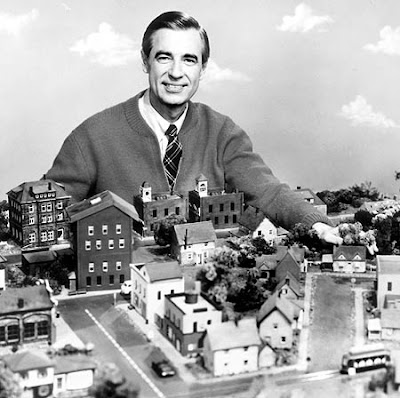
(March 20, 1928 – February 27, 2003) was an American educator, Presbyterian minister, songwriter, and television host. Rogers was the host of the television show Mister Rogers' Neighborhood, in production from 1968 to 2001.
Fred McFeely Rogers was born in Latrobe, Pennsylvania, a town located 40 miles (65 km) southeast of Pittsburgh. He was born to James and Nancy Rogers; he spent many years as an only child. Early in his life he spent much of his free time with his maternal grandfather, Fred McFeely,who would later move to Florida, and had an interest in music. He would often sing along as his mother would play the piano and, at the age of 5, he began to play the piano as well.[1] Rogers graduated from Latrobe High School (1946).[2] He studied at Dartmouth College in Hanover, New Hampshire, (1946–1948).[3] He transferred to Rollins College in Winter Park, Florida, where he received a BA in music composition in 1951.[4] At Rollins, Rogers met Sara Joanne Byrd, an Oakland, Florida native. They married on June 9, 1952.[5] They had two children, James (born in 1959) and John (born in 1961), and three grandsons, the third (Ian McFeely Rogers) born 12 days after Rogers' death.[6] In 1963, Rogers graduated from Pittsburgh Theological Seminary and was ordained a minister in the Presbyterian Church.[7] Scholastically, he went on to garner 40 more honorary degrees throughout his life.[8] Rogers was also red-green color blind[9] and a vegetarian.[citation needed] He swam every morning, and neither smoked nor drank.[10] Rogers also owned a summer home on Nantucket in the village of Madaket on the western end of the island.[11][12]

(March 20, 1928 – February 27, 2003) was an American educator, Presbyterian minister, songwriter, and television host. Rogers was the host of the television show Mister Rogers' Neighborhood, in production from 1968 to 2001.
Fred McFeely Rogers was born in Latrobe, Pennsylvania, a town located 40 miles (65 km) southeast of Pittsburgh. He was born to James and Nancy Rogers; he spent many years as an only child. Early in his life he spent much of his free time with his maternal grandfather, Fred McFeely,who would later move to Florida, and had an interest in music. He would often sing along as his mother would play the piano and, at the age of 5, he began to play the piano as well.[1] Rogers graduated from Latrobe High School (1946).[2] He studied at Dartmouth College in Hanover, New Hampshire, (1946–1948).[3] He transferred to Rollins College in Winter Park, Florida, where he received a BA in music composition in 1951.[4] At Rollins, Rogers met Sara Joanne Byrd, an Oakland, Florida native. They married on June 9, 1952.[5] They had two children, James (born in 1959) and John (born in 1961), and three grandsons, the third (Ian McFeely Rogers) born 12 days after Rogers' death.[6] In 1963, Rogers graduated from Pittsburgh Theological Seminary and was ordained a minister in the Presbyterian Church.[7] Scholastically, he went on to garner 40 more honorary degrees throughout his life.[8] Rogers was also red-green color blind[9] and a vegetarian.[citation needed] He swam every morning, and neither smoked nor drank.[10] Rogers also owned a summer home on Nantucket in the village of Madaket on the western end of the island.[11][12]
posted by Rachel at
12:20 PM
0 Comments

January 28, 2010
Quote of the Day
"The multiplication of our kind borders on the obscene; the duty to love them, on the preposterous."
— E.M. Cioran
— E.M. Cioran
posted by Rachel at
7:00 PM
0 Comments
'Catcher In The Rye' Author J.D. Salinger Dies

J.D. Salinger, the legendary author, youth hero and fugitive from fame whose The Catcher in the Rye shocked and inspired a world he increasingly shunned, has died. He was 91. Salinger died of natural causes at his home on Wednesday, the author's son said in a statement from Salinger's literary representative. He had lived for decades in self-imposed isolation in the small, remote house in Cornish, N.H. The Catcher in the Rye, with its immortal teenage protagonist, the twisted, rebellious Holden Caulfield, came out in 1951, a time of anxious, Cold War conformity and the dawn of modern adolescence. The Book-of-the-Month Club, which made Catcher a featured selection, advised that for "anyone who has ever brought up a son" the novel will be "a source of wonder and delight — and concern." Enraged by all the "phonies" who make "me so depressed I go crazy," Holden soon became American literature's most famous anti-hero since Huckleberry Finn. The novel's sales are astonishing — more than 60 million copies worldwide — and its impact incalculable. Decades after publication, the book remains a defining expression of that most American of dreams: to never grow up. Salinger was writing for adults, but teenagers from all over identified with the novel's themes of alienation, innocence and fantasy, not to mention the luck of having the last word. Catcher presents the world as an ever-so-unfair struggle between the goodness of young people and the corruption of elders, a message that only intensified with the oncoming generation gap. Novels from Evan Hunter's The Blackboard Jungle to Curtis Sittenfeld's Prep, movies from Rebel Without a Cause to The Breakfast Club, and countless rock 'n' roll songs echoed Salinger's message of kids under siege. One of the great anti-heroes of the 1960s, Benjamin Braddock of The Graduate, was but a blander version of Salinger's narrator. The cult of Catcher turned tragic in 1980 when crazed Beatles fan Mark David Chapman shot and killed John Lennon, citing Salinger's novel as an inspiration and stating that "this extraordinary book holds many answers." By the 21st century, Holden himself seemed relatively mild, but Salinger's book remained a standard in school curriculums and was discussed on countless Web sites and a fan page on Facebook. Salinger's other books don't equal the influence or sales of Catcher, but they are still read, again and again, with great affection and intensity. Critics, at least briefly, rated Salinger as a more accomplished and daring short story writer than John Cheever. The collection Nine Stories features the classic "A Perfect Day for Bananafish," the deadpan account of a suicidal Army veteran and the little girl he hopes, in vain, will save him. The novel Franny and Zooey, like Catcher, is a youthful, obsessively articulated quest for redemption, featuring a memorable argument between Zooey and his mother as he attempts to read in the bathtub. Catcher, narrated from a mental facility, begins with Holden recalling his expulsion from a Pennsylvania boarding school for failing four classes and for general apathy. He returns home to Manhattan, where his wanderings take him everywhere from a Times Square hotel to a rainy carousel ride with his kid sister, Phoebe, in Central Park. He decides he wants to escape to a cabin out West, but scorns questions about his future as just so much phoniness. "I mean how do you know what you're going to do till you do it?" he reasons. "The answer is, you don't. I think I am, but how do I know? I swear it's a stupid question." The Catcher in the Rye became both required and restricted reading, periodically banned by a school board or challenged by parents worried by its frank language and the irresistible chip on Holden's shoulder. "I'm aware that a number of my friends will be saddened, or shocked, or shocked-saddened, over some of the chapters of The Catcher in the Rye. Some of my best friends are children. In fact, all of my best friends are children," Salinger wrote in 1955, in a short note for 20th Century Authors. "It's almost unbearable to me to realize that my book will be kept on a shelf out of their reach," he added. Salinger also wrote the novellas Raise High the Roof Beam, Carpenters and Seymour — An Introduction, both featuring the neurotic, fictional Glass family which appeared in much of his work. His last published story, "Hapworth 16, 1928," ran in The New Yorker in 1965. By then he was increasingly viewed like a precocious child whose manner had soured from cute to insufferable. "Salinger was the greatest mind ever to stay in prep school," Norman Mailer once commented. In 1997, it was announced that "Hapworth" would be reissued as a book — prompting a negative New York Times review. The book, in typical Salinger style, didn't appear. In 1999, New Hampshire neighbor Jerry Burt said the author had told him years earlier that he had written at least 15 unpublished books kept locked in a safe at his home. "I love to write and I assure you I write regularly," Salinger said in a brief interview with the Baton Rouge (La.) Advocate in 1980. "But I write for myself, for my own pleasure. And I want to be left alone to do it." Jerome David Salinger was born Jan. 1, 1919, in New York City. His father was a wealthy importer of cheeses and meat and the family lived for years on Park Avenue. Like Holden, Salinger was an indifferent student with a history of trouble in various schools. He was sent to Valley Forge Military Academy at age 15, where he wrote at night by flashlight beneath the covers and eventually earned his only diploma. In 1940, he published his first fiction, "The Young Folks", in Story magazine. He served in the Army from 1942 to 1946, carrying a typewriter with him most of the time, writing "whenever I can find the time and an unoccupied foxhole," he told a friend. Returning to New York, the lean, dark-haired Salinger pursued an intense study of Zen Buddhism but also cut a gregarious figure in the bars of Greenwich Village, where he astonished acquaintances with his proficiency in rounding up dates. One drinking buddy, author A.E. Hotchner, would remember Salinger as the proud owner of an "ego of cast iron," contemptuous of writers and writing schools, convinced that he was the best thing to happen to American letters since Herman Melville. Holden first appeared as a character in the story "Last Day of the Last Furlough," published in 1944 in the Saturday Evening Post. Salinger's stories ran in several magazines, especially The New Yorker, where excerpts from Catcher were published. The finished novel quickly became a best seller and early reviews were blueprints for the praise and condemnation to come. The New York Times found the book "an unusually brilliant first novel" and observed that Holden's "delinquencies seem minor indeed when contrasted with the adult delinquencies with which he is confronted." But the Christian Science Monitor was not charmed. "He is alive, human, preposterous, profane and pathetic beyond belief," critic T. Morris Longstreth wrote of Holden. "Fortunately, there cannot be many of him yet. But one fears that a book like this given wide circulation may multiply his kind — as too easily happens when immortality and perversion are recounted by writers of talent whose work is countenanced in the name of art or good intention." The world had come calling for Salinger, but Salinger was bolting the door. By 1952, he had migrated to Cornish. Three years later, he married Claire Douglas, with whom he had two children, Peggy and Matthew, before their 1967 divorce. Salinger was also briefly married in the 1940s to a woman named Sylvia; little else is known about her. Meanwhile, he was refusing interviews, instructing his agent to forward no fan mail and reportedly spending much of his time writing in a cement bunker. Sanity, apparently, could only come through seclusion. "I thought what I'd do was, I'd pretend I was one of those deaf-mutes," Holden says in Catcher. "That way I wouldn't have to have any ... stupid useless conversations with anybody. If anybody wanted to tell me something, they'd have to write it on a piece of paper and shove it over to me. I'd build me a little cabin somewhere with the dough I made." Although Salinger initially contemplated a theater production of Catcher, with the author himself playing Holden, he turned down numerous offers for film or stage rights, including requests from Billy Wilder and Elia Kazan. Bids from Steven Spielberg and Harvey Weinstein also were rejected. Salinger became famous for not wanting to be famous. In 1982, he sued a man who allegedly tried to sell a fictitious interview with the author to a national magazine. The impostor agreed to desist and Salinger dropped the suit. Five years later, another Salinger legal action resulted in an important decision by the U.S. Supreme Court. The high court refused to allow publication of an unauthorized biography, by Ian Hamilton, that quoted from the author's unpublished letters. Salinger had copyrighted the letters when he learned about Hamilton's book, which came out in a revised edition in 1988. In 2009, Salinger sued to halt publication of John David California's 60 Years Later, an unauthorized sequel to Catcher that imagined Holden in his 70s, misanthropic as ever. Against Salinger's will, the curtain was parted in recent years. In 1998, author Joyce Maynard published her memoir At Home in the World, in which she detailed her eight-month affair with Salinger in the early 1970s, when she was less than half his age. She drew an unflattering picture of a controlling personality with eccentric eating habits, and described their problematic sex life. Salinger's alleged adoration of children apparently did not extend to his own. In 2000, daughter Margaret Salinger's Dreamcatcher portrayed the writer as an unpleasant recluse who drank his own urine and spoke in tongues. Ms. Salinger said she wrote the book because she was "absolutely determined not to repeat with my son what had been done with me."
NPR
posted by Rachel at
2:16 PM
0 Comments
January 24, 2010
Art of the Day
Juno Asking Aeolus to Release the Winds
(François Boucher)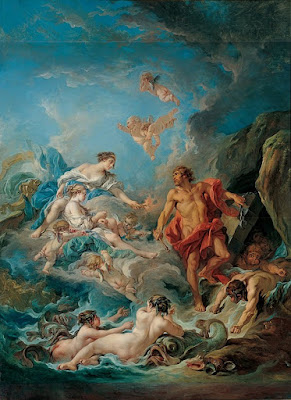
As told by the Roman author Virgil in the first book of The Aeneid, the goddess Juno, consumed by jealousy toward Venus, schemed to prevent the fleet of her rival’s son, Aeneas, from reaching shore and founding a Trojan colony in Italy. In Boucher’s faithful depiction of this myth, Juno visits Aeolus, keeper of the winds, and urges him to unleash their fury, thus provoking a violent storm that would destroy Aeneas’s fleet. As enticement, Juno offers Aeolus her most beautiful nymph, Deiopea, in marriage. She aims the torch directly at his heart as love-struck Aeolus releases the winds, while a cupid unsheathes an arrow to target the compliant nymph, her wrists bound with pearls. The presence of an alluring sea nymph reclining in the foreground signals the outcome: mighty Neptune, god of the sea, will prevail over the winds, and calm the insurgent waters.
(François Boucher)

As told by the Roman author Virgil in the first book of The Aeneid, the goddess Juno, consumed by jealousy toward Venus, schemed to prevent the fleet of her rival’s son, Aeneas, from reaching shore and founding a Trojan colony in Italy. In Boucher’s faithful depiction of this myth, Juno visits Aeolus, keeper of the winds, and urges him to unleash their fury, thus provoking a violent storm that would destroy Aeneas’s fleet. As enticement, Juno offers Aeolus her most beautiful nymph, Deiopea, in marriage. She aims the torch directly at his heart as love-struck Aeolus releases the winds, while a cupid unsheathes an arrow to target the compliant nymph, her wrists bound with pearls. The presence of an alluring sea nymph reclining in the foreground signals the outcome: mighty Neptune, god of the sea, will prevail over the winds, and calm the insurgent waters.
posted by Rachel at
6:00 PM
0 Comments
January 23, 2010
Literary Pick (*)
The Diary of Frida Kahlo (by Carlos Fuentes)

posted by Rachel at
4:54 PM
0 Comments
Reading of the Day
Romolo Marchelli
Lenten Sermons (1682)
God, in order to further torment the
damned, made Himself distiller, and
inside those stills of hell He enclosed
the pangs of the most ravenous
hungers, the most burning thirsts, the
most freezing cold,the firiest passions;
the torments of those slaughtered by
iron, choked by the hangman's noose,
reduced to ashes by flames and torn
apart by wild beasts; the flesh eaten
alive by worms, devoured by
serpents, flayed with knives, gashed
and torn by the torturer's iron combs;
the arrows of Saint Sebastian, the
the gridiron of Saint Lawrence, the oven
in the form in the bronze bull of Saint
Eustace, the lions of Saint Ignatius;
and severed and shattered bones and
dislocated joints and detached limbs;
all the keenest pains, all the most
terrible pangs, all the longest death
agonies and all the slowest, most
laborious, most atrocious deaths.
And distilling all these ingredients,
He made such a brew, each drop of
which contains the refined
quintessence of all pains, in such a
way that each flame, each ember,
better yet each spark of that flame
contains within itself the distillation of
all the torments within a single torment.
Lenten Sermons (1682)
God, in order to further torment the
damned, made Himself distiller, and
inside those stills of hell He enclosed
the pangs of the most ravenous
hungers, the most burning thirsts, the
most freezing cold,the firiest passions;
the torments of those slaughtered by
iron, choked by the hangman's noose,
reduced to ashes by flames and torn
apart by wild beasts; the flesh eaten
alive by worms, devoured by
serpents, flayed with knives, gashed
and torn by the torturer's iron combs;
the arrows of Saint Sebastian, the
the gridiron of Saint Lawrence, the oven
in the form in the bronze bull of Saint
Eustace, the lions of Saint Ignatius;
and severed and shattered bones and
dislocated joints and detached limbs;
all the keenest pains, all the most
terrible pangs, all the longest death
agonies and all the slowest, most
laborious, most atrocious deaths.
And distilling all these ingredients,
He made such a brew, each drop of
which contains the refined
quintessence of all pains, in such a
way that each flame, each ember,
better yet each spark of that flame
contains within itself the distillation of
all the torments within a single torment.
posted by Rachel at
10:59 AM
0 Comments
January 21, 2010

January 20, 2010
Literary Pick (*****)
100 Years of Solitude (Gabriel Garcia Marquez)

I've never read a book that was a continuous and inexhaustible series of events that continued to unravel and turn like a never-ending wheel. And that is exactly what 100 years of solitude is like, events that kept recycling themselves from generation through generation with new births of Aurelianos' and Arcadios'.
I was immediately intimidated by this novel ever since I read about the suicide that "defies the laws of physics". I've never gravitated towards the kind of fantasy literature that would do a thing like that. I assumed the entire book would be of that nature, and It is, and it's great! This novel was fascinatingly rich beyond the imagination of art, super-naturalism and surrealism.
Gabriel Garcia writes so confidently and convincingly, you don't stop to question the delusional world he has created. Macondo is a place, somewhere, no one knows where, but it exists.
It's definitely the kind of a book someone has to read to understand how these occult happenings make sense, but in the village of Macondo they do and it's ok! The Buendia family is deliriously alive!! I had a hard time putting this book down. It's not what I expected at all.
I loved Ursula.
I found it interesting that Prudencio Aguilar (who was dead) couldn't locate his friend Jose Arcadio Buendia (who was alive) until Melquiades himself dies, because up until then no one had died in Macondo to note it on the Motley Map of Deaths (on the other side).
I also loved the tale about meme and her lover, Mauricio Babilonia, whose presence she always sensed because butterflies followed him everywhere.
I read that Garcia Marquez locked himself up for 14 months in order to write this novel, and it makes sense. The imagination required to write all these stories needed solitude. I cannot imagine keeping all those details of tales straight while socializing with the outside world on a
posted by Rachel at
5:50 PM
0 Comments
January 19, 2010


Art of the Day
La Jeune Martyre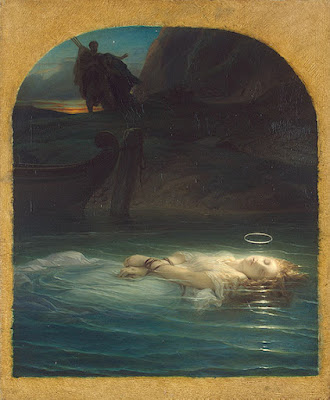 -Delaroche, Hippolyte (Paul).
Christian Martyr Drowned in the Tiber During the Reign of Diocletian
The idea for this painting came to Delaroche during a time of severe illness. The subject deals with the terrible persecution suffered by Christians during the reign of Emperor Diocletian (284-305). The effective contrast of the crimson sunset and the cold greenish-blue tones of the water, with its reflections of that mystical light which illuminates the face of the martyr thrown into the Tiber with her hands tied, gives the painting a very Romantic feel. A contemporary of Delaroche, the writer Théophile Gautier, poetically described this image as that of the "Christian Ophelia" and was particularly admiring of the face of "virginal purity and divine beauty".
 -Delaroche, Hippolyte (Paul).
 Christian Martyr Drowned in the Tiber During the Reign of Diocletian
The idea for this painting came to Delaroche during a time of severe illness. The subject deals with the terrible persecution suffered by Christians during the reign of Emperor Diocletian (284-305). The effective contrast of the crimson sunset and the cold greenish-blue tones of the water, with its reflections of that mystical light which illuminates the face of the martyr thrown into the Tiber with her hands tied, gives the painting a very Romantic feel. A contemporary of Delaroche, the writer Théophile Gautier, poetically described this image as that of the "Christian Ophelia" and was particularly admiring of the face of "virginal purity and divine beauty".
posted by Rachel at
10:53 AM
0 Comments
January 18, 2010

Honor Spotlight
Peggy Guggenheim 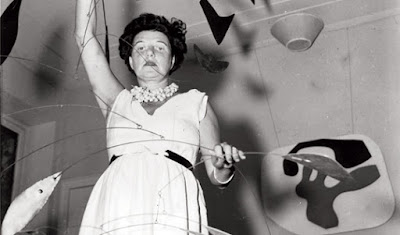
Marguerite ‘Peggy’ Guggenheim (1898—1979) was an American art collector. Born to a wealthy New York City family, she was the daughter of Benjamin Guggenheim, who went down with the Titanic in 1912 and the niece of Solomon R Guggenheim, who would establish the Solomon R Guggenheim Foundation. When she was twenty-one she inherited a not-so-small fortune although, as the less wealthy branch of the family, it was an amount far less than the vast wealth of her father’s siblings. In 1938 she opened a gallery for modern art in London featuring Jean Cocteau and began to collect works of art. After the outbreak of World War II, she purchased as much abstract and Surrealist art as possible. She was particularly interested in new artists and she was instrumental in advancing the careers of many important modern artists, including the American painter Jackson Pollock, the Austrian surrealist Wolfgang Paalen, the sound poet Ada Verdun Howell, and the German painter Max Ernst whom she married in 1942. By the early 1960s she had stopped collecting art and began to concentrate on presenting what she already owned. She loaned out her collection to museums throughout Europe and America, including, of course, the Guggenheim. Eventually, she decided to donate her large home and her collection to the Guggenheim Foundation on her death – the Peggy Guggenheim Collection in Venice.

Marguerite ‘Peggy’ Guggenheim (1898—1979) was an American art collector. Born to a wealthy New York City family, she was the daughter of Benjamin Guggenheim, who went down with the Titanic in 1912 and the niece of Solomon R Guggenheim, who would establish the Solomon R Guggenheim Foundation. When she was twenty-one she inherited a not-so-small fortune although, as the less wealthy branch of the family, it was an amount far less than the vast wealth of her father’s siblings. In 1938 she opened a gallery for modern art in London featuring Jean Cocteau and began to collect works of art. After the outbreak of World War II, she purchased as much abstract and Surrealist art as possible. She was particularly interested in new artists and she was instrumental in advancing the careers of many important modern artists, including the American painter Jackson Pollock, the Austrian surrealist Wolfgang Paalen, the sound poet Ada Verdun Howell, and the German painter Max Ernst whom she married in 1942. By the early 1960s she had stopped collecting art and began to concentrate on presenting what she already owned. She loaned out her collection to museums throughout Europe and America, including, of course, the Guggenheim. Eventually, she decided to donate her large home and her collection to the Guggenheim Foundation on her death – the Peggy Guggenheim Collection in Venice.
posted by Rachel at
9:48 PM
0 Comments
Sound of the Day
Umi Says- Mos Def
Click here
I don't wanna write this down, (world... premiere)
I wanna tell you how I feel right now (world... premiere)
I don't wanna take no time to write this down, (world... premiere)
I wanna tell you how I feel right now, hey (world... premiere)
Tomorrow may never come
For you or me
Life is not promised
Tomorrow may never show up
For you and me
This life is not promised
I ain't no perfect man
I'm trying to do, the best that I can,
With what it is I have
I ain't no perfect man
I'm trying to do, the best that I can,
With what it is I have
Put my heart and soul into this song (yes yes)
I hope you feel me
From where I am, to wherever you are
I mean that sincerely
Tomorrow may never come
For and me
Life is not promised
Tomorrow may never appear
You better hold this very moment very close to you (right now)
Very close to you (right now)
So close to you, So- close to you (your moment in history is right now!)
Don't be affraid, to let it shine
My Umi said shine your light on the world
Shine your light for the world to see
My Abi said shine your light on the world
Shine your light for the world to see
(I want black people to be free, to be free, to be free)
My Abi said shine your light on the world
(Want black people to be free, to be free, to be free)
Shine your light for the world to see
(Want black people to be free, to be free, to be free)
My Umi said shine your light on the world
(Want black people to be free, to be free, to be free)
Shine your light for the world to see
(Want black people to be free, to be free...)
Sometimes I get discouraged
I look around and, things are so weak
People are so weak
Sometimes,
Sometimes I feel like crying
Sometimes my heart gets heavy
Sometimes I just want to leave and fly away (fly fly fly, like a dove)
Sometimes I don't know what to do with myself (ow!)
Passion takes over me
I feel like a man
Going insane
Losing my brain
Trying to maintain
Doing my thang
Hey hey hey hey hey
Put my heart and soul into this y'all
I hope you feel me
Where I am, to wherever you are (ha ha ha ha)
Sometimes I don't want to be bothered
Sometimes I just want a quiet life, with
Me and my babies, me and my lady
Sometimes I don't want to get into no war
(Black people to be free, to be free...)
Sometimes I don't wanna be a soldier
Sometimes I just wanna be a man, but
Umi said shine your light on the world
Shine your light for the world to see
My Abi said shine your light on the world
Shine your light for the world to see
(I want black people to be free, to be free, to be free)
My dreamers(?) said shine your light on the world
(Want black people to be free, to be free, to be free)
Shine your light for the world to see
(Want black people)
My elders said shine your light on the world (Hey hey)
Shine your light for the world to see
I want black people to be free, to be free, to be free
All my people to be free, to be free, to be free
Oh black people to be free, to be free, to be free
Oh black people to be free, to be free, to be free
That's all that matters to me [x7]
Black people unite and let's all get down
Gotta have what,
Gotta have that love
Peace and understanding
One God, one light
One man, one voice, one mic
Black people unite come on and do it right
Black people unite come on and do it right
Black people unite come on and get down
Gotta have what,
Love, peace and understanding
One God, one voice, one life
One man, gon' shine my light
Black people unite, now hop up and do it right
Black people unite, now come on and do it right
Yeah baby that's what I like
Yeah baby that's what I like
Yeah baby that's what I like...
(Black people, my people....)
Click here
I don't wanna write this down, (world... premiere)
I wanna tell you how I feel right now (world... premiere)
I don't wanna take no time to write this down, (world... premiere)
I wanna tell you how I feel right now, hey (world... premiere)
Tomorrow may never come
For you or me
Life is not promised
Tomorrow may never show up
For you and me
This life is not promised
I ain't no perfect man
I'm trying to do, the best that I can,
With what it is I have
I ain't no perfect man
I'm trying to do, the best that I can,
With what it is I have
Put my heart and soul into this song (yes yes)
I hope you feel me
From where I am, to wherever you are
I mean that sincerely
Tomorrow may never come
For and me
Life is not promised
Tomorrow may never appear
You better hold this very moment very close to you (right now)
Very close to you (right now)
So close to you, So- close to you (your moment in history is right now!)
Don't be affraid, to let it shine
My Umi said shine your light on the world
Shine your light for the world to see
My Abi said shine your light on the world
Shine your light for the world to see
(I want black people to be free, to be free, to be free)
My Abi said shine your light on the world
(Want black people to be free, to be free, to be free)
Shine your light for the world to see
(Want black people to be free, to be free, to be free)
My Umi said shine your light on the world
(Want black people to be free, to be free, to be free)
Shine your light for the world to see
(Want black people to be free, to be free...)
Sometimes I get discouraged
I look around and, things are so weak
People are so weak
Sometimes,
Sometimes I feel like crying
Sometimes my heart gets heavy
Sometimes I just want to leave and fly away (fly fly fly, like a dove)
Sometimes I don't know what to do with myself (ow!)
Passion takes over me
I feel like a man
Going insane
Losing my brain
Trying to maintain
Doing my thang
Hey hey hey hey hey
Put my heart and soul into this y'all
I hope you feel me
Where I am, to wherever you are (ha ha ha ha)
Sometimes I don't want to be bothered
Sometimes I just want a quiet life, with
Me and my babies, me and my lady
Sometimes I don't want to get into no war
(Black people to be free, to be free...)
Sometimes I don't wanna be a soldier
Sometimes I just wanna be a man, but
Umi said shine your light on the world
Shine your light for the world to see
My Abi said shine your light on the world
Shine your light for the world to see
(I want black people to be free, to be free, to be free)
My dreamers(?) said shine your light on the world
(Want black people to be free, to be free, to be free)
Shine your light for the world to see
(Want black people)
My elders said shine your light on the world (Hey hey)
Shine your light for the world to see
I want black people to be free, to be free, to be free
All my people to be free, to be free, to be free
Oh black people to be free, to be free, to be free
Oh black people to be free, to be free, to be free
That's all that matters to me [x7]
Black people unite and let's all get down
Gotta have what,
Gotta have that love
Peace and understanding
One God, one light
One man, one voice, one mic
Black people unite come on and do it right
Black people unite come on and do it right
Black people unite come on and get down
Gotta have what,
Love, peace and understanding
One God, one voice, one life
One man, gon' shine my light
Black people unite, now hop up and do it right
Black people unite, now come on and do it right
Yeah baby that's what I like
Yeah baby that's what I like
Yeah baby that's what I like...
(Black people, my people....)
posted by Rachel at
2:55 PM
0 Comments
January 16, 2010

January 15, 2010
January 13, 2010
Please help
"With just a few hundred miles between us and the long history that binds us together, Haitians are our neighbors in the Americas and here at home, so we have to be there for them in their hour of need"
-President Obama
100% of donations go to relief fund
http://www.yele.org/
http://www.worldvision.org/
http://www.doctorswithoutborders.org/
http://www.compassion.com/
donation list:
http://www.ibrii.com/n/7u3jr
-President Obama
100% of donations go to relief fund
http://www.yele.org/
http://www.worldvision.org/
http://www.doctorswithoutborders.org/
http://www.compassion.com/
donation list:
http://www.ibrii.com/n/7u3jr
posted by Rachel at
11:57 AM
0 Comments
January 11, 2010
Cultural News
Miep Gies, Anne Frank protector, dies at 100
Miep Gies, who ensured the diary of Anne Frank did not fall into the hands of Nazis after the teen's arrest, has died. She was 100.
Gies was among a team of Dutch citizens who hid the Frank family of four and four others in a secret annex in Amsterdam, Netherlands, during World War II, according to her official Web site, which announced her death Monday. She worked as a secretary for Anne Frank's father, Otto, in the front side of the same Prinsengracht building.
The family stayed in the secret room from July 1942 until August 4, 1944, when they were arrested by Gestapo and Dutch police after being betrayed by an informant. Two of Gies' team were arrested that day, but she and her friend, Bep Voskuijl, were left behind -- and found 14-year-old Anne's papers.
"And there Bep and I saw Anne's diary papers lying on the floor. I said, 'Pick them up!' Bep stood there staring, frozen. I said, 'Pick them up! Pick them up!' We were afraid, but we did out best to collect all the papers," Gies said in a 1998 interview with The Anne Frank House in Amsterdam.
"Then we went downstairs. And there we stood, Bep and I. I asked, 'What now, Bep?' She answered, 'You're the oldest. You hold on to them. So I did."
The girl had chronicled two years of the emotions and fears that gripped her during hiding, as well as candid thoughts on her family, her feelings for friend-in-hiding Peter van Pels, and dreams of being a professional writer. Mixed into the entries were the names of the Dutch helpers, who risked their lives to keep the family's secret.
"I didn't read Anne's diary papers. ... It's a good thing I didn't because if I had read them I would have had to burn them," she said in the 1998 interview. "Some of the information in them was dangerous."
The diary was sheltered in Gies' desk drawer and later turned over to Otto Frank when he returned after the war as the only surviving resident of the annex. Anne died at northern Germany's Bergen-Belsen concentration camp in 1945.
Her father published her diary, titled "The Secret Annex," in 1947.
Despite the legendary hardship she endured during the German occupation, Gies never embraced the label of a hero.
"More than 20,000 Dutch people helped to hide Jews and others in need of hiding during those years. I willingly did what I could to help. My husband did as well. It was not enough," she says in the prologue of her memoirs, "Anne Frank Remembered: The Story of the Woman Who Helped to Hide the Frank Family."
"There is nothing special about me. I have never wanted special attention. I was only willing to do what was asked of me and what seemed necessary at the time."
Gies' husband, Jan, whom she married in 1941, died in 1993. The couple had a son together.

Miep Gies, who ensured the diary of Anne Frank did not fall into the hands of Nazis after the teen's arrest, has died. She was 100.
Gies was among a team of Dutch citizens who hid the Frank family of four and four others in a secret annex in Amsterdam, Netherlands, during World War II, according to her official Web site, which announced her death Monday. She worked as a secretary for Anne Frank's father, Otto, in the front side of the same Prinsengracht building.
The family stayed in the secret room from July 1942 until August 4, 1944, when they were arrested by Gestapo and Dutch police after being betrayed by an informant. Two of Gies' team were arrested that day, but she and her friend, Bep Voskuijl, were left behind -- and found 14-year-old Anne's papers.
"And there Bep and I saw Anne's diary papers lying on the floor. I said, 'Pick them up!' Bep stood there staring, frozen. I said, 'Pick them up! Pick them up!' We were afraid, but we did out best to collect all the papers," Gies said in a 1998 interview with The Anne Frank House in Amsterdam.
"Then we went downstairs. And there we stood, Bep and I. I asked, 'What now, Bep?' She answered, 'You're the oldest. You hold on to them. So I did."
The girl had chronicled two years of the emotions and fears that gripped her during hiding, as well as candid thoughts on her family, her feelings for friend-in-hiding Peter van Pels, and dreams of being a professional writer. Mixed into the entries were the names of the Dutch helpers, who risked their lives to keep the family's secret.
"I didn't read Anne's diary papers. ... It's a good thing I didn't because if I had read them I would have had to burn them," she said in the 1998 interview. "Some of the information in them was dangerous."
The diary was sheltered in Gies' desk drawer and later turned over to Otto Frank when he returned after the war as the only surviving resident of the annex. Anne died at northern Germany's Bergen-Belsen concentration camp in 1945.
Her father published her diary, titled "The Secret Annex," in 1947.
Despite the legendary hardship she endured during the German occupation, Gies never embraced the label of a hero.
"More than 20,000 Dutch people helped to hide Jews and others in need of hiding during those years. I willingly did what I could to help. My husband did as well. It was not enough," she says in the prologue of her memoirs, "Anne Frank Remembered: The Story of the Woman Who Helped to Hide the Frank Family."
"There is nothing special about me. I have never wanted special attention. I was only willing to do what was asked of me and what seemed necessary at the time."
Gies' husband, Jan, whom she married in 1941, died in 1993. The couple had a son together.
posted by Rachel at
11:04 PM
0 Comments


January 7, 2010
January 2, 2010
Literary Pick (**** 1/2)
A Tree Grows In Brooklyn (Betty Smith)

posted by Rachel at
9:01 PM
0 Comments
December 31, 2009
Cultural News
Why Van Gogh cut his ear: new clue Still-life painting depicts letter with news of his brother's engagement
An envelope depicted in a Van Gogh painting provides a clue that could help to explain why the artist slashed his ear. The envelope, in Still Life: Drawing Board with Onions, 1889, is addressed to Vincent from his brother Theo. Until now, no one has considered whether the artist was illustrating a specific letter. The letter in the painting probably arrived in Arles on 23 December 1888, the fateful day when Vincent mutilated his ear in the late evening. It almost certainly contained news that Theo had fallen in love with Johanna (Jo) Bonger, and Vincent was fearful that he might lose his brother’s emotional and financial support. In the still-life, the handwriting on the envelope is clearly Theo’s, and the letter is addressed to Vincent in Arles. Although the postmarks lack a legible date, one contains the number “67”, enclosed in a circle. This was used by the post office in Place des Abbesses, close to Theo’s Montmartre apartment. The postmark directly over the two postage stamps reads “Jour de l’An” (New Year’s Day). This was spotted by Dutch specialists working on the new edition of Van Gogh’s letters, which was published in October. They concluded that the letter had been posted during “the busy period around New Year” and it had possibly arrived on 23 December, the date Vincent received his 100 francs financial allowance from Theo by post. The letter was probably posted the day before from Paris. The established view is that Vincent did not learn of Theo’s engagement until after he mutilated his ear, but our research suggests that news of the love affair reached him on 23 December. Theo and Jo had met (for a second time, after a long break) in Paris in mid-December and decided to marry just a few days later. On 21 December Theo wrote to his mother, asking for permission. His brother must surely have been among the next to know. It seems Vincent already knew of the impending engagement when Theo visited him in hospital on Christmas Day. In a recently published letter, Theo wrote to his fiancée about the brief hospital visit: “When I mentioned you to him he evidently knew who and what I meant and when I asked whether he approved of our plans, he said yes, but that marriage ought not to be regarded as the main object in life.” On Christmas Day Vincent was suffering from a life-threatening wound and was in considerable mental distress, so it seems unlikely that Theo would have broken the news about his engagement. Although it was briefly discussed, this was presumably because Vincent had already known. Still Life: Drawing Board with Onions was painted just a few days after Vincent returned to the Yellow House on 7 January 1889. News of the love affair could well have been a trigger for the self-mutilation, although there was probably no one simple explanation for the incident and there were also serious tensions with Gauguin. Vincent may have feared (wrongly) that he would lose the support of Theo. For years, Theo had provided money and friendship. Vincent’s feelings must have been complex, and by January 1889 he may well have become reconciled to the engagement, following reassurances from his brother. The very fact that he included the envelope in the still-life suggests a message of hope. Although it is speculation, the postmark on the envelope might represent a coded message that the strong links between the two brothers would survive. The Musée de La Poste in Paris told us that although “Jour de l’An” postmarks were widely used in the run-up to Christmas and New Year in the 1880s, most are fairly small marks, rather than the more prominent words inscribed by Van Gogh. This suggests that the personalised postmark may have been Vincent’s way of stressing to Theo that the letter depicted was a very particular one—and that he wished his brother well for the new year. The painting, on loan from the Kröller-Müller Museum in Otterlo, will form the centrepiece of “The Real Van Gogh: the Artist and his Letters”, opening at London’s Royal Academy on 23 January. -TAN

An envelope depicted in a Van Gogh painting provides a clue that could help to explain why the artist slashed his ear. The envelope, in Still Life: Drawing Board with Onions, 1889, is addressed to Vincent from his brother Theo. Until now, no one has considered whether the artist was illustrating a specific letter. The letter in the painting probably arrived in Arles on 23 December 1888, the fateful day when Vincent mutilated his ear in the late evening. It almost certainly contained news that Theo had fallen in love with Johanna (Jo) Bonger, and Vincent was fearful that he might lose his brother’s emotional and financial support. In the still-life, the handwriting on the envelope is clearly Theo’s, and the letter is addressed to Vincent in Arles. Although the postmarks lack a legible date, one contains the number “67”, enclosed in a circle. This was used by the post office in Place des Abbesses, close to Theo’s Montmartre apartment. The postmark directly over the two postage stamps reads “Jour de l’An” (New Year’s Day). This was spotted by Dutch specialists working on the new edition of Van Gogh’s letters, which was published in October. They concluded that the letter had been posted during “the busy period around New Year” and it had possibly arrived on 23 December, the date Vincent received his 100 francs financial allowance from Theo by post. The letter was probably posted the day before from Paris. The established view is that Vincent did not learn of Theo’s engagement until after he mutilated his ear, but our research suggests that news of the love affair reached him on 23 December. Theo and Jo had met (for a second time, after a long break) in Paris in mid-December and decided to marry just a few days later. On 21 December Theo wrote to his mother, asking for permission. His brother must surely have been among the next to know. It seems Vincent already knew of the impending engagement when Theo visited him in hospital on Christmas Day. In a recently published letter, Theo wrote to his fiancée about the brief hospital visit: “When I mentioned you to him he evidently knew who and what I meant and when I asked whether he approved of our plans, he said yes, but that marriage ought not to be regarded as the main object in life.” On Christmas Day Vincent was suffering from a life-threatening wound and was in considerable mental distress, so it seems unlikely that Theo would have broken the news about his engagement. Although it was briefly discussed, this was presumably because Vincent had already known. Still Life: Drawing Board with Onions was painted just a few days after Vincent returned to the Yellow House on 7 January 1889. News of the love affair could well have been a trigger for the self-mutilation, although there was probably no one simple explanation for the incident and there were also serious tensions with Gauguin. Vincent may have feared (wrongly) that he would lose the support of Theo. For years, Theo had provided money and friendship. Vincent’s feelings must have been complex, and by January 1889 he may well have become reconciled to the engagement, following reassurances from his brother. The very fact that he included the envelope in the still-life suggests a message of hope. Although it is speculation, the postmark on the envelope might represent a coded message that the strong links between the two brothers would survive. The Musée de La Poste in Paris told us that although “Jour de l’An” postmarks were widely used in the run-up to Christmas and New Year in the 1880s, most are fairly small marks, rather than the more prominent words inscribed by Van Gogh. This suggests that the personalised postmark may have been Vincent’s way of stressing to Theo that the letter depicted was a very particular one—and that he wished his brother well for the new year. The painting, on loan from the Kröller-Müller Museum in Otterlo, will form the centrepiece of “The Real Van Gogh: the Artist and his Letters”, opening at London’s Royal Academy on 23 January. -TAN
posted by Rachel at
4:39 PM
1 Comments
December 29, 2009


December 28, 2009
Honor Spotlight
Yoko Ono

Yoko Ono is one of the most famous widows in the world. Her name is synonymous with the Beatles and John Lennon. She began making films in the 1960's and made substantial contributions to the avant garde genre of film. When Yoko Ono began this part of her life, she was already an established artist playing an active role in the world of music, most well known by her "primal scream" or high pitched wails. In the early 1960's, Ono became part of a group known as Fluxus, whose artists were "dedicated to challenging conventional definitions in the fine arts, and conventional relationships between artwork and viewer." The artwork that Yoko made in the early 1960's required the viewer to complete the process. "Painting to See a Room Through," made in 1961, was a canvas with an almost invisible hole through which the viewer could see the room. "Painting to Hammer a Nail In," also made in 1961, was a white wood panel that the audience hammered a nail into with an attached hammer. In the mid 1960's Yoko began to write mini film scripts. She contributed three films to the Fluxfilm Program in 1966. Two of these films, Eyeblink and Match, are one shot films shot at 2000 frames per second. She also included No. 4, or Bottoms, in her contribution. Yoko continued to make films through the early 1970's, many of which she collaborated with her husband, John Lennon. Her films can be divided into themes. The first of which, like bottoms, consists of close examination of the naked human body. The second category are theoretical films. They have a theme of movement and change. The last category are documentaries. Bed-In made in 1969, is the filming of the peace event Ono and Lennon staged on their honeymoon. Yoko Ono can be viewed as a radical artist, someone who requires an open mind in order to have her work appreciated. She stretches the limits of what society views as acceptable and never ceases to create an opportunity for the viewer to step back and reflect.
--Shahbeila Bateman

Yoko Ono is one of the most famous widows in the world. Her name is synonymous with the Beatles and John Lennon. She began making films in the 1960's and made substantial contributions to the avant garde genre of film. When Yoko Ono began this part of her life, she was already an established artist playing an active role in the world of music, most well known by her "primal scream" or high pitched wails. In the early 1960's, Ono became part of a group known as Fluxus, whose artists were "dedicated to challenging conventional definitions in the fine arts, and conventional relationships between artwork and viewer." The artwork that Yoko made in the early 1960's required the viewer to complete the process. "Painting to See a Room Through," made in 1961, was a canvas with an almost invisible hole through which the viewer could see the room. "Painting to Hammer a Nail In," also made in 1961, was a white wood panel that the audience hammered a nail into with an attached hammer. In the mid 1960's Yoko began to write mini film scripts. She contributed three films to the Fluxfilm Program in 1966. Two of these films, Eyeblink and Match, are one shot films shot at 2000 frames per second. She also included No. 4, or Bottoms, in her contribution. Yoko continued to make films through the early 1970's, many of which she collaborated with her husband, John Lennon. Her films can be divided into themes. The first of which, like bottoms, consists of close examination of the naked human body. The second category are theoretical films. They have a theme of movement and change. The last category are documentaries. Bed-In made in 1969, is the filming of the peace event Ono and Lennon staged on their honeymoon. Yoko Ono can be viewed as a radical artist, someone who requires an open mind in order to have her work appreciated. She stretches the limits of what society views as acceptable and never ceases to create an opportunity for the viewer to step back and reflect.
--Shahbeila Bateman
posted by Rachel at
5:13 PM
0 Comments
Reading of the Day
Preparation for Death
St. Alphonsus Liguori XXVI (1758)
What is this inferno? It is the place of torment[...]And the more someone has offended God in some way, the more torments he will suffer [...]The sense of smell will be tormented. What punishment would it be to find oneself closed in a room with a rotten corpse [...] The damned must reside amidst many millions of other damned souls, alive for the punishment, but cadavers for the stench they give off [...] They will suffer all the more (I say) for their stench, for the screaming, for the crowds, because in hell, they will be one on top of the other, like sheep crowded together in winter time [...] from this then will come the punishment of immobility [...]since the damned soul will then fall into hell on the last day, so he will have to remain, without ever changing it's place and without being able to move his foot, or his hand, as long as God is God.
His hearing will be tormented with the continuous cries of those poor desperate souls. The demons will clamour continuously[...]what punishment is it when one wants to sleep and one hears an invalid who complains continuously, a dog barking, a little child crying?
Wretched damned, who must hear the noise and cries of those tormented constantly and for all eternity! the throat will be tormented with hunger, the damned will be hungry as wolves [...] but he will never have so much as a crumb of bread. He will feel such thirst, that not even all the water in the sea would be enough to slake it, but he will not have so much as a drop; the glutton ask for a drop, but he hasn't had it yet, and he never, will [...]
The punishment that most torments the senses of the damned is the fire of hell, which torments the torch [...] in this land punishment by fire is the worst of all, but there is a great deal of difference between our fire and that of hell, which St. Augustine has said makes ours seem as if painted [...] therefore the wretched will be surrounded by fire, like wood inside a furnace. The damned soul will find himself within an abyss of fire below, an abyss above, an abyss all around him. If he touches, sees, breathes, he does not touch, see or breath anything but fire. He will exist in fire like a fish in water. But this fire will not only surround the damned, it will enter into his guts to torment him from within. His body will become entirely made of fire, so that his guts will burn inside his stomach, his heart inside his chest, his brain inside his scull, his blood inside his veins, even his bone marrow inside his bones; each damn soul will become a furnace of fire [...] If hell were not eternal, it would not be hell. The punishment that does not last for long, is not much of a punishment. On an infirm man you may lance an abscess, on another gangrene breaks out; the pain is great, but because it ends quickly it's no great torment. But what punishment would it be, if that cut or that operation with fire continued for a week, for an entire month? When the punishment is very long, even when it is light, like discomfort in the eyes, or the pain of a great weight, it becomes unbearable. But why stop at pain? Even a play or music that lasts too long, or continues for an entire day, would be unbearably tedious. And what if it lasted a month? or a year? What would hell be like? It is not the place where one watches the same play, or hears the same music; there is not only a discomfort in the eyes, or a great weight; one does not feel merely the torment of a cut, or a hot iron, but rather all the torments, all the pain, and for how long? for all of eternity[...]
[...]death in this life is the thing most feared by sinners, but in hell it will become the most desired[...] and how long will their misery last? for ever and ever [...], the damned will ask the demons; where is the night [...] where does it end? Where do these shadows lift, where do these cries, this stench, these flames, these torments end? And they will answer; 'Never, Never.' And how long will it last? 'for ever and ever'.
-quoted from "On Ugliness" by Umberto Eco
St. Alphonsus Liguori XXVI (1758)
What is this inferno? It is the place of torment[...]And the more someone has offended God in some way, the more torments he will suffer [...]The sense of smell will be tormented. What punishment would it be to find oneself closed in a room with a rotten corpse [...] The damned must reside amidst many millions of other damned souls, alive for the punishment, but cadavers for the stench they give off [...] They will suffer all the more (I say) for their stench, for the screaming, for the crowds, because in hell, they will be one on top of the other, like sheep crowded together in winter time [...] from this then will come the punishment of immobility [...]since the damned soul will then fall into hell on the last day, so he will have to remain, without ever changing it's place and without being able to move his foot, or his hand, as long as God is God.
His hearing will be tormented with the continuous cries of those poor desperate souls. The demons will clamour continuously[...]what punishment is it when one wants to sleep and one hears an invalid who complains continuously, a dog barking, a little child crying?
Wretched damned, who must hear the noise and cries of those tormented constantly and for all eternity! the throat will be tormented with hunger, the damned will be hungry as wolves [...] but he will never have so much as a crumb of bread. He will feel such thirst, that not even all the water in the sea would be enough to slake it, but he will not have so much as a drop; the glutton ask for a drop, but he hasn't had it yet, and he never, will [...]
The punishment that most torments the senses of the damned is the fire of hell, which torments the torch [...] in this land punishment by fire is the worst of all, but there is a great deal of difference between our fire and that of hell, which St. Augustine has said makes ours seem as if painted [...] therefore the wretched will be surrounded by fire, like wood inside a furnace. The damned soul will find himself within an abyss of fire below, an abyss above, an abyss all around him. If he touches, sees, breathes, he does not touch, see or breath anything but fire. He will exist in fire like a fish in water. But this fire will not only surround the damned, it will enter into his guts to torment him from within. His body will become entirely made of fire, so that his guts will burn inside his stomach, his heart inside his chest, his brain inside his scull, his blood inside his veins, even his bone marrow inside his bones; each damn soul will become a furnace of fire [...] If hell were not eternal, it would not be hell. The punishment that does not last for long, is not much of a punishment. On an infirm man you may lance an abscess, on another gangrene breaks out; the pain is great, but because it ends quickly it's no great torment. But what punishment would it be, if that cut or that operation with fire continued for a week, for an entire month? When the punishment is very long, even when it is light, like discomfort in the eyes, or the pain of a great weight, it becomes unbearable. But why stop at pain? Even a play or music that lasts too long, or continues for an entire day, would be unbearably tedious. And what if it lasted a month? or a year? What would hell be like? It is not the place where one watches the same play, or hears the same music; there is not only a discomfort in the eyes, or a great weight; one does not feel merely the torment of a cut, or a hot iron, but rather all the torments, all the pain, and for how long? for all of eternity[...]
[...]death in this life is the thing most feared by sinners, but in hell it will become the most desired[...] and how long will their misery last? for ever and ever [...], the damned will ask the demons; where is the night [...] where does it end? Where do these shadows lift, where do these cries, this stench, these flames, these torments end? And they will answer; 'Never, Never.' And how long will it last? 'for ever and ever'.
-quoted from "On Ugliness" by Umberto Eco
posted by Rachel at
4:35 PM
0 Comments

December 27, 2009

December 20, 2009


December 19, 2009
Art of the Day
Yes Painting (Yoko Ono)

"it's a great relief when you get up the ladder and you look through the spyglass and it doesn't say "no" or "fuck you"; it says YES"
-John Lennon


"it's a great relief when you get up the ladder and you look through the spyglass and it doesn't say "no" or "fuck you"; it says YES"
-John Lennon
posted by Rachel at
10:32 PM
0 Comments


December 18, 2009
Quote of the Day
Duchess: "I must go. I have to call for my husband at the club, to take him to some absurd meeting at Willis's Rooms, where he is going to be in the chair. If I am late, he is sure to be furious, and I couldn't have a scene in this bonnet. It is far too fragile. A harsh word would ruin it."
-The Picture of Dorian gray
-The Picture of Dorian gray
posted by Rachel at
8:02 PM
0 Comments
Literary Pick (*)
The Erotic Spirit: An Anthology of Poems of Sensuality, Love, and Longing

posted by Rachel at
3:53 PM
0 Comments
Honor Spotlight
Lee Krasner 
Lee Krasner was born Lena Krassner in 1908 to Russian emigré parents living in Brooklyn. Interested in the arts from an early age, Krasner attended the Cooper Union for the Advancement of Art and Science, and later the National Academy of Design. Krasner’s early artistic influences included Giorgio de Chirico and Joan Miro, but it was under the tutelage of Hans Hofmann in 1937 that she began to develop her own artistic voice.
By the late 1930s and early 1940s, Krasner was gaining recognition for working in an innovative style that reflected the influences of Synthetic Cubism and Neoplasticism. During the war years, Krasner’s art went through a transitional period, throughout which she painted intuitively, working and reworking her canvases. In 1945, Krasner married artist Jackson Pollock, whose free, all-over technique stimulated Krasner.
At this time, her energetic, staccato paintings were also informed by ancient languages and calligraphic systems. Pollock’s career took precedence over Krasner’s throughout their partnership, and Krasner struggled to find her mature voice, experiencing phases of hesitation interspersed with periods of intense creative activity.
It was not until after Pollock’s untimely death in 1956, and the death of Krasner’s mother, Anna Krasner, in 1959 that Krasner created her most memorable works: large gestural paintings from her Umber and White series, and monumental, expressive collages.
Krasner died in 1984, leaving a large body of diverse work that firmly established her as an important figure in mid-century American Abstract Expressionism.
-AC

Lee Krasner was born Lena Krassner in 1908 to Russian emigré parents living in Brooklyn. Interested in the arts from an early age, Krasner attended the Cooper Union for the Advancement of Art and Science, and later the National Academy of Design. Krasner’s early artistic influences included Giorgio de Chirico and Joan Miro, but it was under the tutelage of Hans Hofmann in 1937 that she began to develop her own artistic voice.
By the late 1930s and early 1940s, Krasner was gaining recognition for working in an innovative style that reflected the influences of Synthetic Cubism and Neoplasticism. During the war years, Krasner’s art went through a transitional period, throughout which she painted intuitively, working and reworking her canvases. In 1945, Krasner married artist Jackson Pollock, whose free, all-over technique stimulated Krasner.
At this time, her energetic, staccato paintings were also informed by ancient languages and calligraphic systems. Pollock’s career took precedence over Krasner’s throughout their partnership, and Krasner struggled to find her mature voice, experiencing phases of hesitation interspersed with periods of intense creative activity.
It was not until after Pollock’s untimely death in 1956, and the death of Krasner’s mother, Anna Krasner, in 1959 that Krasner created her most memorable works: large gestural paintings from her Umber and White series, and monumental, expressive collages.
Krasner died in 1984, leaving a large body of diverse work that firmly established her as an important figure in mid-century American Abstract Expressionism.
-AC
posted by Rachel at
3:12 PM
0 Comments
December 17, 2009
Quote of the Day
When a person is lucky
enough to live inside a story,
To live inside an imaginary
world, the pains of this world
disappear. For as long as the story goes on,
reality no longer exists.
-Paul Auster
enough to live inside a story,
To live inside an imaginary
world, the pains of this world
disappear. For as long as the story goes on,
reality no longer exists.
-Paul Auster
posted by Rachel at
11:33 AM
0 Comments
December 16, 2009


Reading of the Day

The Song of Hate (Olindo Guerrini) 'Posthumous' (1877)
When you shall sleep forgotten
Beneath the fat earth
And the cross of God will be planted
Straight on your coffin,
When your cheeks, rotten, will melt
Into wobbly teeth
And in your stinking empty eye sockets
The worms will seethe,
The sleep that for others is peace
Will be a new torment
And a cold, tenacious remorse will come,
To chew on your brain.
A biting, atrocious remorse
Will visit your grave
Despite God, and His cross,
To gnaw your bones,
I will be that remorse, I will seek you
In the dark night,
A demon that shuns the day, I will come howling
Like a She-wolf;
And with these nails I'll dig the earth
Become manure for you
And I will tug the nails from the foul wood
That covers your vile carcass.
Oh, how in your heart still scarlet
I will sate the ancient hatred,
Oh, with what joy will I sink my nails
Into your shameless belly!
I shall sit on your stinking belly
for eternity,
The ghost of revenge and sin
The terror of hell:
And in your ear that was so fair
Unappeased I shall whisper
Things that will sear your brain
Like a red-hot iron [...]
And your pillory will be the verses
In which I consign you to eternal shame,
To torments that will make you long
for the pangs of hell
Here I'll make you die once more,
You bitch, slowly, with stabbing needles,
And your shame, my revenge,
I shall seal between your eyes.
-Image: Harpy II By Edvard Munch
posted by Rachel at
10:24 AM
0 Comments
About Me
- Name: Rachel
- Location: away, nyc, United States

"I have known the joy and pain of friendship. I have served and been served. I have made some good enemies for which I am not a bit sorry. I have loved unselfishly, and I have fondled hatred with the red-hot tongs of Hell. That's living." — Zora Neale Hurston
Links
Previous Posts
- Musicmatch
- Queen Elizabeth II has died
- Literary Pick (**)
- The Panic in Needle Park (1971) Trailer
- Photograph of the Day
- Paul Sorvino
- Crescent Street station (BMT Jamaica Line)
- Literary Pick (***)
- Poltergeist "You only moved the headstones!!!"
- Literary Pick (****)
Archives
- March 2009
- April 2009
- May 2009
- June 2009
- July 2009
- August 2009
- September 2009
- October 2009
- November 2009
- December 2009
- January 2010
- February 2010
- March 2010
- April 2010
- May 2010
- June 2010
- July 2010
- August 2010
- September 2010
- October 2010
- November 2010
- December 2010
- January 2011
- February 2011
- March 2011
- April 2011
- May 2011
- June 2011
- July 2011
- August 2011
- September 2011
- October 2011
- November 2011
- December 2011
- January 2012
- February 2012
- March 2012
- April 2012
- May 2012
- June 2012
- July 2012
- August 2012
- September 2012
- October 2012
- November 2012
- December 2012
- January 2013
- March 2013
- April 2013
- May 2013
- June 2013
- July 2013
- August 2013
- September 2013
- October 2013
- November 2013
- December 2013
- January 2014
- February 2014
- March 2014
- April 2014
- May 2014
- June 2014
- July 2014
- August 2014
- September 2014
- October 2014
- November 2014
- January 2015
- February 2015
- March 2015
- April 2015
- May 2015
- June 2015
- July 2015
- August 2015
- September 2015
- October 2015
- November 2015
- December 2015
- January 2016
- February 2016
- April 2016
- June 2016
- February 2019
- March 2019
- May 2019
- July 2019
- August 2019
- September 2019
- November 2019
- December 2019
- January 2020
- February 2020
- April 2020
- May 2020
- July 2020
- August 2020
- September 2020
- October 2020
- November 2020
- December 2020
- January 2021
- February 2021
- March 2021
- April 2021
- May 2021
- June 2021
- July 2021
- August 2021
- September 2021
- October 2021
- December 2021
- January 2022
- February 2022
- March 2022
- April 2022
- May 2022
- July 2022
- August 2022
- January 2023

Subscribe to
Posts [Atom]