January 11, 2022

Bob Saget

Bob Saget, Comic Who Starred in Sitcom ‘Full House,’ Dies at 65

The actor, who had also hosted “America’s Funniest Home Videos,” was found dead in an Orlando hotel room while on tour.

Credit...Dan Steinberg/R-STEINBERG, via Associated Press

Bob Saget, the stand-up comic and actor who was known as Danny Tanner on the long-running sitcom “Full House,” as the host of “America’s Funniest Home Videos” and for his deadpan, ribald stage routines, was found dead on Sunday in Orlando, Fla. He was 65.

His death was confirmed by the Orange County Sheriff’s Office, which said that Mr. Saget was found unresponsive in a hotel room at the Ritz-Carlton Orlando, Grande Lakes. The cause was not known, but the sheriff’s office said there were no signs of foul play or drug use.

Mr. Saget, who was on tour, had performed on Saturday night at Ponte Vedra Concert Hall in Ponte Vedra Beach, Fla., southeast of Jacksonville. In a tweet early on Sunday, he thanked the “appreciative audience.”

“I had no idea I did a 2 hr set tonight,” he said. “I’m happily addicted again to this.”

Credit...ABC Photo Archives via Getty Images
 
On “Full House,” Mr. Saget played a widowed father who shared his house with his three daughters (Candace Cameron, Jodi Sweetin and, alternating as the youngest daughter, Mary-Kate and Ashley Olsen), his brother-in-law (John Stamos) and his best friend (Dave Coulier). The show, seen on ABC from 1987 to 1995, got consistently good ratings and made stars of Mr. Saget and his fellow cast members, including Lori Loughlin, who joined in the third season.
Robert Lane Saget was born on May 17, 1956, in Philadelphia. He graduated from Temple University in 1978 before finding his way into comedy clubs. In contrast to his squeaky-clean image on “Full House” and “America’s Funniest Home Videos,” he became known for raunchy, profanity-laden stand-up routines.

At Temple, Mr. Saget studied film, and in the year of his graduation he received a student Academy Award for documentary merit for his film “Through Adam’s Eyes,” about a nephew of his who had undergone facial reconstructive surgery.

But even then he was pursuing comedy. He told The Philadelphia Inquirer in 2016 that he had won a local radio contest at 17 by singing a song about bondage, and that while he spent most of his time at Temple shooting film, he would also go to the University of Pennsylvania’s campus to do improv.

After graduating, Mr. Saget moved to Los Angeles and became a constant presence at one of the city’s main comedy clubs, the Comedy Store. “I lived in that room for seven years,” he said on the comedian Marc Maron’s podcast in 2010.

Credit...ABC Photo Archives via Getty Images
 
In 1989 also Mr. Saget became the first host of “America’s Funniest Home Videos,” a showcase for viewers’ homemade clips, many of which featured people getting hurt in unusual and farcical ways. While most of his commentary was in line with the character he played on “Full House” — funny voices and groan-inducing puns — his mordant wit sometimes slipped in.

December 31, 2021

Betty White

Betty White, ‘Golden Girls’ Star and TV Legend, Dies at 99 


Betty White, the Emmy-winning TV star who had a remarkable later-career resurgence in films, TV commercials and the hit series “The Golden Girls” and “Hot in Cleveland,” has died. She was 99.

The Los Angeles Police Department responded to a death investigation on the 500 block of N. Carmelina Ave. in Los Angeles at 9:30 a.m. Friday morning. White would have celebrated her 100th birthday on Jan. 17. White is believed to have died Thursday night at her Brentwood home.

White’s agent and close friend Jeff Witjas confirmed her death to Variety. “Even though Betty was about to be 100, I thought she would live forever,” Witjas said in a statement. “I will miss her terribly and so will the animal world that she loved so much. I don’t think Betty ever feared passing because she always wanted to be with her most beloved husband Allen Ludden. She believed she would be with him again.”

Witjas emphasized that White had not been ill but had been extremely cautious during the COVID-19 pandemic. She spent most of the past two years at the home she loved with her many pets. She had round-the-clock caretakers in her final years, Witjas said.

White’s work schedule had slowed considerably as she reached her late 90s. She told Variety in an email Q&A in 2020 that her career blossomed in the early days of TV because she was fascinated by the medium. “I just love to work and the word ‘no’ did not exist,” White told Variety. 

The approach of White’s 100th birthday sparked numerous tributes and appreciations of her long run in the industry. Just this week, White graced the cover of People magazine. “I’m so lucky to be in such good health and feel so good at this age,” White told the magazine. White was also the subject of a recent book by Variety alum Ray Richmond, “Betty White: 100 Remarkable Moments in an Extraordinary Life.”

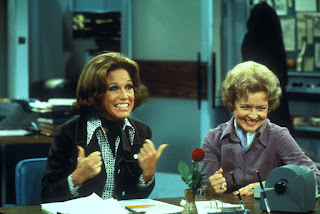
White, who played Sue-Ann Nivens on “The Mary Tyler Moore Show” in the 1970s and Rose on “The Golden Girls” from 1985-92, was a staple on TV for more than 60 years, having started as the sidekick on a local Los Angeles daytime show that kept her on live TV five hours a day, five days a week.

The energetic blonde with the honeyed voice and girl-next-door beauty was one of the rare performers to remain as popular into her nineties with new generations of viewers — thanks to reruns of “Golden Girls” — as she was in her sitcom heyday.

In her 80s, White was still stealing scenes in film comedies such as “The Proposal,” “You Again” and “Bringing Down the House,” as well as making regular appearances on late night talkshows, where she delighted audiences with her quickfire repartee with Jay Leno, Craig Ferguson and other hosts.

Her well-reviewed turn alongside Sandra Bullock and Ryan Reynolds in 2009’s “The Proposal” boosted her profile, and suddenly she was everywhere: starring in the well-received Super Bowl commercial spot for Snickers and hosting “Saturday Night Live” after a fan campaign to land her the job started on Facebook (White had actually been offered the gig years before but turned it down).

She was hired by producers of “Hot in Cleveland” for a guest shot in the pilot but was quickly pressed into service as a series regular. “Cleveland” was an instant hit thanks in no small measure to White’s star power. She earned SAG Awards for her work on the show in 2011 and 2012 and her 17th career Emmy nomination.

The hits she had in the series department were giant ones and made her a household name. Her characters on “The Mary Tyler Moore Show,” a homemaker with a rather saucy reputation, and on “Golden Girls,” a rather befuddled simpleton, were part of television history. Both programs brought her Emmys, two for “Moore” and three for “Golden Girls.”

Born in Oak Park, Ill., she moved with her family to Los Angeles, where her acting aspirations began at Beverly Hills High School. Shortly after graduation, she made her professional stage debut as part of the Bliss Hayden Little Theater, of which she was a member for several years. She also did guest stints on radio shows such as “Blondie,” “This Is Your FBI” and “The Great Gildersleeve” before branching into early television. White made her first screen appearance, however, in the 1945 educational short “Time to Kill,” promoting the benefits of the G.I. Bill.

In 1953 White landed her first sitcom, “Life With Elizabeth,” which was short-lived, as was daytime talkshow “The Betty White Show” in 1954, “A Date With the Angels” in 1957 and comedy variety skein “The Betty White Show” in 1958.

She then drifted into gameshows, including “To Tell the Truth,” “I’ve Got a Secret,” “Match Game,” “Password” and “What’s My Line?” White was also a regular on the nighttime “Jack Paar Show” and the syndicated woman’s daytime show “Girl Talk.” During that time she had her own radio show on CBS, “Ask Betty White.”

White had worked with “Password” host Alan Ludden and was appearing in summer stock with him in 1962 in “Critic’s Choice” when they became romantically involved; they married the next year. (White had been briefly married to Frederick Barker and to Lane Allen but had been single since 1949). They would co-star for years in summer stock in productions such as “Brigadoon,” “Any Wednesday” and “Guys and Dolls” as well as on TV on “Password.”

In 1971, White, an animal lover, had a talkshow called “The Pet Set,” about celebrities and their pets. (She later wrote the book “Betty White’s Pet Love.”)

White was a friend of Mary Tyler Moore when Moore’s producers were looking for a regular like Cloris Leachman. The character of Sue Ann was created with White in mind but offered to several actresses before the producers decided to go with White (who claimed, perhaps rightly, that for a time her gameshow persona was so ingrained in everyone’s mind that she was ignored for other acting jobs). The character of the Happy Homemaker, who always had sex on the brain, was an instant success and brought her back-to-back Emmys as supporting actress in 1974 and 1975.

After the Moore show ended, another series was developed for White in which she co-starred with Georgia Engel. “The Betty White Show” debuted in 1977 but was cancelled after half a season. She returned to gameshows as well as miniseries and TV movies like “The Best Place to Be,” “This Ring,” “Before and After” and “The Gossip Columnist.”

In 1983 she hosted another gameshow, “Just Men.” The show was panned but brought her another Emmy. She had a recurring role in “Mama’s Family,” a spinoff of a regular skit on “The Carol Burnett Show” in which Rue McClanahan also recurred.

Though she was originally slated for the role of the promiscuous southern Belle on “The Golden Girls,” she chose instead to play Rose, the slightly akilter but sweet-hearted character in the series targeted at an older demo (McClanahan got the Belle role). It was a huge hit running into the early ’90s and added two more Emmys to White’s shelf. She carried on for another season in the spinoff “The Golden Palace” and then segued into a regular role on Newhart series “Bob” and 1995’s “Maybe This Time.”

Television movies and regular guest appearances on shows as diverse as “St. Elsewhere” and “Suddenly Susan” kept White constantly in front of the camera, as did the occasional TV movie like “Weekend in the Country.”

In 1999 an appearance in David E. Kelley’s monster crocodile movie “Lake Placid” renewed attention on White: She lampooned her love of animals by playing a smiling but foul-mouthed woman who protects the predator that’s dispatching humans.

She was a television phenomenon in the 2000s, guesting as herself on “Ugly Betty” as well as in animated form on both “The Simpsons” and “Family Guy” and providing voices for many animated films and TV shows.

White recurred on soap “The Bold and the Beautiful” from 2006-09, on “That ’70s Show” and as Catherine Piper both on “The Practice” and on “Boston Legal.” In 2010 she became the oldest person ever to host “Saturday Night Live.”

In January 2012 the NBC special “Betty White’s 90th Birthday: A Tribute to America’s Golden Girl’’ was the most-watched program on the night. White hosted and produced the hidden-camera reality show “Off Their Rockers” in 2012-13, earning two more Emmy nominations.

Her most recent book, “If You Ask Me (And of Course You Won’t),” was published in 2011. She won a Screen Actors Guild life achievement award in 2010.

Ludden died in 1981, and White never remarried.

(Carmel Dagan contributed to this report.)

 -Variety

December 14, 2021

Literary Pick (****)

 A Manual for Cleaning Women: Selected Stories
-Lucia Berlin


Dean Stockwell


Veteran actor Dean Stockwell, best known for playing Admiral ‘Al’ Calavicci opposite Scott Bakula’s Dr. Sam Beckett in NBC’s sci-fi dramedy Quantum Leap, died Sunday of natural causes. He was 85. 

Airing from March 1989 to May 1993, Quantum Leap starred Bakula as Dr. Sam Beckett, a physicist who in testing out a time travel theory “leapt” into the body of an Air Force pilot 50 years in the past. In trying to return home, Sam realized he could only randomly leap into other people, in other times. Stockwell played Sam’s womanizing, cigar-smoking hologram of a BFF/companion.

The role of Admiral ‘Al’ Calavicci earned Stockwell four Emmy Award nominations for Supporting Actor in a Drama Series, as well as one Golden Globe award.

He later recurred as Brother Cavil in Syfy’s reboot of Battlestar Galactica (2004–2009). Additional TV credits included JAG and 1998’s short-lived Tony Danza Show.

Born in North Hollywood in 1936, Stockwell was on Broadway by the time he was age 7, and his career as a child star began. As a child actor of the 1940s, his credits included the films Song of the Thin Man, The Boy with Green Hair, Kim and Gentleman’s Agreement (for which he won a Golden Globe).

His later big-screen credits included David Lynch’s Dune (1984) and Blue Velvet (1986), as well as To Live and Die in L.A. (1985), Beverly Hills Cop II (1987), The Player (1992) and Air Force One (1997). Stockwell scored an Oscar nomination for his supporting performance in the 1988 comedy Married to the Mob.

Stockwell is survived by his wife, Joy, and their two children, Austin and Sophie.

-TVLine


October 31, 2021

Literary Pick (***)

 Old Yeller
by Fred Gipson


October 4, 2021

Milford Plaza Commercial


September 28, 2021

Ed Asner, Renowned Character Actor, Dies at 91

Ed Asner, Renowned Character Actor, Dies at 91  

 Asner’s career extended far beyond Lou Grant.


Actress Shirley MacLaine and Ed Asner at the 1981 Emmy Awards.by Ron Galella/WireImage.
 

“The world for me is divided into three spaces,” Ed Asner told AM New York in 2016. Those spaces: “Lou Grant, Up, and Elf.” While those are his most identifiable credits, they only hint at the breadth and depth of this consummate character actor and controversial activist, who died on Sunday at the age of 91

In the days to come, expect to see this Asner clip a lot. You should know which one without even clicking on it. His impeccably-timed delivery of one of the most quoted lines in television history—“I hate spunk,” barked at job applicant Mary Richards in the pilot episode of The Mary Tyler Moore Show—instantly and indelibly defined newsman Lou Grant, the character Asner embodied and made iconic for seven seasons on that show, and then for another five on the spin-off series, Lou Grant.

Asner knew he had nailed the “spunk” scene. “I felt such power at that moment,” he told V.F. in 2017. “I could command those 300 people [in the audience] to march into the sea if it was nearby.”

The Mary Tyler Moore Show made Asner an “overnight” star after more than a decade of steady appearances in television and films. As Lou Grant, Asner became the first actor to win comedy and drama Emmy Awards for playing the same character. He won seven Emmy Awards (out of 10 nominations) and five Golden Globes (out of six nominations).

But he did not rest on those estimable laurels. Over the course of his 60-year career, Asner’s stocky build, gruff voice, and glowering visage made him a good fit for characters on both sides of the law—the villain or the cop, or even the network executive. But his inner-softy’s smile and twinkling eyes made him ideal to portray grumpy but lovable old men (Up) and Santa Claus—which, according to the Internet Movie Database, he did nine times, most notably opposite Will Ferrell in the feature film Elf.

In his 80s, Asner embarked on new acting challenges, including FDR, a one-man show in which he portrayed the 32nd president. “I love the work of acting,” he said in a 2009 interview with a suburban Chicago newspaper chain. “It’s the only thing I’m good at. One of the reasons I took [the role] is I’ve never done a one-man show, and I relish the challenge.” In 2012, at the age of 82, he returned to Broadway after an absence of 23 years in Grace opposite Paul Rudd and Michael Shannon.

In March 2013, while on tour with FDR, he was taken off the stage at the Marquette Park Pavilion in Gary, Indiana, and hospitalized for exhaustion. But that did not slow him down for long. About 60 of Asner’s more than 360 IMDB credits date from 2014 to the present. In 2017, he co-starred in the ensemble independent film The Parting Glass and toured with another one-man show, A Man and His Prostate, written by Emmy and Peabody Award-winner Ed Weinberger. Weinberger also wrote or co-wrote some of the most memorable episodes of The Mary Tyler Moore Show, including the series finale.

Asner was born into an Orthodox Jewish family on November 15, 1929, in Kansas City, Missouri, but he grew up in Kansas City, Kansas. He worked as an announcer for his high-school radio station. While attending the University of Chicago, he appeared in a production of Richard III on a closed-circuit dormitory radio station started by his two roommates.

After serving in the army, he returned to the university, where he was recruited to join the Playwrights Theatre Club alongside such future luminaries as Mike Nichols, Elaine May, Barbara Harris, and Sheldon Patinkin. (The ensemble would evolve into an improvisational ensemble called the Compass Players, and then Second City.)

Asner departed for New York in 1955 (“you had to if you wanted respect as an actor,” he told the New York Times in a 1973 interview). For almost three years, he co-starred in the Off-Broadway production of The Threepenny Opera while also doing television work. He performed in several Shakespeare productions, and in 1960 was cast in a small role opposite Jack Lemmon in the play Face of a Hero, which ran for only 36 performances. 

The next year, Asner and his first wife, Nancy Sykes, whom he married in 1959 (they divorced in 1988), relocated to Los Angeles, where he worked steadily on TV series as varied as Route 66, The Alfred Hitchcock Hour, and The Outer Limits before landing his first series in 1964, Slattery’s People, in which he co-starred with Richard Crenna. It lasted two seasons.

In the years leading up to getting cast on The Mary Tyler Moore Show, Asner appeared in iconic and cult series that included The Fugitive, Rat Patrol, Gunsmoke, The Invaders, and Mission: Impossible. “When I came out to Hollywood in 1961, I was determined not to be typecast,” Asner told The Spectrum in 2016. “My agent and I worked assiduously ever since to make sure that never happened.”

A rare foray into comedy as a police chief in the 1971 made-for-TV movie They Call It Murder made an impression on network executive Grant Tinker, who was then married to Mary Tyler Moore. When it came time to cast The Mary Tyler Moore Show, he recommended that Asner be brought in to audition for the role of Lou Grant. In an interview for the Archive of American Television, Asner credited CBS casting executive Ellen Weinert with assuring Tinker that he could handle a sitcom. As Asner recalled, she told Tinker, “Ed Asner can do anything.”

“Anything” included two benchmark made-for-TV miniseries, Rich Man, Poor Man, and Roots, which aired while The Mary Tyler Moore Show was on the air. Asner’s featured roles as an embittered German immigrant father and slave ship captain, respectively, earned him Emmy Awards.

The spin-off series Lou Grant premiered in 1977, but despite garnering critical acclaim and racking up a dozen Emmys as well as Peabody and Humanitas Awards, it was unceremoniously canceled in 1982.

Asner, a liberal and self-described “staunch unionist,” did not think it was a coincidence that the show’s demise coincided with his contentious two-term tenure as president of the Screen Actors Guild—and, specifically, a 1982 press conference at which he proclaimed his support for victims of El Salvador’s civil war and announced his humanitarian donation of $25,000 for medical supplies. Critics contended Asner did not make it clear he was acting as a private citizen and not as president of the union. Asner served from 1981 to 1985.

The ever-defiant Asner did not mellow with age. He was an outspoken critic of the war in Iraq, and in 2013 expressed equal opposition to any proposed military action in Syria. In January 2017, he joined a roster of celebrities in signing a petition of anti-fascist resistance against then-president-elect Donald Trump.

“Whether it’s a Republican or Democrat president, or Republican or Democrat Congress—and it doesn't make a God-damned difference—it behooves us to get off our ass and ask questions," Asner told the Hollywood Reporter in 2013. 

With the possible exception of the SAG incident, his outspoken views did not seem to hinder his career. He graced such celebrated series as ER, The X-Files, The Practice, and The Good Wife, while he lent his distinctive voice to such animated series as The Simpsons, King of the Hill, Family Guy, The Boondocks, and Spider-Man. In 2001, the Screen Actors Guild honored him with its Lifetime Achievement Award.

Asner’s career soared to new heights with Pixar’s 2009 computer-animated film Up, which earned an Academy Award for Best Animated Feature. Asner voiced Carl, a stay-at-home widower who, facing eviction, ties thousands of balloons to his house and embarks on a South American adventure.

Beyond Elf and Up, perhaps Asner’s most notable feature film roles were opposite John Wayne in the 1966 Howard Hawks western El Dorado, Paul Newman in Fort Apache, the Bronx in 1981, and in two movies starring Elvis Presley, Kid Galahad in 1962 and Change of Habit in 1969. Presley’s leading lady in that film was Asner’s future co-star Mary Tyler Moore, but the two did not share any scenes together.

In 2016, at the age of 85, Asner filed for divorce from his second wife, Cindy Gilmore, whom he married in 1998. The couple had been separated for eight years.

Asner will be remembered for much more than Lou Grant, Up, and Elf. He was the very model of a working actor. “Where the work goes, I go,” he joked in a 2012 USA Today interview. “Wherever adulation occurs, that’s where you’ll find me.”

August 9, 2021

Johnny Ventura

Dominican Merengue Star Johnny Ventura Dies At 81


The popular Dominican merengue musician Johnny Ventura has died. According to Dominican news media, the 81-year-old musician died after a sudden heart attack in his home country on Wednesday. The news was later confirmed by Ventura's son on social media.

Ventura started life as Juan de Dios Ventura Soriano, and became well-known as El Caballo Mayor, as both his husky voice and the very danceable, Afro-Caribbean style of his chosen music became popular across Latin America.

Starting in the 1960s, Ventura had a string of hits that became classics ("Patacon Pisao," "Pitaste," "Merenguero Hasta La Tumbadora") and also transformed merengue from a folk music to an international sensation. He further modernized the music by adding complex horn arrangements and even elements of rock and roll, which became a useful canvas for Ventura's elaborate stage choreography and musical arrangements.

Just before his death, Ventura had posted about how much he was looking forward to performing in front of his fans after the long pandemic lockdown.


Ventura's career coincided with a renewed interest in Afro-Caribbean music, thanks in no small part to New York-based record label Fania Records, which revived interest in work from Cuba, Puerto Rico and the Dominican Republic in the late '60s and throughout the '70s. The merenguero earned the respect and admiration of salsa stars like Celia Cruz, who recorded several songs featuring the hip-swinging style. Ventura also ventured into politics, serving first as vice mayor of the Dominican Republic's capital city of Santo Domingo from 1994 to 1998, then as mayor from 1998 to 2002.

The grand dame of Cuban song, Omara Portuondo, paid tribute to Ventura on Twitter from her home in Havana: "Artista inmenso, corazón radiante y alegre 'hasta la tumbadora. Gracias, nunca te olvidaremos."

-NPR

July 2, 2021

Branded Theme


 Branded is an American Western series that aired on NBC from 1965 through 1966. It was sponsored by Procter & Gamble in its Sunday night, 8:30 p.m. Eastern time period. The series is set in the post Civil War old west. The show starred Chuck Connors as Jason McCord, a United States Army cavalry captain who had been court-martialed and drummed out of the service following an unjust accusation of cowardice

-wikipedia

June 24, 2021

Irene Suchocki

 Taxi Cab Confessions


May 30, 2021

Literary Pick (****)

 Sofia: Living and Loving: Her Own Story
-by A.E. Hotchner 


May 29, 2021

Crossbay Movie Theatre

UA Crossbay 
9411 Rockaway Boulevard, Ozone Park, NY 11417
 

The 1,425-seat Cross Bay Theatre opened in December 1924. Located on the corner of Rockaway and Woodhaven Boulevards, the theatre was later known as the Crossbay. It was a Randforce house and then was operated by United Artists. In the 1970s the auditorium was twinned, and in the early 1980s a third auditorium was built in space once occupied by retail stores.

The UA Crossbay closed on June 23, 2005, and the building was converted to retail. 

-Cinema Treasures


Literary Pick (****)

 Keep The Faith
-Faith Evans


Gavin MacLeod

Gavin MacLeod of 'Love Boat' and 'Mary Tyler Moore' fame dead at 90


LOS ANGELES — Gavin MacLeod, a sitcom veteran who played seaman "Happy" Haines on "McHale's Navy," Murray on "The Mary Tyler Moore Show" and the very different, vaguely patrician Captain Stubing on "The Love Boat," has died. He was 90.

MacLeod's nephew, Mark See, confirmed his death to Variety.

MacLeod played a relatively minor character on ABC hit "McHale's Navy," starring Ernest Borgnine, but as newswriter Murray Slaughter, he was certainly one of the stars of "The Mary Tyler Moore Show," appearing in every one of the classic comedy's 168 episodes during its 1970-77 run on CBS. Murray was married to Marie (Joyce Bulifant) but was in love with Moore's Mary Richards. His desk was right next to Mary's in the WGN newsroom, so MacLeod was frequently in the shot during the sitcom, and Murray, like all the other characters, was richly developed — a hallmark of MTM shows.

MacLeod originally tried out for the part of Lou Grant, which went to Ed Asner, but claimed to be happy that he ended up playing Murray. He also auditioned for the role of Archie Bunker on "All in the Family," but of reading the script for the first time, he wrote in his memoir, "Immediately I thought, 'This is not the script for me. The character is too much of a bigot. I can't say these things.' " When Norman Lear called the actor to say that Carroll O'Connor had gotten the part, MacLeod was relieved.

The "Moore" cast — MacLeod, Asner, Valerie Harper, Cloris Leachman, Betty White and Georgia Engel (Ted Knight had died in 1986) — reminisced with Moore in 2002 on CBS' "The Mary Tyler Moore Reunion."

Asner, one of two surviving members of the cast, said Saturday that his "heart is broken."

"Gavin was my brother, my partner in crime (and food) and my comic conspirator," he wrote in a tweet. "I will see you in a bit Gavin. Tell the gang I will see them in a bit. Betty! It’s just you and me now."

MacLeod had the great fortune to roll right from one hit show to another in 1977, when "Moore" ended and ABC's "The Love Boat" began. The hourlong romantic comedy set on a cruise ship ran for 10 years. Even after the end of the voyage in 1987, the actor returned for telepic "The Love Boat: A Valentine Voyage" in 1990 and for the "Reunion" episode of rebooted series "Love Boat: The Next Wave" in 1998.

MacLeod may, indeed, hold a record for consecutive long-running series: He went straight from "The Mary Tyler Moore Show" (168 episodes) to "The Love Boat" (249 episodes). The actor's Captain Stubing was known for his signature salute.

The New York Times said in 2010: "Perhaps no actor has embraced a signature role the way Mr. MacLeod has with Captain Stubing. Since 'The Love Boat' went off the air, he has been a spokesman for Princess Cruises."

In a statement Saturday, the cruise line called him "our beloved global ambassador, dearest friend and treasured member of the Princess Cruises family for more than 35 years."

In 1997, the actor joined the rest of "The Love Boat" cast on "Oprah" in what was the first full cast appearance since the show was canceled. Another cast reunion occurred in 2013 on "The Talk."

MacLeod was born Allan George See in Mount Kisco, N.Y. His mother worked for Reader's Digest, while his father was an electrician who was part Chippewa. He grew up in Pleasantville, New York, and went to Ithaca College, where he studied acting and graduated in 1952. After serving in the U.S. Air Force, he moved to New York City and worked at Radio City Music Hall as an usher and elevator operator while seeking work as an actor. During this time he changed his name. He lost his hair early, which proved a barrier as a young man looking for acting work, but a hairpiece solved the problem.

After a few uncredited film roles, MacLeod made his credited big screen debut in the 1958 Susan Hayward vehicle "I Want to Live," playing a police lieutenant, then played a G.I. in Gregory Peck starrer "Pork Chop Hill" the next year. His supporting role in Blake Edwards' World War II comedy "Operation Petticoat," starring Cary Grant and Tony Curtis and focusing on the chaotic goings on aboard a submarine, gave the young actor a flavor of what he would be doing a few years later on "McHale's Navy." In the meantime he appeared in the 1960 thriller "Twelve Hours to Kill," which starred future "I Dream of Jeannie" star Barbara Eden; Blake Edwards' musical comedy "High Time," starring Bing Crosby and Fabian; and the critically hailed but now forgotten Korean War film "War Hunt." He also did a boatload of guest appearances on TV before his stint on "McHale's Navy."

-NBC News

May 21, 2021

Literary Pick (****)

 I Will Find You
-Joanna Connors


May 19, 2021

Charles Grodin (1935-2021)

Charles Grodin, Star of ‘Beethoven’ and ‘Heartbreak Kid,’ Dies at 86 

A familiar face who was especially adept at deadpan comedy, he also appeared on Broadway in “Same Time, Next Year,” wrote books and had his own talk show. 

Credit...via Photofest

Charles Grodin, the versatile actor familiar from “Same Time, Next Year” on Broadway, popular movies like “The Heartbreak Kid,” “Midnight Run” and “Beethoven” and numerous television appearances, died on Tuesday at his home in Wilton, Conn. He was 86.

His son, Nicholas, said the cause was bone marrow cancer.

With a great sense of deadpan comedy and the kind of Everyman good looks that lend themselves to playing businessmen or curmudgeonly fathers, Mr. Grodin found plenty of work as a supporting player and the occasional lead. He also had his own talk show for a time in the 1990s and was a frequent guest on the talk shows of others, making 36 appearances on “The Tonight Show Starring Johnny Carson” and more than 40 on David Letterman’s NBC and CBS shows combined.

Credit...Bettmann, via Getty Images

Mr. Grodin was a writer as well, with a number of plays and books to his credit. Though he never won a prestige acting award, he did win a writing Emmy for a 1977 Paul Simon television special, sharing it with Mr. Simon and six others.

Mr. Grodin, who dropped out of the University of Miami to pursue acting, had managed to land a smattering of stage and television roles when, in 1962, he received his first big break, landing a part in a Broadway comedy called “Tchin-Tchin,” which starred Anthony Quinn and Margaret Leighton.

“Walter Kerr called me impeccable,” Mr. Grodin wrote years later, recalling a review of the show that appeared in The New York Times. “It took a trip to the dictionary to understand he meant more than clean.”

 Another Broadway appearance came in 1964 in “Absence of a Cello.” Mr. Grodin’s next two Broadway credits were as a director, of “Lovers and Other Strangers” in 1968 and “Thieves” in 1974. Then, in 1975, came a breakthrough Broadway role opposite Ellen Burstyn in Bernard Slade’s “Same Time, Next Year,” a durable two-hander about a man and woman, each married to someone else, who meet once a year in the same inn room.


“The play needs actors of grace, depth and accomplishment, and has found them in Ellen Burstyn and Charles Grodin,” Clive Barnes wrote in a rave in The Times. “Miss Burstyn is so real, so lovely and so womanly that a man wants to hug her, and you hardly notice the exquisite finesse of her acting. It is underplaying of sheer virtuosity. Mr. Grodin is every bit her equal — a monument to male insecurity, gorgeously inept, and the kind of masculine dunderhead that every decent man aspires to be.”

May 8, 2021

Stephan’s Folly


What words? Plush, lavish, regal, colorful … epic! This 1965 Palm Springs time capsule home — which was redecorated in glamorous 1969 style by the home’s second owner Jack Stephan, “Plumber to the Stars” — is currently listed for sale by Matthew Reader of Paul Kaplan Group. Almost all of the home’s 1969 decor and furnishings remain intact. Back in 1969, the interior redesign cost $150,000 – that’s a whopping $968,321 today! You will be amazed, we promise — thanks to the 23 photos, courtesy Lance Gerber of Lance Gerber Studio.

Jack Stephan founded his first business, Jack Stephan Plumbing & Heating, in 1946, and Adee Plumbing & Heating in 1949. The company is still in business, run by two of his sons. By the time he bought the house and redecorated it in 1969, his business must have been booming, because the decorators working on this house seem to have been given a blank check. Even so, Jack Stephan seems to have been bemused by his own extravagance and dubbed his estate “Stephan’s Folly.”

 And the “Adee Do!” in our headline? That’s from Stephan’s local TV commercials. What a hoot! NOTE: That’s actor Wally Sherwin in the commercial, not Mr. Stephan.

This house — it’s fantastique! From the listing:

  • Price: $879,000
  • Year built: 1965
  • Square footage: 3,250
  • Bedrooms: 3
  • Bathrooms: 5

This grand 3,250 square foot estate style home is a showcase of design and Palm Springs style. This exceptional mid-century property was designed by architect Robert Lewis and constructed in 1965, and it is located in Deepwell Estates, one of the most desirable neighborhoods in South Palm Springs. This impressive home was made for entertaining, and it is rich in local history. Deepwell had many celebrity residents, and Loretta Young, Julie London, Jack Webb, Eva Gabor, Liberace, and Elizabeth Taylor all lived on Manzanita at one time.

The current incredible interior was designed and installed in 1971 [note, Matthew says further research indicates: 1969], and every surface has been meticulously maintained and preserved. The home was the 2015 recipient of the PS ModCom’s prestigious Residential Preservation Award.

This special home is centered around a kidney-shaped pool, and it features a sunken living room, curved wet bar, three bedrooms, den (or 4th bedroom), five bathrooms, pool cabana room, and an oversized garage for classic cars.


Stephan’s Folly has been so extraordinarily preserved that the Palm Springs Modern Committee just awarded its current owner of the home — Ross A. Klein — with a Residential Preservation Award. Realtor Matthew Reader, who sold the house to Klein, made the presentation and shared his introductory speech. It includes more background information (edited a bit by us for use here):

Adee do! Those words were drilled into pop-culture posterity thanks to Jack Stephan, a flamboyant entrepreneur with a flair for marketing who founded two of the region’s most heavily advertised plumbing companies in Southern California: Adee and Stephan’s Heating and Plumbing.

This fabulous residence, constructed in 1965, was designed by Robert Lewis & Associates. Originally built for Dr. & Mrs. Sanford Ehrens, it was later purchased by “Plumber to the Stars” Jack Stephan in 1969, who gave it the name Stephan’s Folly. Mr. Stephan founded Jack Stephan Plumbing & Heating in 1946, and Adee Plumbing & Heating in 1949. He passed away in 2014 at the age of 96 and left the home to his third wife of forty-five years, Barbara.

Ross purchased the home sight unseen after he was encouraged by yours truly of The Paul Kaplan Group. I was literally face-timing Ross from the house. He said it was love at first sight.

 Ross says he was inspired to buy the house because of the history of the previous owners and the exquisitely maintained period interior decor and custom furnishings. The house has amazing color theory and is a stunning example of early 70s design. It feels like an immersive piece of art. There are 16 different types of wallpaper and fabric cohabitating in perfect harmony from red to orange, and pink to fuchsia. Every lampshade and light bulb is spec’d to match the light fixture.

 The Stephans were incredibly social and many great card games and parties of Palm Springs luminaries were hosted at the house.  Mrs. Stephan was very generous in leaving many period accessories in the home from books and games, and cards and shufflers, to the Jean Naté and chafing trays for guests!  In keeping with his attention-grabbing advertising style, Stephan drove Rolls-Royces and maintained a flashy wardrobe, including mega-carat diamonds and suits in his favorite color, red.

 The interior is almost entirely original. In fact, the only items not original to the design are some of the appliances that were replaced over time. The house was the epitome of chic luxury and Palm Springs style.

 Every piece of furniture was custom designed, with many pieces featuring hand-applied gold leaf. There are matching fixtures in 23 karat gold, and up-to-date modern luxuries like electric drapes, a movie screen, 12 carousel 8-Track Player, and NuTone Sound System. There is even a professional salon hair dryer.

In contrast, the exterior is much more restrained than the interior. While the house was always “please, no smoking,” guests were given gold leafed wooden matchboxes inscribed with “Stephan’s Folly.”

On the phone with Matthew Reader, Pam discussed how to categorize the home’s interior design. How about: Arabian Nights meets Moroccan meets Hollywood Regency Taken As Far As it Can Go meets…. Steak House?! Indeed, Matthew says that everytime he goes into the house he immediately starts craving a steak, a baked potato and a Manhattan. “Even at eight o’clock in the morning,” he laughed. He underscores that inside, smoking was never allowed — the house does not feel musty or old. Pam declares that this home may not really be a “time capsule” — it’s a “time machine.”

Reader also told us that it’s believed that the interior redesign in 1969 cost $150,000. We went over to the online CPI Inflation calculator and that translated to nearly a million dollars ($968,321) today. That said, we don’t think you could even replicate these interiors today — some of these materials would be very difficult, and expensive, to find!

 Suffice to say: We love it. Fingers crossed the new buyers do, too, and don’t change a thing.
-Retro Renovation

May 2, 2021

Literary Pick (****)

You Get So Alone At Time That It Just Makes Sense
-Charles Bukowski